Houthi attacks further escalate tensions in Middle East powder keg: Saudi Arabia warns it will not 'stand idly by'
The latest actions by Iran-linked terrorists left more than 60 Yemeni government soldiers dead and at least 11 wounded—of various nationalities—in Riyadh. Oil prices are rising again amid tensions in the region.
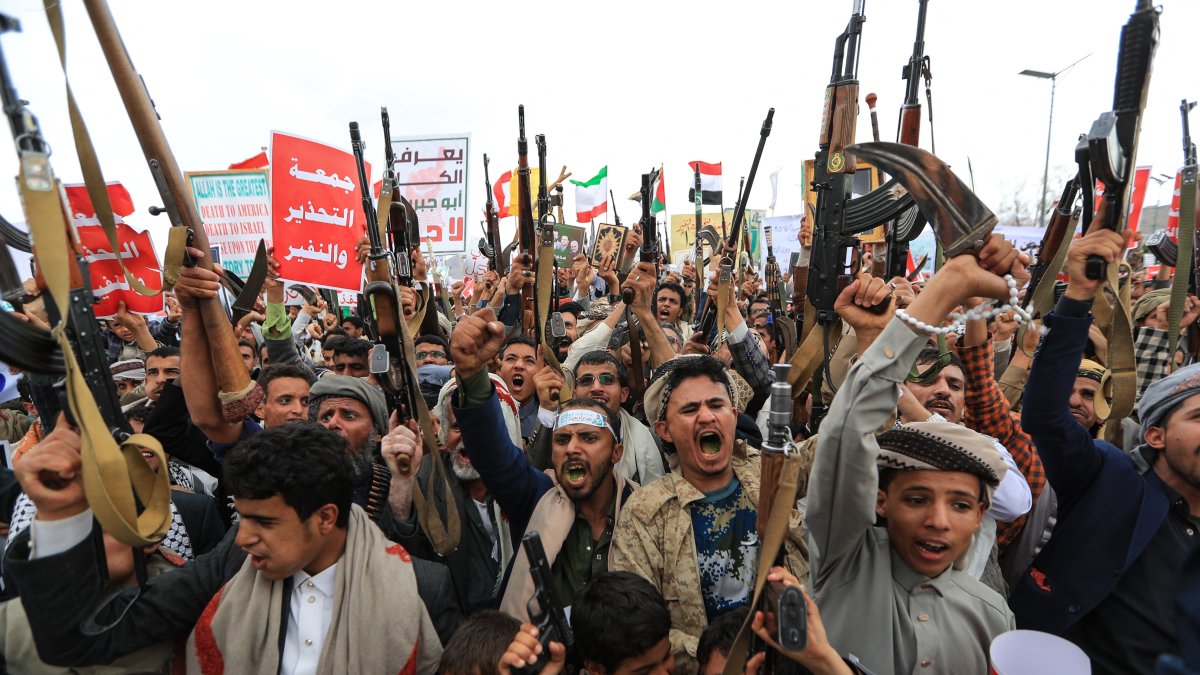
Houthi supporters

Houthi terrorists are further escalating—if that's even possible—the already tense situation in the Middle East. Their offensive against the Yemeni government and Saudi Arabia is ongoing, and last Thursday, several drone attacks killed at least 60 Yemeni soldiers and wounded 11 civilians of various nationalities in Riyadh. In the days leading up to this, they had been firing on Saudi ships in the Red Sea.
Finally, Saudi Arabia's patience ran out, and the kingdom warned that it will not "stand idly by" while the Iranian-backed proxy's attacks continue.
In addition to Thursday's attacks, which left at least 58 dead and dozens wounded (initial reports put the death toll at 39) among Yemen's government forces, another attack on Friday left three more dead. The Yemeni Ministry of Defense stated that it will respond to this "aggression at the appropriate time and place."
Deadliest attacks since 2022 ceasefire
A military official told AFP that a military camp in the Al Ruwaik area, in the Marib province of central Yemen, had been attacked, as well as camps in the Al Abr and Al Wadiah areas, in Hadramaut, near the border with Saudi Arabia.
These are the deadliest attacks since the 2022 ceasefire, which put an end to more than seven years of a devastating war in the poorest country on the Arabian Peninsula. The Houthis have been at war with the government since 2014, in a conflict that has claimed hundreds of thousands of lives and triggered a severe humanitarian crisis in Yemen.
The Houthis say they are "prepared" for escalation
The rebel terrorists, who control Sana'a and much of the north of the country, claimed responsibility for the latest attacks:
"Our armed forces carried out a large-scale operation targeting concentrations of enemy troops," said their military spokesperson, Yahya Saree, claiming there has been "a significant Saudi military buildup." He warned that the rebels were "prepared in the event of an escalation."
Attacks against Saudi Arabia
Yemeni rebels have also attacked infrastructure in Saudi Arabia, which has retaliated against their positions. On Thursday, new attacks along the Saudi-Yemeni border left 11 civilians wounded, according to the Riyadh-led coalition.
Among the injured are seven Saudis, including a 4-year-old boy, two Egyptians, one Yemeni and one Pakistani, said coalition spokesman General Turki al-Malki in a statement released by the official Saudi news agency.
Attacks on oil tankers
On Wednesday, the Houthis claimed to have attacked two Saudi oil tankers in the Red Sea and the Gulf of Aden, as part of the blockade they had announced in July against the Saudi fleet.
The measure jeopardizes the ability of Saudi Arabia, the world's leading crude oil exporter, to transport its oil to international markets, following Iran's closure of the Strait of Hormuz.
The hostilities follow the recent attempt by an Iranian plane from Tehran to land in Sana'a, defying Saudi control over Yemeni airspace.
Oil prices continue to rise, stock markets stumble
Markets had experienced a sharp rebound earlier in the week, when Donald Trump suspended attacks against the Islamic Republic and stated that an agreement was close, even though Tehran denied that any talks had taken place.
At the close of Asian markets, and during the early trading hours in Europe, a barrel of West Texas Intermediate reached $77.75, while a barrel of Brent reached $83.24.
LATEST