Yemen on the brink of civil war as Houthis kill more than 30 government troops
This is the deadliest attack against government forces since the de facto truce was reached, which had halted large-scale fighting between the two sides.

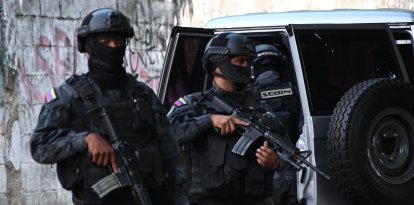
Houthi terrorists in Yemen in a file photo

The fragile balance that had sustained Yemen since 2022 crumbled on Thursday, after Houthi terrorist rebels, backed by the Iranian regime, launched an offensive with ballistic missiles and drones against military camps belonging to the internationally recognized government in the provinces of Marib and Hadramaut, leaving more than 30 soldiers dead and dozens wounded, according to Yemeni officials cited by the AP news agency.
This is the deadliest attack against government forces since the de facto truce was sealed, which had halted large-scale fighting between the two sides.
The Yemeni Ministry of Defense confirmed in a statement posted on social media that the Houthis struck "several camps and units of the Armed Forces" in those two provinces, both of which are oil-rich and under government control. The army itself publicly acknowledged that there were casualties among its troops, though it declined to provide an official figure.
Hours after the attack, the Houthi military spokesman, Brigadier General Yahya Saree, claimed responsibility for the operation and explained that his group launched a "large number of drones and ballistic missiles" after "monitoring a major Saudi military mobilization" that, according to him, sought to "escalate the conflict against them." Saree also claimed that the offensive left "hundreds of enemy Saudi mercenaries" dead or wounded and destroyed warehouses, military vehicles, and weapons—a figure that neither Yemeni nor Saudi authorities have independently confirmed.
The Yemeni government, through the Ministry of Defense, stated that its forces "will respond to these missile and drone attacks at the appropriate time and place," while the Saudi-led military coalition promised to activate "all deterrence mechanisms" in response to what it described as "terrorist aggressions." On the other hand, Saree called on "all our people to remain vigilant and to attack concentrations of Saudi troops wherever they may be," a message that foreshadows a further escalation in the coming weeks.
The violence spread beyond Yemen's borders. During the day, the Saudi coalition reported a Houthi rocket attack on the border region of Najran, already within the territory of Saudi Arabia, leaving at least 11 civilians wounded. The Houthis did not immediately comment on the incident.
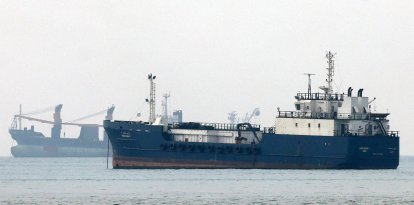
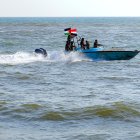
This week's outbreak adds to an escalation that had already been building for several weeks in the Red Sea, where the Houthis declared a blockade against Saudi oil tankers last month and opened fire on commercial vessels. Since then, both sides have accused each other of new attacks: the Saudi-led coalition bombed Houthi-controlled territory for the first time in years, while the rebel group claims to have attacked oil transport routes connecting oil fields in eastern Saudi Arabia to the port of Yanbu.
The underlying risk is that this new cycle of violence will ultimately bury the 2022 truce, the agreement that had managed to reduce large-scale fighting between the Yemeni government and the Houthis without ever resolving the root causes of the conflict. Yemen has been mired in civil war since 2014, when the Houthis seized the capital, Sana'a, and forced the internationally recognized government into exile in Saudi Arabia the internationally recognized government. The Saudi military intervention, launched a year later to restore that government, eventually turned into a war of attrition with no clear winner, which has already claimed hundreds of thousands of lives—most from hunger and war-related diseases rather than direct violence.
Marib, one of the provinces under attack, is now one of the last strongholds of the Yemeni government in the north of the country and is home to the largest population of internally displaced persons resulting from the conflict; last week, its own authorities had declared a state of emergency there due to a measles outbreak. Hadramaut, the other hard-hit province, is home to a large portion of the oil reserves that financially sustain the besieged Yemeni government, making both areas targets of high strategic value for the Houthis as they look ahead.
LATEST