Trump-backed candidate falls in Tennessee: Farmer Charlie Hatcher ousts Andy Ogles with help from a Democratic super PAC
Ogles (47%) lost Thursday's Republican primary in Tennessee's 5th District to Charlie Hatcher (53%), a fifth-generation dairy farmer and former state agriculture director, according to The Associated Press.
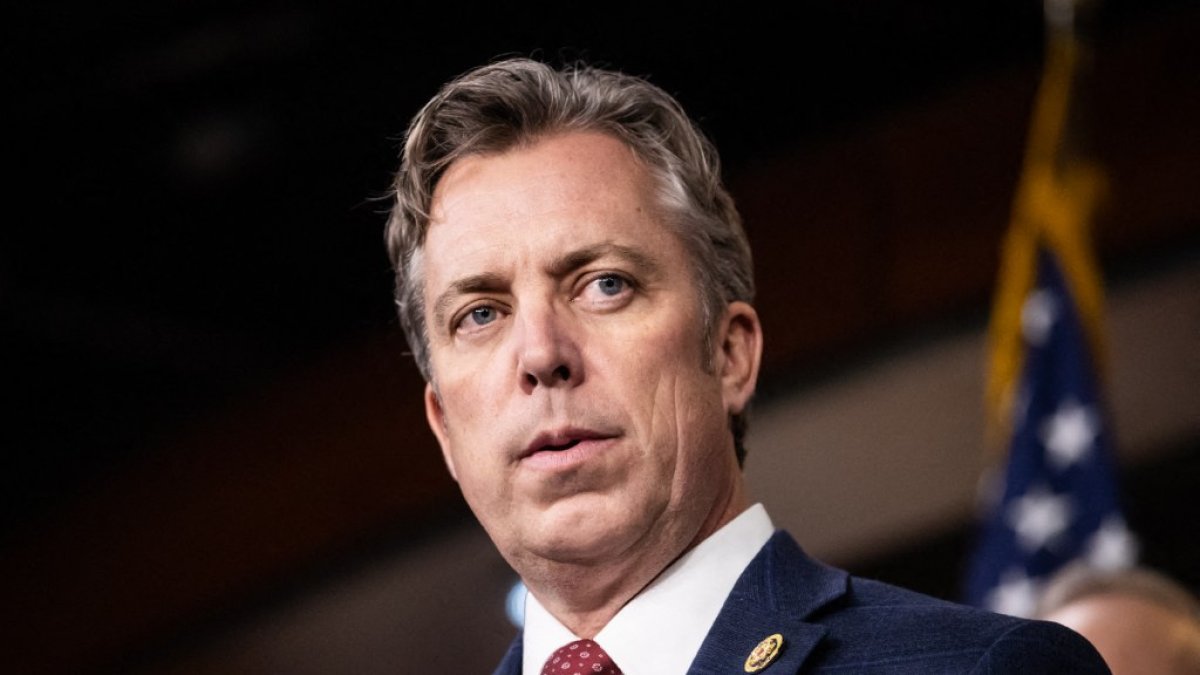
Rep. Andy Ogles in a file photo

A cryptocurrency billionaire, known for funding Democratic campaigns, ended up playing a key role in a Republican primary that ended with the president's candidate Donald Trump suffering a surprise defeat.
Chris Larsen, CEO of the fintech company Ripple and a regular donor to the Democratic Party, contributed more than $5.4 million to the failed presidential campaign of Kamala Harris. He is funding the super PAC Invest in Tomorrow Coalition, which spent about $2 million to defeat Rep. Andy Ogles, a Tennessee Republican backed by Trump in his race. The strategy paid off. Ogles (47%) lost on Thursday in the Republican primary for Tennessee's 5th District to Charlie Hatcher (53%), a fifth-generation dairy farmer and former state agriculture director, as confirmed by The Associated Press.
A nonpartisan PAC with an energy agenda
The Invest in Tomorrow Coalition is a PAC funded by contributions from renewable energy developers and has already raised $6.7 million this year, a significant portion of which was specifically allocated to the campaign against Ogles, who had called for cutting state funding for that sector, a legacy of the Biden administration.
Its president, Tom Matzzie, celebrated the election result: "Just proved once again that standing in the way of America's energy future comes with a hefty political price," he said, before warning that the group "will continue to punish members of either party who want to play politics with American jobs, energy security, and utility prices."
In an interview with Fox News Digital, Ogles took direct aim at Larsen's spending.
"When you have a group spending roughly $2 million in a Republican primary, that tells you how much money they're making off of government subsidies, and they're upset that the government welfare has been taken away from them," the congressman said. "It's because I'm close to the president. It is because I am outspoken. And quite frankly, it is because I speak plainly on these issues."
Politics
Tennessee will have its first female governor: Republican Blackburn wins primary, sets up November race against another woman
Emmanuel Alejandro Rondón
Hatcher, a rival who didn't need to pick a fight with Trump
While Ogles sought to capitalize on his ties to the White House, Hatcher built his campaign around his rural identity and his closeness to the local electorate.
"I think there's something missing in Washington. There's a lack of farmer common sense. There's a lack of work ethic," he said in a campaign video, in which he also took care to position himself in line with the ruling party's agenda even without Trump's direct endorsement.
He did, however, receive direct support from another influential Republican figure in the state: outgoing Gov. Bill Lee, who joined Hatcher's campaign by citing a prior relationship built on trust.
"He served as my commissioner of agriculture; I know Charlie. I know his conservative values and how much he loves our country," Lee said, further emphasizing that his candidate "has stood with President Trump since day one," even without Trump's formal endorsement.
Trump, for his part, had reaffirmed his support for Ogles weeks earlier with praise: "Andy will be really enshrined as one of the best congressmen that you'll ever see. He's just fantastic," he wrote on Truth Social, adding that the lawmaker was always there "when we needed him" and had been "a source of inspiration to a lot of people in Congress."
The redrawn district also worked against Ogles
Furthermore, the result came in an electoral landscape that was no longer the same one Ogles knew. Tennessee's 5th District was redrawn by Republicans following the Supreme Court's weakening of the Voting Rights Act, and now stretches from the Nashville metropolitan area to parts of Memphis, a configuration that left Ogles himself with less time to introduce himself to new voters who did not know him from his previous terms.
With the nomination now secured, Hatcher moves on to the general election on Nov. 3, where he will face the Democratic candidate, the mayor of Columbia, Chaz Molder, in a district that is nonetheless considered a safe stronghold for the Republican Party.
LATEST