Tennessee will have its first female governor: Republican Blackburn wins primary, sets up November race against another woman
"Our work is much bigger than any one candidate or one campaign (...) We absolutely have to unite as a party," the senator said, calling for GOP unity.
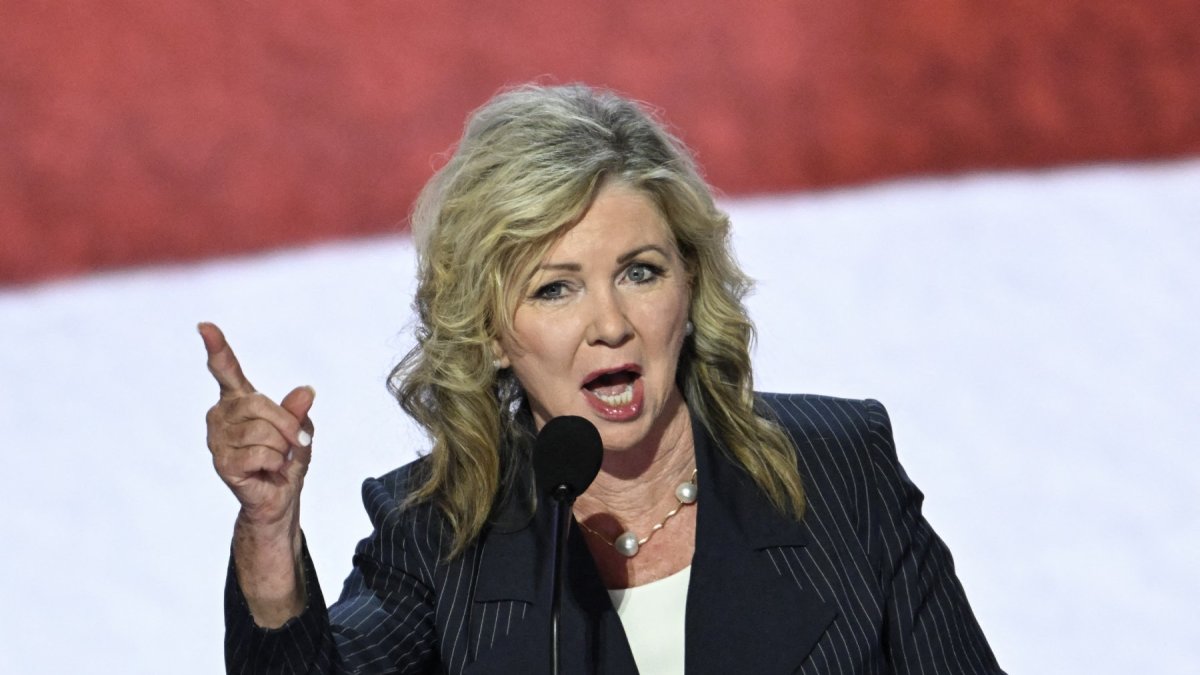
Senator Marsha Blackburn, a Republican from Tennessee, in a file photo

Marsha Blackburn did not need the endorsement of President Donald Trump to sweep the Republican primary for governor of Tennessee. According to projections by The Associated Press, the Republican senator defeated U.S. Representative John Rose (33%) and state legislator Monty Fritts (23.4%) with more than 43% of the vote, putting her one step away from becoming the first woman to lead that state in its entire history. That milestone will be achieved in November anyway, as her Democratic opponent is another woman: Jerri Green, a Memphis city councilwoman who easily defeated her rivals in the Democratic primaries.
Blackburn, 74, entered the race after securing reelection to the Senate in 2024. Her intention has always been to succeed Governor Bill Lee, who cannot run again due to term limits.
Unlike in other races, President Trump did not intervene directly in this campaign and chose not to endorse any candidate. Ultimately, this benefited Blackburn, who solidified her position as the front-runner after securing key local endorsements and raising significantly more money than her rivals.
Another effective strategy for Blackburn was to avoid debating her opponents, limit her public appearances, and ignore criticism for doing so. The candidate, who ultimately won, celebrated her victory with supporters in Knoxville, accompanied by several incumbent Republican lawmakers from both the U.S. House of Representatives and the Tennessee General Assembly. There, she called for party unity ahead of November: "Our work is much bigger than any one candidate or one campaign (...) We absolutely have to unite as a party."

The senator, who was the first woman to represent Tennessee in the Senate—a milestone she achieved in 2018— built her career by positioning herself as an unconditional ally of Trump and a hard-line conservative, taking a particularly aggressive stance against major tech platforms and the regime in China.
In fact, one of her most viral campaign ads was precisely one in which she broke fortune cookies as a metaphor for her anti-China stance.
As governor, Blackburn promised to maintain that profile: a tough stance on illegal immigration and crime, full alignment with Trump's agenda, and low taxes and regulations.

Politics
Establishment 3, squad 0: Moderate Democrats dominate primary night
Emmanuel Alejandro Rondón
Green, the Democratic hope in hostile territory
From the blue corner, Democrat Jerri Green faces a different challenge: winning in a state that hasn't voted Democratic at the state level since 2006. Her campaign strategy targets voters' wallets directly rather than ideological battles: "Tennessee families deserve a leader who fights for groceries they can afford, world-class public schools, and health care that doesn't bankrupt them," she said in a statement after her nomination was confirmed.
Green's approach addresses the current socioeconomic situation head-on, with inflation, the high cost of living, and the state of the economy as the top concerns for most voters nationwide.
The gubernatorial race is also taking place at a politically sensitive time, amid a broader redrawing of the state's political map. Tennessee voters elected their congressional candidates under new district boundaries, drawn by Republicans after the Supreme Court weakened the Voting Rights Act. With this new map, the Republican Party aims to wrest from the Democrats the only federal seat they still held in the state, which until now has been centered in the Memphis area—precisely the area where Green serves.
LATEST