ANALYSIS
Oil prices soar amid escalating fighting in Middle East
Iran responded with intense attacks against Oman, Jordan, Bahrain and Kuwait to the fourth and "most powerful" wave of U.S. airstrikes on its territory
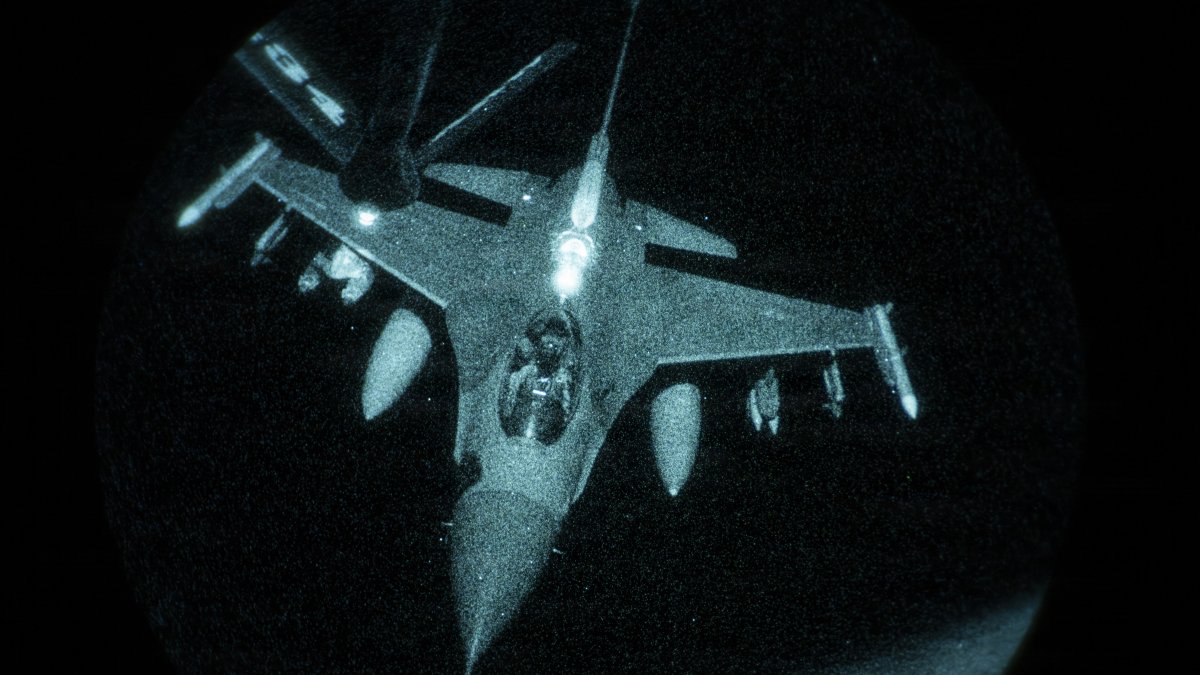
An F-16 approaches to refuel

The escalation of fighting between the United States and Iran sent oil prices soaring by more than 4% once again, dragging Asian stock markets lower. The Revolutionary Guard Corps responded to the fourth wave of U.S. airstrikes—more intense than the previous ones—by launching attacks against Oman, Jordan, Bahrain and Kuwait.
According to U.S. Central Command, American fighter jets struck hard at "Iranian military air defense systems, coastal radar sites, missile and drone capabilities, and small boats," with the aim of preventing Iran from once again holding the global economy hostage by blocking passage through the strait.
JNS
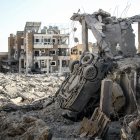
US military says it struck 140 Iranian targets after ‘blatant’ Islamic Republic attack on ship in Hormuz
JNS (Jewish News Syndicate)
In retaliation, the Revolutionary Guard Corps reported that they had attacked Prince Hasan Air Base in Jordan, a military drone command center in Bahrain and two air bases in Kuwait. The day before, they also opened fire on U.S. troops in Qatar.
Early this morning, Iran's ideological military also claimed to have attacked radar systems, including a ship-detection radar in Oman. Oman, located on the opposite shore of the strait from Iran, had summoned the Iranian ambassador the previous day
JNS
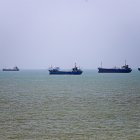
CENTCOM: Strait of Hormuz open despite ‘arbitrary’ Iranian declarations
JNS (Jewish News Syndicate)
Oil prices surge more than 4%
Markets reacted with concern, with oil prices surging 4% amid the military escalation in the region, just after peace had seemed within reach in the previous weeks.
At the start of the trading week, the price of a barrel of North Sea Brent—the international benchmark—rose to $78.96, while West Texas Intermediate (WTI), the U.S. benchmark, reached $74.16.
The Middle East and fears over tech stocks: A lethal combination for the markets
Furthermore, in Asian markets, Seoul fell as much as 9%. Adding to the instability in the Middle East are fears surrounding the tech sector. The South Korean stock market's worst moment came due to the wave of sell-offs in tech stocks following weeks of volatility fueled by concerns over overvaluation and doubts about the massive sums injected into the artificial intelligence sector.
The Kospi was dragged down by a drop of more than 15% in SK Hynix, one of the market's heavyweights, prolonging a recent sell-off that has caused the chip giant to lose nearly 40% since hitting an all-time high last month.
Along with Seoul, stock markets in Shanghai, Singapore, Wellington, Manila, Mumbai and Jakarta fell, while Hong Kong, Taipei and Manila rose.
Iran: Strait of Hormuz is "more important than dozens of atomic bombs"
"This strategic passage is more important than dozens of atomic bombs, and the Islamic Republic of Iran will protect it," Mohsen Rezaee said, according to the ISNA news agency.
LATEST