US military says it struck 140 Iranian targets after ‘blatant’ Islamic Republic attack on ship in Hormuz
“The United States is imposing a heavy cost by continuing to degrade Iran’s ability to attack civilian mariners and commercial ships freely transiting the strait,” said US Central Command.
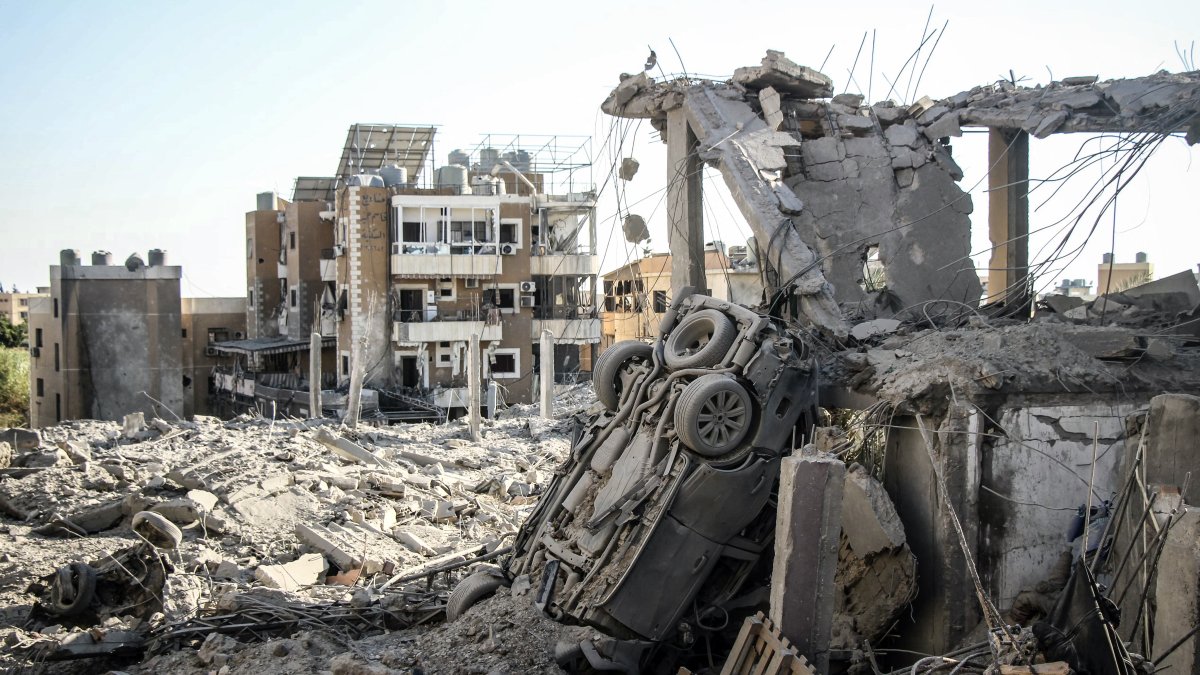
Imagen de la guerra en Irán

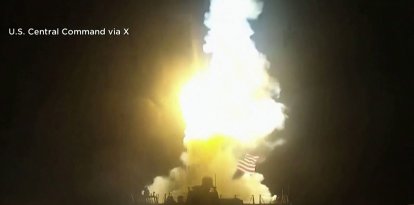
The US military struck 140 military targets in Iran—the third round of strikes in a week—after the Islamic Republic “blatantly” attacked the Cyprus-flagged container ship GFS Galaxy as it went through the Strait of Hormuz, U.S. Central Command said on Saturday night.
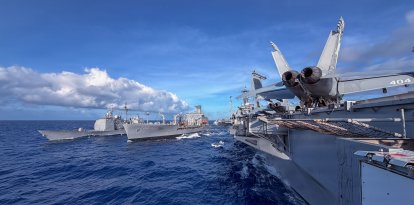
The military used “land- and sea-based fighter aircraft, drones and naval vessels,” and it targeted “Iranian missile and drone sites, naval capabilities, ammunition storage facilities, communication networks and coastal surveillance locations,” said CENTCOM.
“A civilian crew member is missing, and the vessel is unable to continue the journey due to an onboard fire and significant engine room damage,” the U.S. military stated. “Iran was provided yet another opportunity to demonstrate adherence to the memorandum of understanding after being held accountable for earlier attacks on commercial vessels but has again failed.”
The US military is responding by “imposing a heavy cost by continuing to degrade Iran’s ability to attack civilian mariners and commercial ships freely transiting the strait,” according to CENTCOM.
“These strikes are welcome, but they are being carried out to ‘degrade’ Iran’s regime’s ability to threaten commercial vessels in the Strait of Hormuz,” stated Jason Brodsky, policy director at United Against Nuclear Iran. “However, if the US wants to deter the regime, there will need to be a more robust response.”

“Iran made a poor choice,” US Secretary of Defense Pete Hegseth stated. “Now they pay.”
Earlier in the day, the Iranian regime declared the strait to be closed.
“The Strait of Hormuz is closed until further notice and until the end of America’s interventions in the region, and no vessel will be permitted to pass through,” said the Islamic Revolutionary Guard Corps (IRGC).
The IRGC warned that any “new act of aggression” against Iran would be met with a “severe response” and that additional “enemy bases” in the region would be targeted.
Following the latest round of US airstrikes, the IRGC said it had launched attacks on American military assets in Qatar, Kuwait, Oman, Bahrain and Jordan.
According to the IRGC-affiliated Fars News Agency, the missile and drone attacks targeted military facilities in Qatar; a Patriot air-defense system, an ammunition depot and a radar site in Kuwait, refueling platforms used by aircraft carriers at the Port of Duqm in Oman, a military communications facility and a radar site in Bahrain, and a command center and MQ-9 drone hangars at Jordan’s Prince Hassan Air Base.
Qatar’s Defense Ministry said its air defenses had intercepted “a number of ballistic missile attacks” targeting the country.
Kuwait’s Armed Forces also said their air defense systems had engaged “hostile aerial targets” that entered the country’s airspace.
Bahrain’s Interior Ministry on Sunday issued several emergency warnings, urging citizens and residents to “remain calm, head to the nearest safe location and follow updates through official channels.”
Authorities in Oman and Jordan did not immediately confirm Iran’s claim that it had launched attacks on targets inside their territories.
Mohammad Bagher Ghalibaf, the head of Iran’s negotiating team in talks with the United States, said on Sunday that “the era of one-sided deals is over.”
“We told you: Keep your word or pay the price. Reality is knocking,” Ghalibaf wrote on X, sharing a screenshot of the June 17 Memorandum of Understanding between Tehran and Washington.
LATEST