Lindsey Graham had one ultimate goal before leaving: Peace between Saudi Arabia and Israel
In mid-May, the senator began suggesting to Trump that normalization between Riyadh and Jerusalem should be the centerpiece of a regional plan for “the day after” the conflict. Days later, Trump himself conveyed that demand to several Arab and Muslim leaders during a conference call, with Saudi Arabia as the primary target.
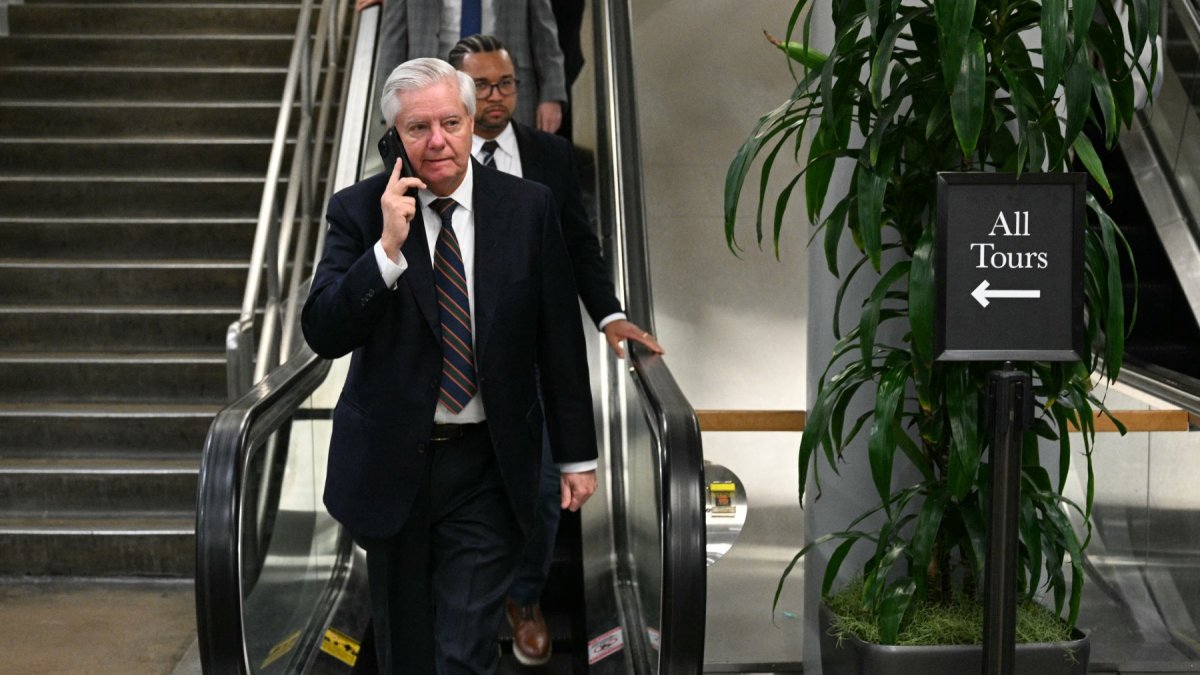
Lindsey Graham on the phone at the Capitol in Washington, D.C.

Senator Lindsey Graham (R-SC), who died suddenly on Saturday from an aortic rupture, devoted much of his final weeks to preparing a new diplomatic offensive aimed at normalizing relations between Saudi Arabia and Israel, in which he sought to directly involve President Donald Trump and his top envoys in the Middle East.
As reported by Axios this Sunday, Graham believed that Saudi-Israeli normalization could become the crowning achievement of a postwar agreement in the region, capable of transcending Washington’s military campaign against the regime in Iran. The senator had been working toward that goal for years, even during the Biden administration, and believed that the weakening of the Iranian regime presented a historic opportunity for Trump to reach a landmark agreement, one that was comprehensive and of great geopolitical significance.
Graham’s plan called for launching an intensive diplomatic offensive following the October elections in Israel and the U.S. midterms, to finalize an agreement before the new Congress was sworn in in January. To that end, the senator believed it was first necessary to contain the conflict with Iran, specifically the ongoing crisis in the Strait of Hormuz, and had advised Trump to authorize a brief and decisive military operation if diplomatic efforts failed to reopen the maritime passage, which is currently keeping global markets on edge.
Politics
Lindsey Graham's sudden death sparks intense Republican race for his seat, cast in the shadow and under the influence of Trump
Andrés Ignacio Henríquez
Graham was among the external advisors Trump consulted most frequently on foreign policy and national security issues, particularly regarding the war with Iran, and was part of the group of hard-line advisors pushing for greater military pressure on Tehran. It was in mid-May when he began suggesting to Trump that normalization between Riyadh and Jerusalem should be the centerpiece of a regional plan for “the day after” the conflict. Days later, Trump conveyed that demand to several Arab and Muslim leaders in a joint call, with Saudi Arabia as the main target.
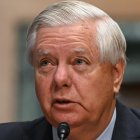
Politics
Trump, Netanyahu and other world leaders mourn the death of Lindsey Graham
Williams Perdomo
According to Axios, the Saudi Crown Prince, Mohammed bin Salman, had previously shown a willingness to normalize relations with Israel, but this apparently was not the case in the past year, as his interest gradually waned. This is because Riyadh maintains that any agreement must include an irreversible, time-bound path toward the creation of a Palestinian state—a condition that the government of Israeli Prime Minister Benjamin Netanyahu has repeatedly rejected.
According to the report, Graham had discussed the initiative with Trump and with envoys Jared Kushner and Steve Witkoff, in addition to maintaining contact with Netanyahu’s confidant, Ron Dermer; the Saudi ambassador to Washington, Princess Reema bint Bandar, and the Saudi foreign minister, Prince Faisal bin Farhan. He had planned to travel to Saudi Arabia and Israel in the coming weeks to test the waters and hoped that, if conditions were right, intensive work would begin in September to have an agreement on track before November.
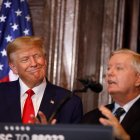
Society
El senador republicano Lindsey Graham murió tras una "enfermedad breve y repentina"
Williams Perdomo
The senator identified two intertwined obstacles: securing the necessary votes in Congress and securing an Israeli government willing to make concessions on the Palestinian issue. The agreement called for a defense treaty between Washington and Riyadh, which had already been largely negotiated during the Biden administration and would require the support of two-thirds of the Senate. Graham estimated that the legislative session following the November elections would be the only realistic window for ratifying it, and that winning over Democratic votes would require concrete commitments from Israel toward a future Palestinian state.
In his final hours, Graham even spoke with Trump by phone on Saturday night and briefed him on his recent trip to Ukraine and the sanctions bill against Russia that he was pushing in the Senate. Trump, according to reports, told him he was preparing new attacks against Iran following a new incident in the Strait of Hormuz. Shortly afterward, the senator complained to a close associate that he was feeling unwell. He was advised to seek immediate medical attention, but said he would wait until Sunday to do so, after his scheduled appearance on NBC's "Meet the Press." Graham then joked that it wasn't his time to go: "I can't die now. I still need to do the Russia sanctions, get Iran sorted out and do Israeli-Saudi normalization."
LATEST