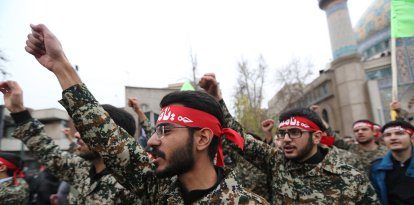
Trump hardens Iran stance, acknowledges nuclear deal is nearly impossible due to Tehran's deception
The administration’s mistrust has been fueled by the regime’s behavior in the Strait of Hormuz.
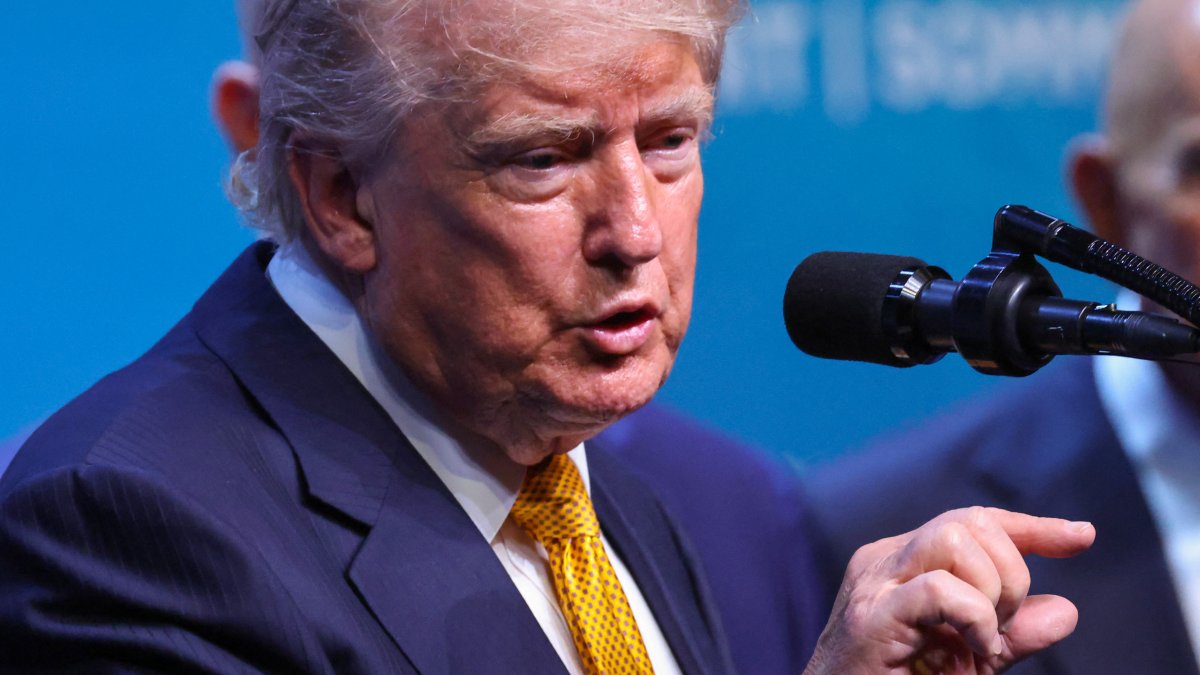
President Donald Trump during the NATO summit in Ankara on Wednesday.

The possibility of resolving the nuclear crisis with Iran through peaceful channels is rapidly fading. According to an exclusive report by Wall Street Journal, senior officials in the Trump administration expressed deep skepticism on Friday regarding the possibility of reaching a final agreement that would reign in Tehran’s nuclear program.
This unusual admission marks a turning point in one of the White House’s core foreign policy objectives, indicating that peace talks with the theocratic regime are on the verge of collapse.
The administration’s distrust has been fueled by the regime’s behavior in the Strait of Hormuz:
“They violate the agreement every day; they lie, they cheat, they kill people,” President Donald Trump stated to the media. The president emphasized the firmness of his stance by adding: “They will never build a nuclear weapon under our agreement, but I don’t know if we’re going to have an agreement.”
Maritime blackmail and Washington’s ultimatum
The root of the impasse lies in the systematic breach of the interim peace agreement signed in June. In that document, Iran committed to guaranteeing the free passage of commercial vessels in exchange for temporary financial relief.
However, the regime’s most radical factions interpreted the memorandum as a validation of their sovereignty over international waters, opening fire on merchant ships that deviated from the routes arbitrarily imposed by Tehran.
Faced with this hostile situation, the U.S. delegation has demanded that Iran immediately issue an official statement stating the unconditional opening of the Strait of Hormuz and the cessation of attacks against the civilian fleet.
A senior official suggested that, should this formal commitment not be made imminently, the regime will face serious consequences.
Although Iranian diplomats attempted to downplay the recent incidents by labeling them an internal “mistake,” the U.S. national security team argues that if Tehran is unable to respect a basic navigation agreement, there is no real basis for negotiating a much more complex nuclear treaty.
Economic strangulation and the option of force
As a direct response to the provocations, the U.S. Department of the Treasury swiftly reinstated economic sanctions that had allowed Iran to trade crude oil on international markets and repatriate dollar-denominated revenues.
Additionally, financial authorities announced new penalties against prominent Iranian tycoon Ali Ansari and the conglomerate of corporations linked to his operations.
The stalemate at the negotiating table reopens the debate over a new strategic shift by the White House. Spokespeople for the government emphasized that the United States has low-cost military options to permanently block the regime’s access to its underground reserves of enriched uranium.
U.S. intelligence maintains that an unwavering condition for any agreement is that Iran hand over full control of its highly enriched uranium to Washington.

World
Iran is preparing a new plan to kill Trump, according to Israeli intelligence shared with the US
Emmanuel Alejandro Rondón

World
Iran strikes US bases in the Gulf and Jordan again; Washington denies having carried out any attacks in recent hours
Emmanuel Alejandro Rondón
LATEST