ANALYSIS
Five years after July 11: The silence that shakes more than the crowds
Cuba is not experiencing a period of stability. It is undergoing a phase of containment. The country that took to the streets en masse in 2021 now faces a combination of fear, exhaustion, emigration and state control—a combination that explains why there has not been another nationwide uprising, even though material conditions are even worse.
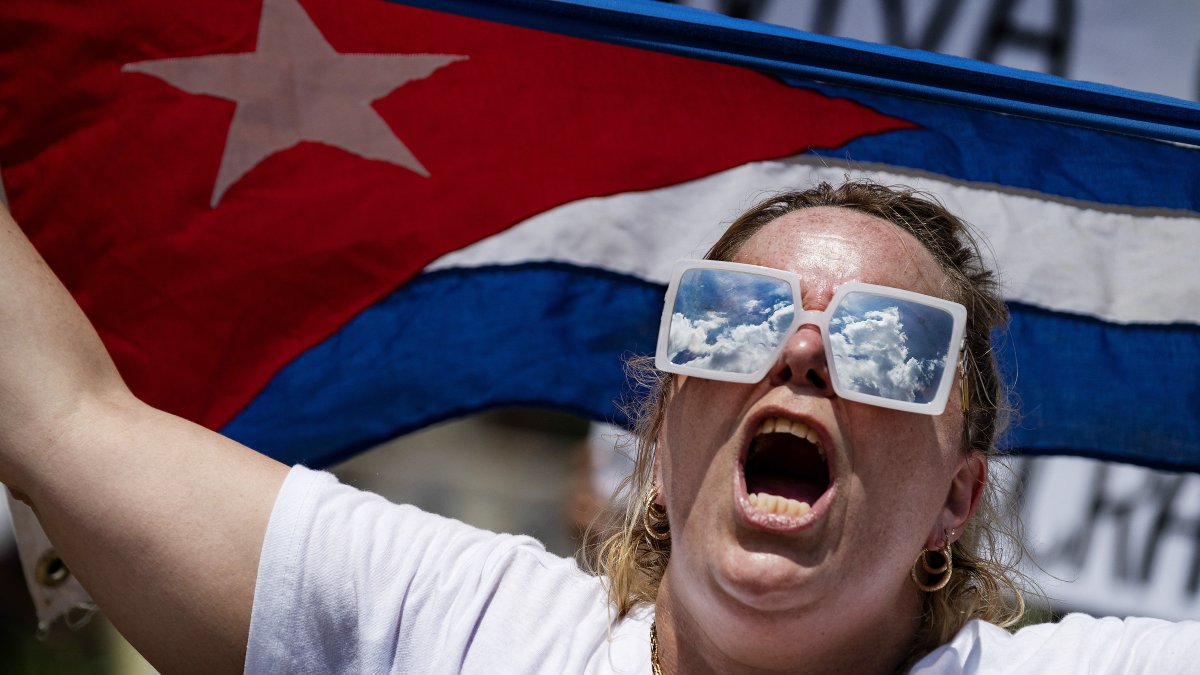
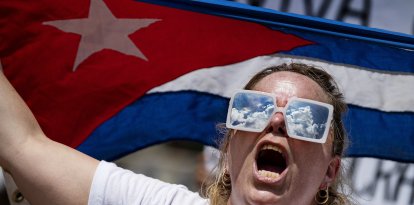
A woman calls for freedom in Cuba during a protest in 2021 (File photo)

Five years after July 11, 2021, in Cuba, the largest anti-government protests since 1959, the question is not why Cubans took to the streets back then. The real question is why, amid a much deeper economic crisis, longer power outages, greater poverty and a deteriorating quality of life, a nationwide uprising of the same magnitude has not been repeated.
The answer is not simple. Nor does it lend itself to a single explanation.
Upon reviewing the analysis published by independent Cuban media outlets, international human rights organizations, think tanks and other publications, there is a surprising point of agreement: the July 11 protests were not defeated by force alone; they were followed by a systematic strategy aimed at preventing them from happening again.
The country is worse off... but society is more contained
If one were to look solely at economic indicators, many analysts would have expected new nationwide protests.
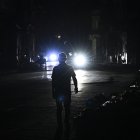
Today Cuba faces persistent inflation, power outages that affect much of the country for hours at a time, chronic shortages of food and medicine, a near-total collapse of transportation, the rapid deterioration of public services, and historic emigration.
Paradoxically, the economic deterioration has not led to a commensurate mobilization. The reason seems to lie elsewhere.
First explanation: Repression shifted from being reactive to preventive
Perhaps the most significant change since 2021 is that the regime learned from that experience.
Various reports maintain that the security apparatus evolved from responding to protests to preventing them from occurring in the first place through digital surveillance, territorial monitoring, early identification of activists and the preemptive prosecution of any attempt at organization.
In other words, in 2021 the regime reacted. In 2026, it is trying to prevent protests from even emerging.
Surveillance of social media, preventive arrests and the rapid intervention of security forces have significantly reduced the capacity for spontaneous coordination.
Second explanation: Fear became a political tool
After July 11, hundreds of legal proceedings were filed.
There were thousands of arrests, with sentences of up to 20 and 30 years for some protesters. That message had a clear psychological effect. It was not merely about punishing those who participated. It was a warning directed at the rest of society.
Various human rights organizations believe that the imprisonment of protesters continues to be one of the main mechanisms of political deterrence.
Third explanation: Emigration changed the social landscape
Another element repeatedly cited in numerous analyses is the enormous impact of emigration.
More than 1 million Cubans left the country in just a few years, profoundly altering the social composition of the nation. Among those who emigrated were young people, professionals, entrepreneurs and sectors of society that had historically been the most discontented.
Politically speaking, many citizens replaced the option of confronting the system with the possibility of leaving the country. The discontent did not disappear. The escape route changed.
Fourth explanation: Survival consumes all one’s energy
There is also a less visible phenomenon.
In many Cuban households, the daily priority is no longer politics. The priority has shifted to obtaining food, cooking during the hours when electricity is available, finding transportation or securing medication.
When survival takes up most of one’s time, the capacity to organize collective action diminishes. This does not mean acceptance. It means exhaustion.
Fifth explanation: The problem of coordination
July 11 came as a surprise because it was essentially spontaneous. There was no single leader, nor was there a national organization. It was precisely that spontaneity that allowed for its initial spread. But it also facilitated its subsequent fragmentation.
Since then, any attempt at coordination has faced greater technological, police and judicial obstacles, reducing the possibilities of synchronizing simultaneous protests on a national scale.

World
Warning issued over surge in drug use in Cuba: Over 200% increase in last five years
Diane Hernández
Does this mean that the discontent has disappeared?
Probably not.
Virtually all independent analyses agree on distinguishing between two different concepts: the absence of protests and the absence of discontent. They are not the same thing.
The lack of mass mobilizations does not necessarily imply support for the political system. It may simply reflect that the costs of protesting have increased considerably.
The Cuban paradox
Five years after July 11, Cuba is facing a paradox that is hard to ignore. Material conditions are worse than they were in 2021. But the political conditions for a nationwide protest are much more difficult.
As the economic crisis deepens, the state apparatus’s mechanisms of control, surveillance and deterrence have also been strengthened, according to recent reports from international organizations and independent media.
Could another July 11 happen?
History shows that large-scale protests tend to arise when economic, social, emotional and political factors—which are impossible to calculate with precision—converge.
What does seem clear, according to much of the analysis consulted, is that the Castro regime has spent these past five years working precisely to reduce that possibility through a more sophisticated and preemptive system of control.
Five years after July 11, the silence in the streets cannot automatically be interpreted as stability.
Rather, it may be the result of a complex combination of repression, fear, economic hardship, mass emigration and social fragmentation. Discontent has not necessarily disappeared.
The difference is that today, expressing it publicly comes at a much higher cost than it did in 2021. And that may be precisely the main lesson left by July 11 for both the public and the regime led by Miguel Díaz-Canel.
LATEST