Vance on Iran: 'We laid a very good foundation for a successful final deal'
Last week, Tehran and Washington signed a memorandum of understanding that lays the groundwork for negotiations, following nearly 40 days of fighting that were followed by an unstable and often-violated ceasefire.
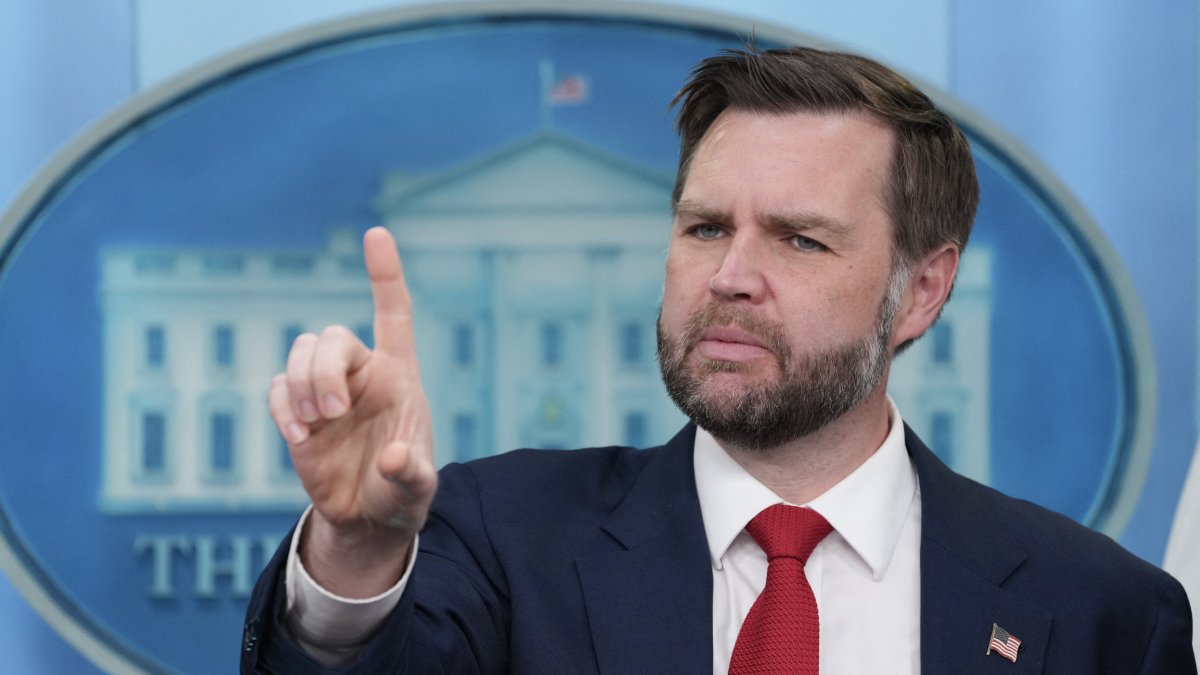
Vice President Vance

The United States temporarily suspended sanctions on Iranian oil on Monday after Vice President J.D. Vance said Iran would allow U.N. nuclear inspectors to return to the country, following talks held in Switzerland.
Last week, Tehran and Washington signed a memorandum of understanding that lays the groundwork for negotiations, following nearly 40 days of fighting that was followed by an unstable and often-violated ceasefire.
According to officials, the groundwork had been laid for 60 days of technical talks—to be held again in Switzerland—aimed at reaching a long-term solution.
"We laid a very good foundation for a successful final deal," Vance told reporters at Switzerland's luxury Bürgenstock resort, adding that "The final deal is the house. ... We set the foundation. We haven't built the house, but we've laid a successful foundation to get to a good place for the American people."
Meanwhile, the U.S. Department of the Treasury announced the temporary lifting of sanctions against Iran to allow the Islamic Republic to produce, sell and distribute crude oil and related products through Aug. 21.
U.S. Treasury Secretary Scott Bessent cited Tehran’s commitment, in the ongoing negotiations, to allow “free and open transit” through the Strait of Hormuz and to allow inspectors from the International Atomic Energy Agency (IAEA) to enter the country as the reason for suspending the sanctions.
The negotiators aim to address some of the most complex issues that have strained relations between the United States and Iran for decades, including Tehran’s nuclear program.
Iranian Foreign Ministry spokesman Esmail Baghaei stated on Monday that “a brief discussion took place on the nuclear issue, but no details were addressed” and that nuclear talks had not yet begun.

Just The News
Homeland boss says Iran tried to sneak IRGC-tied operatives into U.S. with World Cup soccer team
John Solomon
Vance, meanwhile, said Tehran had agreed to invite IAEA inspectors "back to their country," calling it "a major milestone ... and the first step in permanently denuclearizing" Iran.
Tehran suspended some of its cooperation and prevented the agency’s inspectors from accessing key nuclear facilities bombed by the United States and Israel during the 12-day war in 2025, but inspectors continued to visit Iran, most recently in November.
Iran had not yet commented on Vance’s statement on Monday.
As part of the agreement, Tehran will receive some relief from sanctions imposed by Washington, as well as the unfreezing of its assets.
Vance insisted that the assets had not yet been unfrozen and that, if they were, they would be used to purchase U.S. products such as soybeans and not to fund terrorism.
He described it as “a classic Trump deal, where if Iranian assets are ever unfrozen, they’re going to go to make American farmers richer and to feed the Iranian people.”
Shortly thereafter, the United States announced that it was lifting sanctions on sales of Iranian oil until Aug. 21.
In the weeks and days leading up to the talks between the United States and Iran, the war in Lebanon between Israel and Hezbollah, a close ally of Iran, threatened to derail the ceasefire, although the country has remained relatively calm since Sunday.
Israeli leaders have expressed deep doubts about the agreement signed last week and have insisted that their troops will continue to occupy southern Lebanon and are free to respond to any threat in that area.
Meanwhile, Tehran and Washington have established lines of communication to end the fighting in Lebanon and keep the vital Strait of Hormuz open, according to mediators.
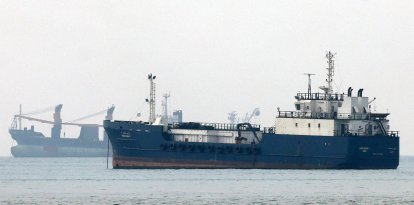
Iran closed the strait—through which much of the world’s oil and gas passes in peacetime—at the start of the war, causing economic repercussions around the world.
Before the conflict began, there was free international passage through the strait, but Tehran appears interested in deriving economic benefit from this sea route as part of any agreement.
Tracking data from Monday showed that ships were still passing through the strait, even though Iran had said on Saturday that it had closed it again due to Israeli attacks in Lebanon.
Details of last week's deal and what was agreed on Sunday remain scarce, but mediators Pakistan and Qatar said the negotiators reached agreement on a "roadmap towards reaching a final deal within 60 days," with technical talks to continue for the rest of the week at the Swiss resort.
"Encouraging progress has been made," they said, including a contact channel set up to "avoid incidents and miscommunication" in the Strait of Hormuz.
An agreement has also been reached to create a “de-escalation cell” between the parties and the Lebanese authorities to prevent fighting from breaking out again.
Iran's Foreign Minister Abbas Araghchi, meanwhile, posted on social media: "Oil and petrochem exports are waived, blockade lifted, some frozen assets released, and major reconstruction & development plan launched for Iran."
Rubio to travel to Persian Gulf amid talks with Iran
On his first trip to the region since the United States and Israel launched the war on Feb. 28, Rubio will visit the United Arab Emirates, Kuwait and Bahrain, according to a statement by State Department spokesperson Tommy Pigott. The trip is scheduled to end on Thursday.
Rubio will discuss "the memorandum of understanding with Iran, efforts to secure full and free safe transit through the Strait of Hormuz, and the importance of peace and stability in the region," the statement said.
LATEST