Trump signs two executive orders to restrict birthright citizenship and combat birth tourism
The White House maintains that the new orders are in line with the Supreme Court's recent ruling and aim to close legal loopholes in immigration law.
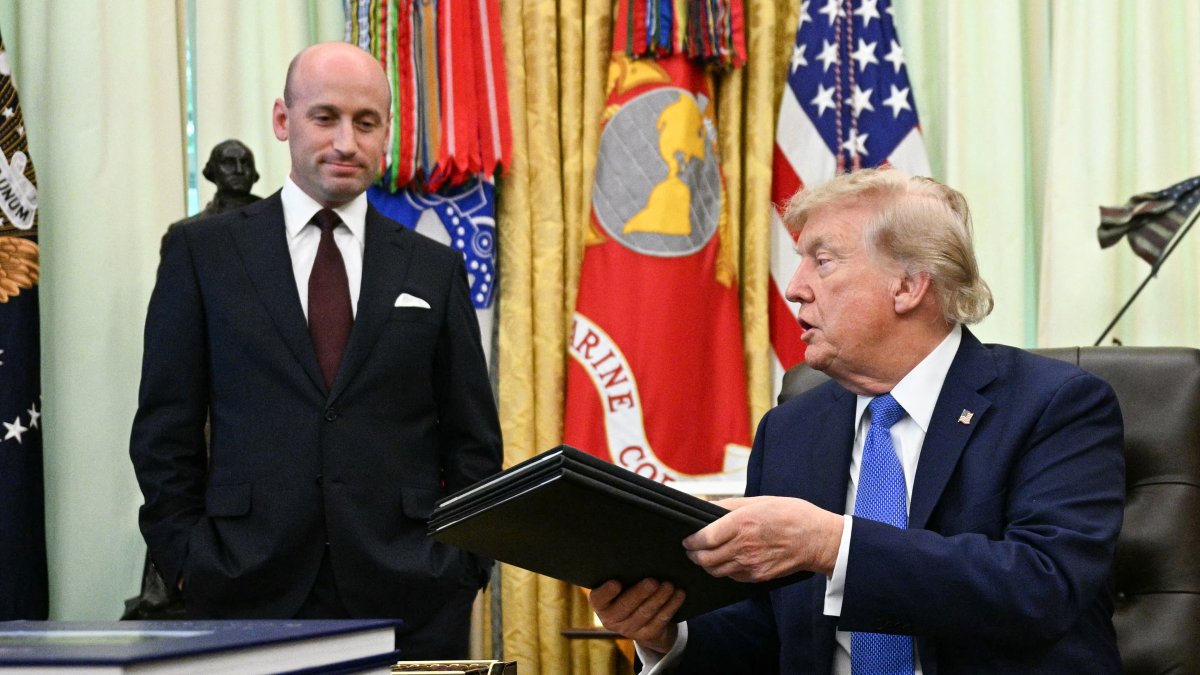
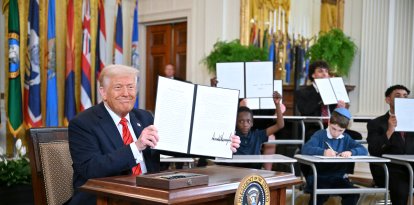
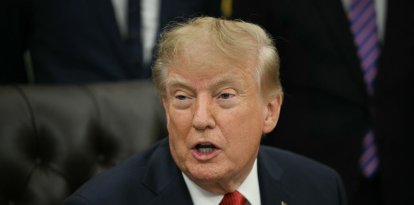
Donald Trump in the Oval Office / Jim Watson

Donald Trump signed two executive orders seeking to restrict access to birthright citizenship and to crack down on so-called "birth tourism," the practice whereby foreigners travel to the United States with the primary goal of having their children born in the country and obtain U.S. citizenship.
In June, the Supreme Court ruled that children born in the United States to parents who are in the country illegally or temporarily are subject to U.S. jurisdiction and, therefore, are U.S. citizens from birth. In doing so, it upheld the traditional interpretation of the Citizenship Clause of the 14th Amendment, according to which children born in the United States to parents who are in the country illegally or temporarily are U.S. citizens from birth.
The case Trump v. Barbara centered on the constitutionality of Executive Order 14160, signed by the president on Jan. 20, 2025. The measure sought to deny automatic citizenship to the children of undocumented immigrants and foreign nationals with temporary status who were born on U.S. soil. The ruling was 6-3, with Chief Justice John Roberts writing the majority opinion.
Society
‘Worst of the Worst’: DHS identifies 5,000 illegal immigrants with criminal records
Diane Hernández
What do Trump's new executive orders say?
In this context, the president signed two new executive orders that seek to restrict birthright citizenship in certain specific cases.
The first broadens the definition of who would not be eligible for automatic citizenship, including "alien enemies of the United States, members of foreign terrorist organizations and large categories of people who lobby and act on behalf of foreign governments."
In turn, the second directive instructs the State Department and the Department of Homeland Security (DHS) to strengthen controls on "birth tourism," including a stricter review of visa applications and measures to combat the networks that organize this type of travel.
The White House did not provide more details on the implementation of the executive orders.
"We had a very unfortunate decision in the Supreme Court concerning birthright. It was close, but a very, very unfortunate decision. So we’re making adjustments because it’s very unfair," Trump said.
"What’s happening now are people are building businesses around it; wealthy people are building businesses around birthright citizenship. That’s not the way it’s supposed to work. It’s a disgrace. They’re buying their way in and we’re not going to let that happen," he added regarding birth tourism.
The president signed the documents from the Oval Office, where he was accompanied by Stephen Miller, deputy chief of staff for political affairs, who added the following: "It ensures that large numbers of people who wrongly would be getting birthright citizenship will no longer be eligible for those benefits."
LATEST