Elections in Colombia: Conservative Abelardo de la Espriella defeats leftist candidate Petro, who suggests he does not recognize the results
During the campaign, the conservative lawyer enjoyed the “Complete and Total Endorsement” of President Donald Trump, who described him as an “intelligent, strong, and tough leader” in contrast to Iván Cepeda, the “radical leftist Marxist.”
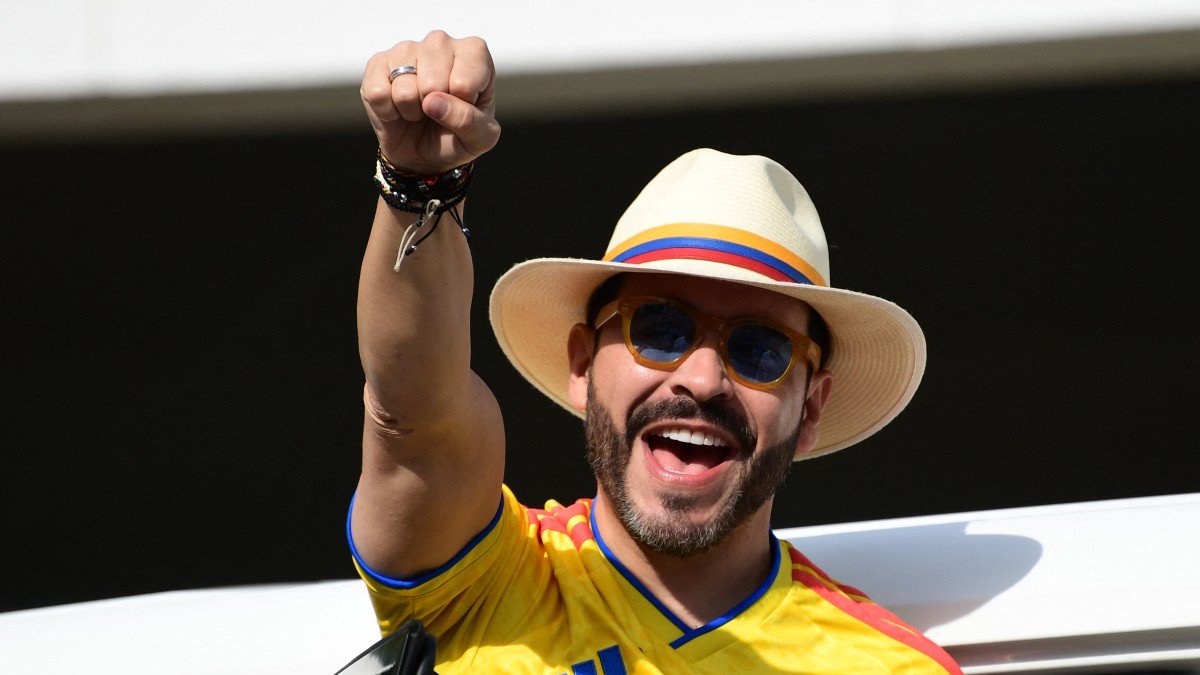
Abelardo de la Espriella raises his fist at a polling station during the runoff election

With 99.74% of polling stations reported in the preliminary election count, Conservative candidate Abelardo de la Espriella defeated far-left candidate Iván Cepeda in Colombia by a margin of about 246,000 votes, 49.65%, with 12,931,544 votes, compared to 48.70% and 12,684,994 votes, thus becoming Colombia’s new president pending the final tally.
Amid the quick count process, the leftist president and former guerrilla Gustavo Petro refused to acknowledge the results, arguing that verification by the judges is still pending, even though, historically in Colombia, one of the defeated candidates has acknowledged their opponent’s victory on the night of the preliminary count.
"Based on the same data from the electoral registry, the preliminary count at this time stands at 49.3 for Abelardo and 49 for Cepeda. Neither can be declared president. It is the official vote count that determines who the president is. I will abide by the judges’ decision. Please, let the public remain calm. The reality is a country split down the middle, with foreign interference robbing us of our freedom. A national agreement is essential if we want to preserve our homeland and peace in the years to come,” Petro posted after the trend against his candidate became irreversible.
After being congratulated by allies and world leaders, De la Espriella himself celebrated the result on social media, calling on his supporters to join a "Caravan of Hope" in Barranquilla. "Nearly 13 million Colombians placed their trust in José Manuel Restrepo, in the Tiger, and in this great dream called Patria Milagro," the conservative candidate wrote, maintaining that "today a new chapter begins for our country, one built on the free and democratic will of millions of citizens."
"With God's help and the work of all Colombians, the Patria Milagro will become a reality," he declared.

Cepeda, for his part, took a middle-ground position: he acknowledged the preliminary figure but announced challenges. "We recognize the preconteo as data that is still neither official nor binding. We recognize its first result, but we must report that our group of witnesses is moving to challenge 33,000 polling tables across the country," said the Pacto Histórico senator.
From Washington, Secretary of State Marco Rubio congratulated De la Espriella as president-elect: "Just spoke to Colombian President-Elect @ABDELAESPRIELLA to congratulate him on his electoral victory. The Trump Administration looks forward to working closely with your incoming administration to advance regional security cooperation, end illegal immigration to the United States, and strengthen our economic ties. Colombia's best days are ahead."
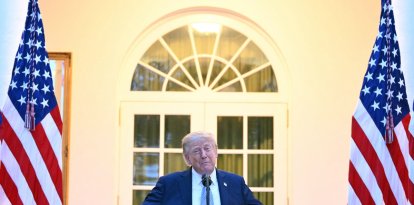
Then, President Donald Trump congratulated the candidate he had backed with a post on Truth Social: "He Won, BIG!"
For now, De la Espriella had not yet commented, but on the streets of major Colombian cities, such as Bogotá and Medellín, his supporters were already celebrating the victory of “El Tigre,” the nickname adopted by the conservative candidate during the campaign.
The victory was celebrated by the former president Álvaro Uribe, one of the conservative candidate’s main supporters in the runoff, who also leveled harsh accusations against the ruling party’s campaign. "Dr. Abelardo de la Espriella and Dr. José Manuel Restrepo defeated Iván Cepeda, who had the support of the illegal campaign by Gustavo Petro’s government, vote-buying, and the coercion of narco-terrorist groups that forced many communities to vote for Cepeda. We are confident that Dr. De la Espriella will lead a government dedicated to democratic recovery, one that will benefit all Colombians. We cannot allow any more tricks from Petro-Chavism,” the former president wrote on his X account.
The result caps a campaign in which De la Espriella received President Donald Trump's endorsement. In a message posted on his Truth Social platform in early June, the U.S. president gave him his “Complete and Total Endorsement,” described him as an “intelligent, strong, and tough leader,” and labeled Cepeda a “radical left-wing Marxist.” "The results of this election are very important for the future of Colombia and its relationship with the United States," wrote Trump, who maintained that, should the conservative lawyer win, the South American country would have "all the support and strength" of Washington.
The Colombian electoral system, one of the most accurate in the world, consists of two clearly distinct phases. The first is the preliminary count—also known as a quick count—which begins as soon as the polls close at 4:00 p.m. Poll workers at each polling station count the votes, complete the official records, and the National Civil Registry consolidates and releases the results in successive bulletins. This report reveals trends within hours, but it is preliminary and informative in nature and has no binding force.
The second phase is the vote tabulation, the official and final count. It begins the following day and is carried out by the vote-tallying commissions—composed of judges and delegates—who review the E-14 forms one by one, resolve complaints and challenges, and validate the polling stations under observation. The National Electoral Council (CNE) ultimately certifies the result and proclaims the president-elect. In practice, the preliminary count and the vote tally usually match within 99%, although only the latter legally determines who occupies the Casa de Nariño.
This is a developing story.
LATEST