OECD oil reserves fall to lowest level since 1990 after Middle East crisis
The International Energy Agency warns that crude oil stocks in the most developed economies have reached their lowest level in 36 years, following the massive release of strategic reserves to address the impact of the conflict in the Persian Gulf.

"Oil Prices" on financial market charts (Archive)

Oil reserves in member countries of the Organization for Economic Cooperation and Development (OECD) fell in May to their lowest level since 1990, the International Energy Agency (IEA) reported Wednesday, signaling the profound pressure that the recent crisis in the Middle East has exerted on the global energy market.
According to the agency’s monthly report cited by AFP, oil inventories in the major industrialized economies have fallen by 163 million barrels since the start of the conflict that disrupted the global crude oil supply and caused sharp volatility in international prices.
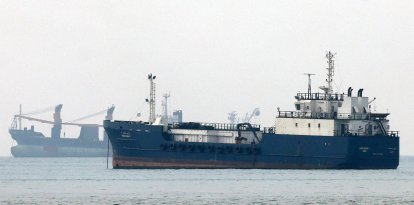
The decline comes after months of intensive use of strategic reserves to offset the impact of the blockade on oil shipments through the Strait of Hormuz, one of the world’s most important energy routes.
"Despite the significant reduction in demand for crude oil and refined products, system reserves continue to decline at a record pace," the IEA noted.
Historic release of reserves
Faced with the surge in oil prices caused by supply disruptions, the IEA coordinated an extraordinary release of 400 million barrels of emergency reserves to stabilize international markets.
As of June 12, 252 million barrels had already been injected into the market, making it one of the largest coordinated interventions in recent history to contain an energy crisis.
However, the agency expects the pace of reserve releases to slow during June and July, especially following this week’s announcement of an agreement to end the war that began on February 28 following U.S. and Israeli attacks on Iran.

High prices hit demand
Although the prospect of a reduction in geopolitical tensions could gradually ease pressure on the market, the IEA warned that the economic impact of high oil prices will continue to affect global consumption for the rest of the year.
The agency estimates that global demand for crude oil will decline by 1.1 million barrels per day compared to 2025 levels, reflecting a slowdown in economic activity and reduced fuel needs across various industrial sectors.
Recovery expected in 2027
Despite the current complex outlook, the agency maintains a more optimistic view in the medium term. According to its projections, growth in energy demand could rebound to reach 2 million barrels per day in 2027, driven by the normalization of international trade flows, a potential reduction in oil prices, and an improvement in global economic conditions.
The report emphasizes that, although energy markets are showing signs of stabilization after months of uncertainty, strategic reserves remain under pressure and continue to be a key factor in ensuring the energy security of the world’s major economies.
The drop in inventories to more than three-decade lows reflects the magnitude of the impact that geopolitical conflicts continue to have on the global energy supply and highlights the vulnerability of markets to disruptions in regions critical to oil production and distribution.
IEA lowers its forecast for global oil demand in 2026
Although the recent agreement between the United States and Iran to end the conflict and reopen the strategic Strait of Hormuz could facilitate the recovery of oil exports from the Middle East, the agency believes that significant operational and political challenges remain. However, for 2027, it forecasts a moderate recovery in demand and a sharp increase in global supply, which could ease pressure on the markets and allow for the rebuilding of strategic reserves.
LATEST