Venezuela takes the first step to dismantle Hugo Chávez's electricity monopoly and open up to private investment
Under the new framework, mixed alliances will operate for a 25-year term, renewable for up to 15 additional years.
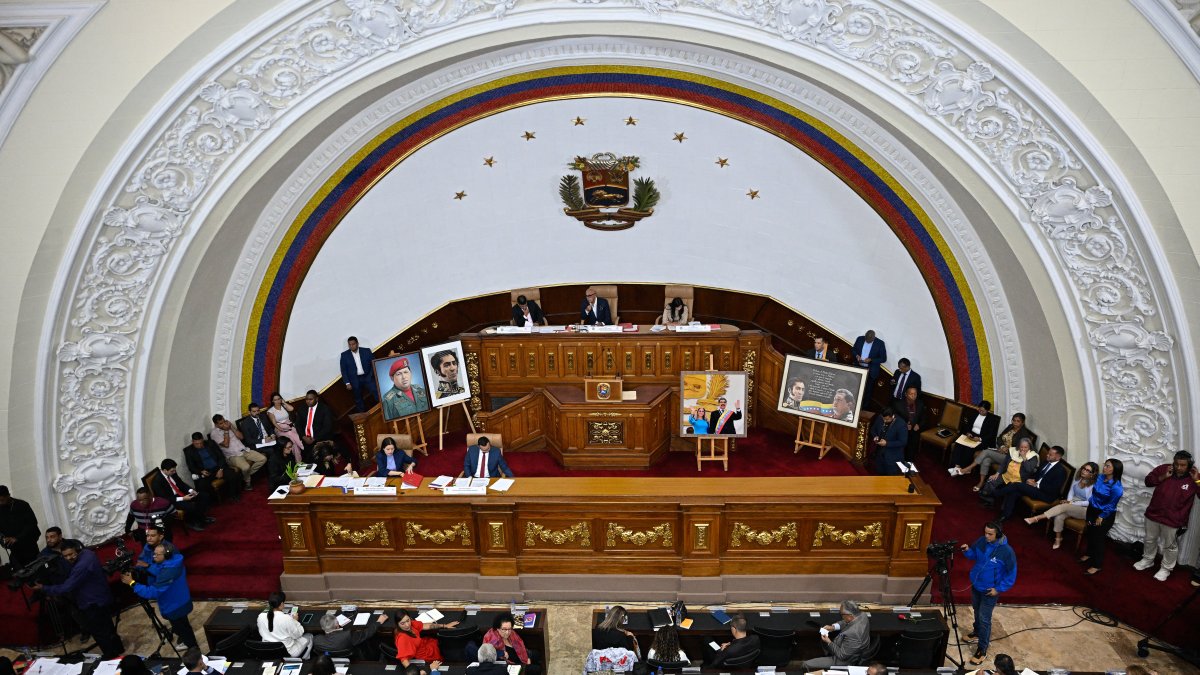
The chamber of the Venezuelan National Assembly.

The model of absolute control over public services in Venezuela has begun its legal retreat due to the collapse of its own infrastructure.
This Tuesday, the National Assembly voted initial approval to a legislative reform proposal designed to open the electricity sector to private investment. The measure contemplates the creation of joint ventures and commercial concessions, marking the first step to reverse nearly two decades of state centralization that buried the country's energy reliability.
The legal initiative represents the most recent effort of the interim regime of Delcy Rodriguez to reconfigure the national economy by attracting private and foreign capital.
This shift toward economic openness, which has already touched the hydrocarbons and mining regulations, has the explicit support of President Donald Trump's administration.
Washington has pointed out that these regulatory changes will serve as an engine to reactivate commercial activity for the mutual benefit of U.S. corporations and the Venezuelan civilian population.
Dismantling the legacy of Chavista nationalizations
The bill, which comprises 42 articles, received unanimous support from parliamentarians during its first formal debate. The text proposes a radical change with respect to the expropriation policy initiated in 2007 by the late President Hugo Chávez, which was consolidated in 2010 with a law that reserved exclusively to the State the tasks of generation, transmission, distribution and commercialization of energy.
The new legislation establishes a diversified model in which the development of the electricity system may be carried out by both public institutions and entirely private firms, companies with minority state participation and mixed-capital corporations in which the State retains a 50% majority.
However, political control is not entirely dissolved: "The establishment of any joint venture and the terms of its concessions will require the approval of the President of the Republic," as detailed in the memorandum approved in the plenary session.
Under this scheme, the joint ventures will operate for a 25-year term, extendable by up to 15 additional years.
Real tariffs in the face of collapsing services
The urgency of this reform lies in the profound systemic crisis plaguing Venezuela's electrical grid, stemming from chronic underinvestment and neglect. Vast regions of the country suffer daily blackouts lasting several hours, which disrupt essential telecommunications and potable water services.
This operational instability kept potential investors on tenterhooks, fearful of moving forward with productive projects without the guarantee of a reliable energy flow.
To remedy the distortions caused by traditional state subsidies, the law stipulates the establishment of new tariffs that reflect the real costs of providing the service, allowing operators to obtain a reasonable return on their investments.
Although stabilization of the power grid presumably figures among the main priorities of the Rodriguez regime, the state's financial channels remain limited by a lack of liquidity, which has prevented it from guaranteeing punctual payments to technical suppliers that could accelerate the system's recovery, industry sources have reported to Reuters.
After passing this first parliamentary filter, the National Assembly will have to open a formal period of citizen consultations and a second debate in plenary before proceeding with the final ratification and enactment of the reform.

World
The Venezuelan regime cedes control of its revenues and orders airlines to transfer fuel payments to the US Treasury
Andrés Ignacio Henríquez


LATEST