ANALYSIS
Canada: Carney calls Alberta separatism 'dangerous' as historical discontent grows in the province
Carney compares Alberta's potential independence to Brexit. The province, tired of Ottawa's interventionism, moves forward with its separatist consultation backed by a record 30% support.

Canada's prime minister, Mark Carney

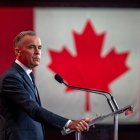
The prime minister of Canada, Mark Carney, on Monday compared the efforts of Alberta to seek greater autonomy, and even possible independence, to Brexit, calling it "dangerous" and suggesting Albertans would not understand the consequences of their decision.
Carney, who was governor of the Bank of England during Brexit, did not hesitate to recall his "experience" to criticize the Albertan independence movement. According to the prime minister, many Britons voted thinking the process would be straightforward. However, Carney said, "They're still, ten years later, trying to undo what people didn't think they were voting for, but what they ended up having."
The leader of the Liberal Party said he has already launched a "campaigning for Canadian unity" in which he proposes "cooperative federalism with Alberta, with Quebec, with all provinces and territories in the country, with Indigenous peoples as well."
However, the independence supporters denounce the excessive interference of Ottawa in the control of its energy resources, as well as the systematic blocking of investments motivated by environmental regulations.
Alberta prepares an independence referendum
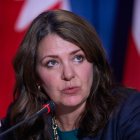
Alberta's prime minister, Conservative Danielle Smith, announced last May 21 the call for a referendum that could open the door to a legal process towards independence for the province, with Canada's main oil producer having generated more than 80% of the national crude oil in 2024.
Society
Jordan Peterson's 'painful' neurological illness reveals silent toll of psychiatric drugs
Carlos Dominguez
Although the courts invalidated a citizen petition that gathered more than 300,000 signatures, Smith considers that this does not prevent him from organizing the consultation before the end of the year. According to the prime minister, even in case of victory, the referendum would only represent the first stage of an eventual road to secession.
Polls show that about 30% of Alberta's five million people support independence, the highest figure ever recorded.
Danielle Smith charges against Trudeau and the Liberals
Last year, Danielle Smith stated: "For the last 10 years, successive Liberal governments in Ottawa, supported by their new Democrat allies, have unleashed a tidal wave of laws, policies, and political attacks aimed directly at Alberta's free economy, and in effect against the future and livelihoods of our people."
World
Carney strengthens his hold on Canada: Liberals win parliamentary majority after special elections and a wave of defections
Emmanuel Alejandro Rondón
"They have blocked new pipelines with [bill] C-69, cancelled multiple oil and gas projects, and banned the very tanker ships needed to carry those resources to new markets," she added.
For the prime minister, "the vast majority of these individuals are not fringe voices to be marginalized or vilified. They are loyal Albertans. They are, quite literally, our friends and neighbors who’ve just had enough of having their livelihoods and prosperity attacked by a hostile federal government"
Alberta, an underappreciated province
In the 1980s, the policy of then-prime minister, Pierre Trudeau, was one of "control." In October of that year, the National Energy Program (NEP) was implemented, which served him well in intensifying the struggle for natural resources between the east and west of the country. For Albertans, Trudeau's actions were nothing more than an attempt to redistribute the wealth generated in Alberta.
The western provinces saw in this program a strategy of the federal government to keep energy prices low, to the benefit of the eastern provinces.
Another program that hit Albertans very hard was the Petroleum Incentives Program (PIP), which paid up to 80% of exploration expenditures to Canadian-owned companies, which worked in the north and overseas territories, thus diverting oil exploration away from Alberta.
In the 1980s, Pierre Trudeau's Liberals branded Albertans as un-Canadian, while much of this province's money circulated in the eastern provinces, most of them engaged in the production of goods and services.
LATEST