UN and European leaders ignore Iranian attacks and threats, while pointing to Israel as a possible cause of the truce's breakdown
"The ongoing military activity in Lebanon presents a serious risk to the ceasefire and efforts to achieve a lasting and comprehensive peace in the region. The Secretary-General reaffirms his call on all parties to immediately cease hostilities," said the UN chief's spokesman.
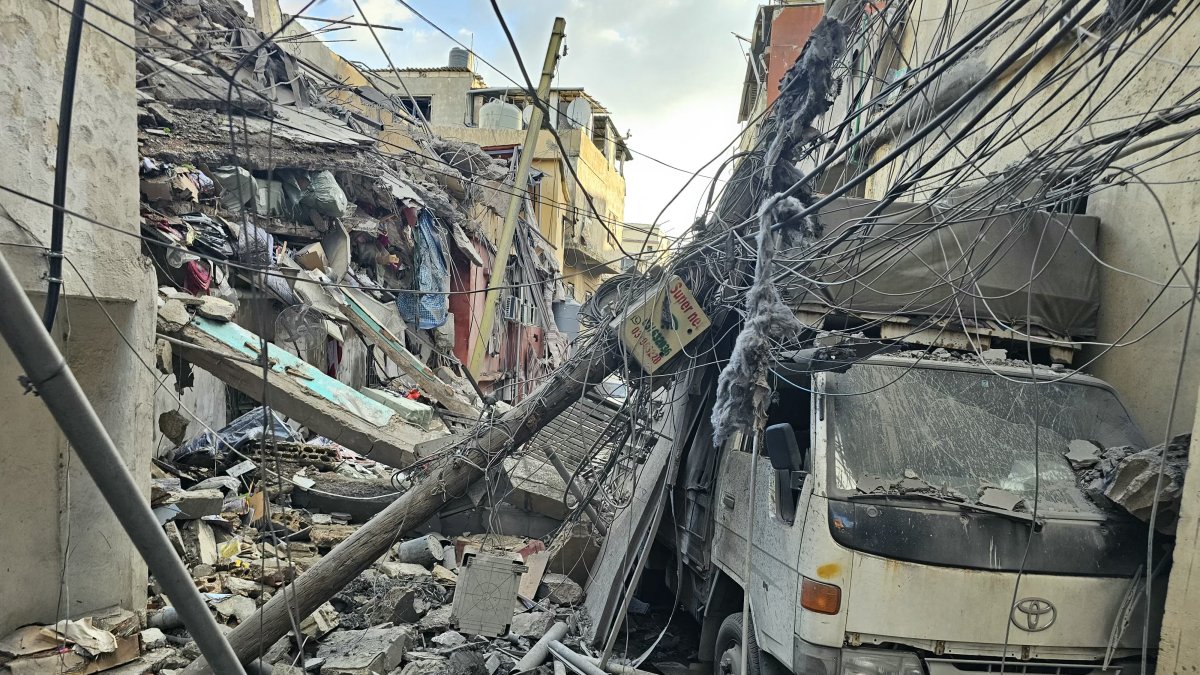
Lebanon

The UN secretary-general, António Guterres, warned Wednesday that Israeli military activity in Lebanon puts at "grave risk" the fragile truce between Iran and the United States. The information was released by his spokesman in a statement.
"The ongoing military activity in Lebanon presents a serious risk to the ceasefire and efforts to achieve a lasting and comprehensive peace in the region. The secretary-general reaffirms his call on all parties to cease hostilities immediately," the UN chief's spokesman said.
Similar was the message from several European leaders. The French foreign minister was among those who condemned the Israeli attacks on Lebanon, calling them "unacceptable" and warning that they could undermine the fragile U.S.-Iran cease-fire.

World
JD Vance warns Iran regime could suffer "serious consequences" if it breaks ceasefire
Luis Francisco Orozco
"These attacks are even more unacceptable because they undermine the temporary ceasefire reached yesterday between the United States and Iran," Jean-Noel Barrot told France Inter radio, a day after Lebanon said Israeli strikes had killed at least 182 people and wounded 890 others.
French President Emmanuel Macron said he also urged his U.S. and Iranian counterparts, Donald Trump and Masud Pezeshkian, to include Lebanon in the cease-fire reached with Iran.
"I expressed my hope that the ceasefire will be fully respected by each of the belligerents, across all theaters of confrontation, including in Lebanon," Macron wrote on X after speaking with both leaders.
According to the French leader, this is a "necessary condition for the ceasefire to be credible and lasting."
">Je me suis entretenu aujourd’hui avec le Président iranien Massoud Pezeshkian, ainsi qu’avec le Président américain Donald Trump.
— Emmanuel Macron (@EmmanuelMacron) April 8, 2026
À tous deux, j’ai indiqué que leur décision d’accepter un cessez-le-feu était la meilleure possible.
J’ai exprimé mon espoir…
Meanwhile, the British foreign secretary said Thursday that the United Kingdom "fervently" wanted Lebanon to be included in the Middle East cease-fire, coinciding with Prime Minister Keir Starmer's arrival in the United Arab Emirates (UAE).
"We do want to see the ceasefire extended to Lebanon. I'm deeply troubled about the escalating attacks that we saw from Israel in Lebanon yesterday," Yvette Cooper told Sky News.
"We've seen the humanitarian consequences, the huge mass displacement of people in Lebanon. So we do strongly want to see the ceasefire extended to Lebanon," she said.
"Finger on the trigger"
For its part, Israel assured that its fight against Hezbollah was not part of the U.S.-Iran truce agreed late Tuesday, an argument reiterated by U.S. Vice President JD Vance, who will lead talks with Tehran in Pakistan over the weekend.
Meanwhile, the UN and European countries ignore the threats and attacks carried out by Iran. The Revolutionary Guards made it clear Wednesday that they are keeping "their finger on the trigger" and have "no confidence" in Washington's promises.
Truce under threat
Washington and Tehran had hailed as a victory the two-week cease-fire agreement and negotiations to end this war that has left thousands dead in the Middle East and unleashed global economic turbulence.
However, President Donald Trump announced Wednesday night that U.S. military forces will remain in position in, and near, Iran, until such time as the actual agreement reached is fully complied with.
LATEST