US-Iran ceasefire begins with doubts as Israel strikes Lebanon
Israeli strikes concentrated on positions linked to the Hezbollah terrorist group.
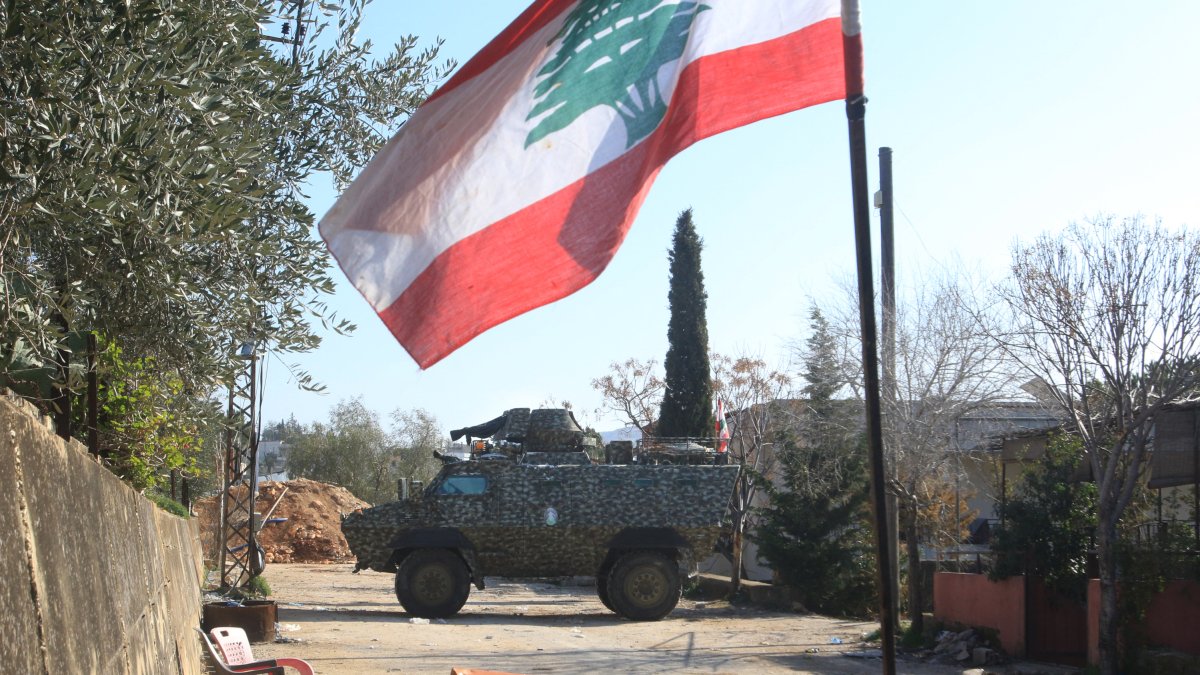
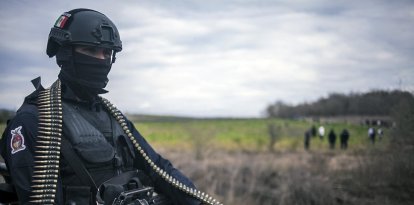
Military vehicle in Lebanon

The truce reached between Donald Trump and the Iranian regime barely lasted a few hours without being tested. As Washington attempts to sustain a two-week ceasefire, Israel launched one of its most intense offensives to date against targets in Lebanon this Wednesday, escalating tensions across the entire region.
According to reports from The Hill and The New York Times, the Israeli strikes concentrated on positions linked to Hezbollah, the Tehran-backed terrorist group, in what is already considered one of the deadliest days of the conflict.
Massive bombings in Beirut and other areas
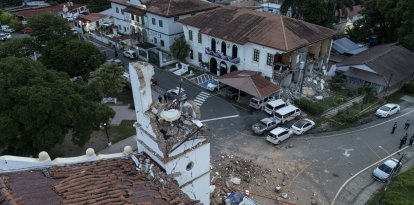
The offensive included more than a hundred airstrikes in a matter of minutes, hitting both the capital, Beirut, and other regions of the country. Lebanese authorities reported hundreds of casualties, while rescue teams continued to search for survivors in the rubble.
In parallel, estimates quoted by international media suggest that the conflict has caused more than 1,500 deaths in Lebanese territory since it began this year.

World
JD Vance warns Iran regime could suffer "serious consequences" if it breaks ceasefire
Luis Francisco Orozco

Lebanon, outside the ceasefire agreement
One of the main sticking points is Lebanon's exclusion from the agreement between Washington and Tehran. While international mediators had suggested that the cessation of hostilities would include that front, both the United States and Israel have insisted that it is a separate conflict.
Trump called the situation in Lebanon a "distinct confrontation," making it clear that the truce does not cover Israeli operations against Hezbollah. This interpretation was backed by the White House, which denied today that the agreement included Lebanon.
From Iran, however, the reading is different. Regime officials have accused the United States of reneging on the initial terms, while warning that attacks in Lebanon could jeopardize the entire negotiation.
A truce under pressure
Military operations in Lebanon have thus become one of the main factors threatening the stability of the agreement. Vice President JD Vance acknowledged that it is a "fragile truce," marked by misunderstandings and tensions on multiple fronts.
Conflicting versions on other elements of the conflict, such as the situation in the Strait of Hormuz, a key point for global energy trade, further complicate the situation.
In this context, analysts warn that the lack of clarity about the agreement's limits and the continuation of military operations in Lebanon could quickly destabilize the fragile balance achieved.
Meanwhile, on the ground, the Lebanese population faces a reality marked by uncertainty, displacement and fear of further escalation, in the midst of a conflict that could continue to expand beyond any truce.

Politics
Five keys to understanding Trump's two-week ceasefire with the Iranian regime
Carlos Dominguez
LATEST