ANALYSIS
Spain: Euthanasia finally carried out for young woman Noelia Castillo
The assisted death of a young paraplegic woman, upheld by the courts despite her family's opposition, casts a spotlight on the limits of the State and the protection of vulnerable individuals.

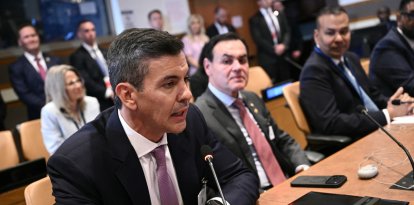
Members of the European Court of Human Rights (ECtHR) at a hearing.

The case of Noelia Castillo Ramos, a 25-year-old woman in Spain, has reignited the debate on euthanasia after a judicial process that authorized her assisted death, validated even by the European Court of Human Rights, despite her family's opposition. This Thursday, after 8 pm, her death by euthanasia was confirmed.
Before requesting it, Castillo was in a vulnerable situation marked by a history of violence and psychological distress. In 2022, the young woman was a victim of a sexual assault. Weeks later, in the midst of a strong psychological deterioration, she threw herself from the fifth floor in a suicide attempt that left her paraplegic and dependent. Eventually, she asked to avail herself of the Organic Law for the Regulation of Euthanasia, citing persistent suffering.
Her request was approved by the medical bodies in 2024, which found that she met the legal requirements.
A decision with family opposition
The case did not follow an ordinary path. Castillo's decision was challenged by her father, who initiated a legal battle to stop the procedure, supported by Christian Lawyers, who questioned the young woman's decision-making capacity and demanded psychological or psychiatric treatment.
The association warned that "currently she is not following any psychological or psychiatric treatment" and criticized that the law does not require previous attempts at treatment: "We are facing a very serious legal vacuum: suicide is offered without having tried to cure."
Despite this, the courts refused to halt the procedure, considering that the legal guarantees were met.

Society
The slippery slope of euthanasia: Deaths have soared in several countries in recent years
Carlos Dominguez
The role of the State
Although the authorities concluded that the decision was valid, family conflict and personal context have fueled doubts about whether these processes manage to completely rule out factors such as psychological suffering or lack of alternatives.
The debate moves to social media
The case of Noelia Castillo Ramos also generated a strong wave of criticism on social media, where users and some public figures questioned the outcome of the process.
Part of the most widespread messages reconstruct the young woman's story - including episodes of violence, the suicide attempt and paraplegia- to argue that euthanasia does not represent a solution, but the result of a chain of failures in her environment and in the institutional response.
Along these lines, several users claim that the State authorized the assisted death of a person in a vulnerable situation, instead of guaranteeing psychological, medical or social support.
Criticism has also been directed at human rights organizations, which some accuse of backing a system that, according to these viewpoints, prioritizes the legalization of this type of procedure, even in cases involving victims.
This approach has been echoed by international public figures, including the president of El Salvador, Nayib Bukele, who openly questioned the role of these organizations and linked the case to a broader critique of their performance.
LATEST