CIA arms Iran's Kurdish militias to encourage an uprising against the regime
According to CNN, officials within the U.S. government have been holding talks with Iranian opposition factions, as well as Iraq-based Kurdish leaders, about the possibility of providing military assistance.

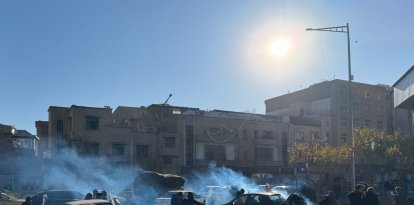
Protesters in Iran.
The CNN revealed Tuesday that the Central Intelligence Agency (CIA) is reportedly developing a plan by President Donald Trump to supply weapons to Kurdish fighters with the aim of provoking a popular uprising inside Iran and thus generate more pressure on the theocratic regime. The media outlet noted that, according to several people familiar with the internal deliberations, officials within the U.S. government have been holding talks with Iranian opposition factions, as well as Iraq-based Kurdish leaders, about the possibility of providing military assistance.
According to CNN, on the same day that Iran's Islamic Revolutionary Guard began launching attacks on positions following the assassination of Ayatollah Ali Khamenei by the United States and Israel, Trump held a telephone conversation with Mustafa Hijri, who is the leader of Iran's Kurdistan Democratic Party (KDPI). Such a decision would not appear to have been coincidental, taking into account that there are numerous armed Kurdish factions opposed to the Iranian regime, which maintain thousands of fighters positioned along the Iraq-Iran border, operating largely from the autonomous region of Iraqi Kurdistan.
Kurdish militias could execute a ground campaign in the coming days.
The network detailed that a senior Kurdish official assured them that the fighters would be preparing to execute a ground campaign in the west of the Persian country in the coming days. Although the person explained that they could have high probabilities of succeeding in their operation, he also pointed out that such militias would be expecting to count on the support not only of the Trump Administration, but also of the Israeli government.
According to Axios, the move to equip Iranian Kurdish factions would require the cooperation of Iraqi Kurdish authorities, as the weapons would likely have to transit their territory and use deployment areas in Iraqi Kurdistan. A source familiar with the strategy noted that planners envision Kurdish forces directly engaging Iranian security units, keeping them occupied and thus reducing the likelihood of unarmed civilians in major cities facing deadly crackdowns similar to those that occurred during the January unrest.
For his part, another Trump administration official suggested to CNN that Kurdish involvement could strain the Iranian regime's military capabilities by forcing it to divert resources on multiple fronts. Other proposals under consideration include whether Kurdish fighters could seize and hold territory in the northern Persian nation, potentially establishing a buffer zone that would benefit Israel.
LATEST