Rubio on Iran: ‘Complicated’ to negotiate with ‘radical Shia clerics’
Israel’s Ambassador to the U.N. Danny Danon said Jerusalem and Washington are “coordinated 100%” should war break out with Iran.
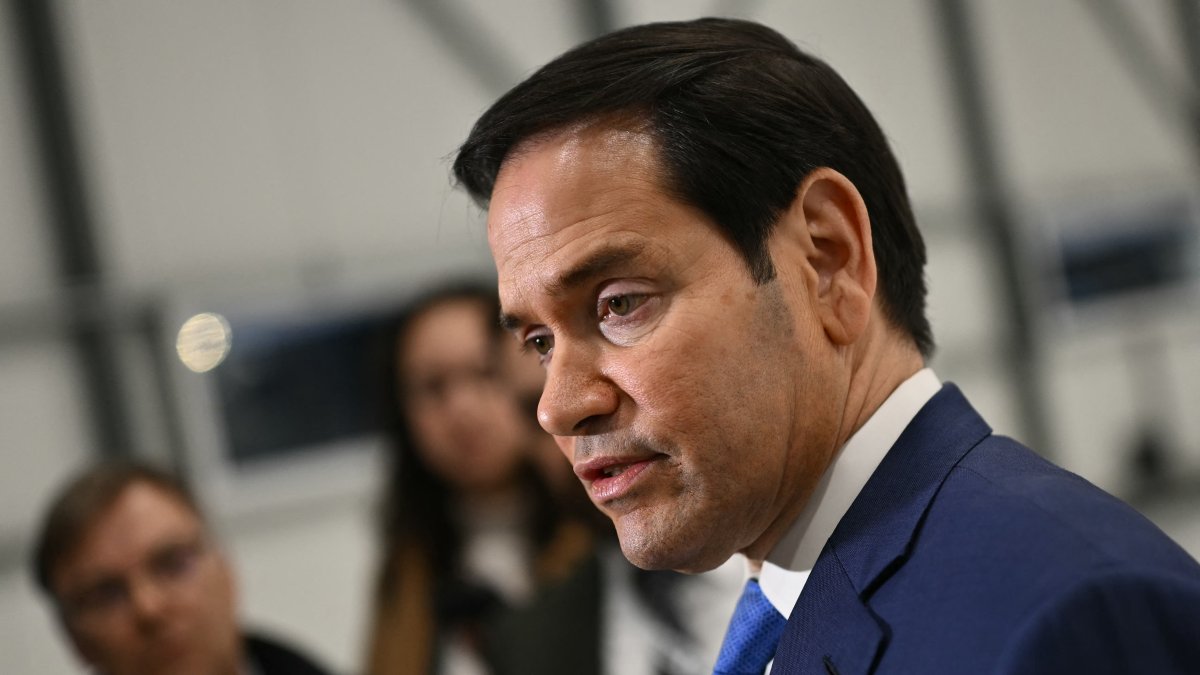
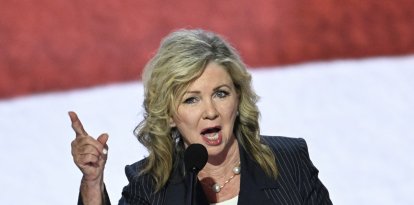
U.S. Secretary of State Marco Rubio / Mandel Ngan

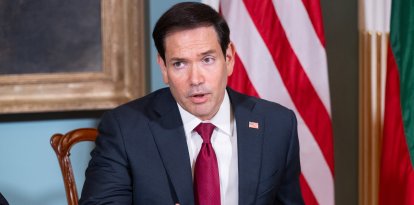
U.S. Secretary of State Marco Rubio stressed on Sunday the challenge in negotiating with the Islamic Republic of Iran due to the “pure theology” that drives its decision-making.
“We’re dealing with radical Shia clerics and people who make geopolitical decisions on the basis of pure theology,” Rubio told reporters at the annual Munich Security Conference in Germany.
“It’s a complicated thing. No one’s ever been able to do a successful deal with Iran, but we’re going to try,” he went on to say.
Referencing the constitutional requirement for the presidency to wage war with congressional approval, Rubio stated that, “We’ll always comply with the applicable laws of the United States in terms of involving Congress in any decision—but right now we’re not talking about any of that.
“We are postured in the region for one simple reason… we understand that there could be threats to our forces in the region; we’ve seen them threatened in the past, and we want to make sure that we have sufficient capacity to defend them, if God forbid that were to happen.”
">.@SecRubio on Iran: We're dealing with radical Shia clerics and people who make geopolitical decisions on the basis of pure theology.
— Department of State (@StateDept) February 15, 2026
We'll comply with applicable U.S. laws involving Congress in decisions, but right now we're not talking about that. We're focused on… pic.twitter.com/dy5SsDKwRp
Israeli opposition leader Yair Lapid (Yesh Atid) told JNS on Monday that the Islamic regime is “stalling and deceiving as it always does, and this is not for Israel to respond.
The U.S. “took the lead on the issue, as it should, because they are the superpower—because this is the commitment President Trump has expressed to the entire world and the demonstrators in Iran,” he said.
Lapid concluded by saying that “the Americans should not—and I don’t think they will—buy into this … I think this entire region will not rest until we get rid of the regime in Iran, and support the demonstrators.”
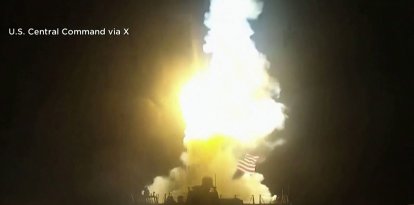
The U.S. military has been amassing forces in the Middle East as tensions between Washington and Tehran have reached seething levels.
On Friday, U.S. President Donald Trump told reporters in North Carolina that regime change in Iran “would be the best thing that could happen.”

While talks are ongoing with the Iranians, “tremendous power has arrived [to the Gulf region]. An additional power, as you know, an additional [aircraft] carrier is going out,” the president said.
The U.S. military is preparing for the possibility of sustained, weeks-long operations against the Islamic Republic if Trump gives the order to attack, Reuters cited two U.S. officials as saying.
On Saturday, Israel’s Ambassador to the U.N. Danny Danon shed some light on Israeli Prime Minister Benjamin Netanyahu’s brief visit to the United States on Feb. 11.
The diplomat told Israel’s broadcaster Channel 12 that in the case that war breaks out with Iran, Jerusalem and Washington “are already coordinated 100%” militarily.
In the case that a U.S. agreement is struck with Iran, Netanyahu wanted “to deliver our significant messages” to Trump in person, Danon said.
He further stated that the gaps between Washington’s demands and Tehran’s willingness to accept them, “to the best of my knowledge,” are too wide for reconciliation.
“I find it difficult to see how [the two] converge. Because also the Iranians, instead of softening, they are hardening their positions,” he relayed.
He went on to say that “until today President Trump proved that with all the talks and doubts he made the right decisions in the Middle East. I believe that this will also happen now. And we are preparing.”

Meanwhile, Iranian Foreign Minister Abbas Araghchi has arrived in Geneva ahead of a second round of negotiations with the Trump administration, Iranian state television said on Monday, according to AFP.
Indirect talks mediated by Oman are expected to take place on Tuesday, the report cited the Iranians as saying.
U.S. Special Envoy Steve Witkoff and Trump’s son-in-law Jared Kushner are reportedly leading the American delegation.
Blue and White Party chairman Benny Gantz told JNS at the Knesset on Monday afternoon that the Iranians “are bluffing as they bluffed before.
“I think that, even if you come up with an agreement with them, they will find the ways to bluff again, and to go back to the same negative behavior as they did before,” the opposition politician continued.
“We are at a historical time,” the former Israel Defense Forces chief of staff said. “I think the world needs to cooperate among the international community—led by the United States and European partners and the region itself—to push out the Iranian regime and fix the next 50 years.
If the Trump administration agrees to a “small” deal, he said, “we may have a short term achievement, but eventually the problem will repeat itself.
“Iran is a global challenge—it’s a regional challenge—and it’s not only a question of Israel’s red line,” according to Gantz. “Nuclear Iran, and the way Iran is responding in different areas like in Europe, Ukraine or in other places in the Middle East, has to bother more people than just Israel itself.
LATEST