Trump ally Nasry Asfura sworn in as president of Honduras
After a close election and with Washington's backing, the conservative will succeed four years of a leftist government.
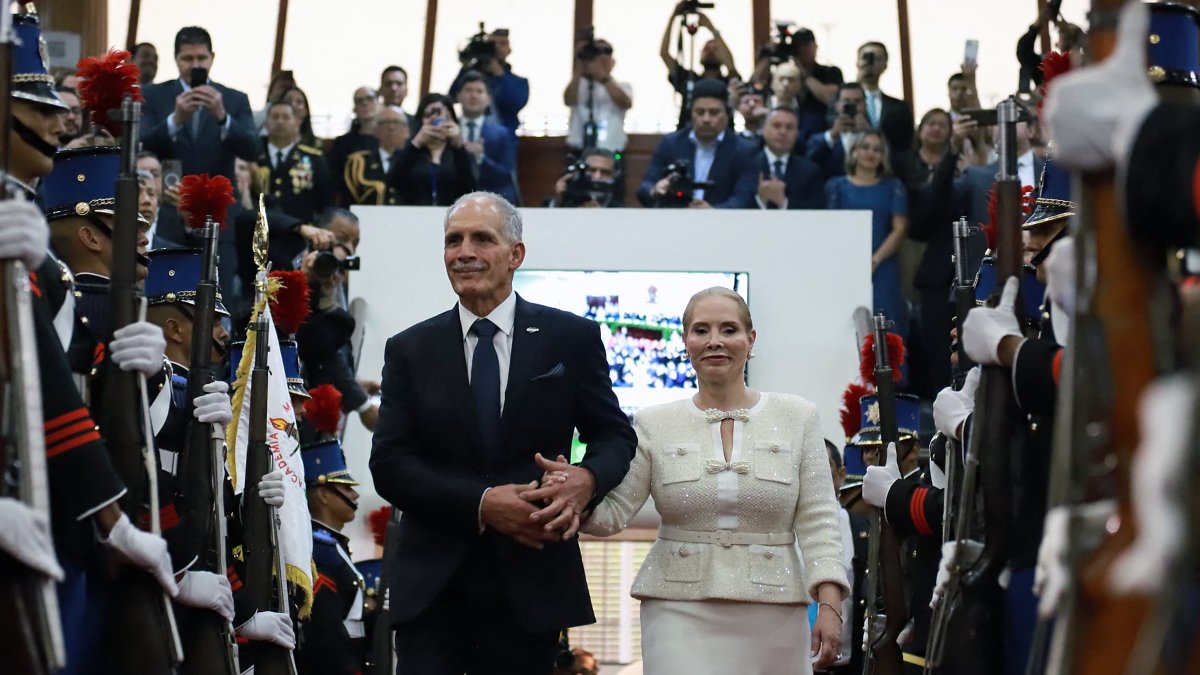
Nasry Asfura and the first lady, Lissette del Cid Fernández.

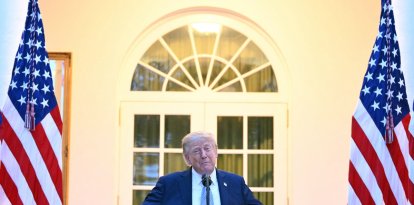
Finally, Honduras has a new president. Conservative Nasry "Tito" Asfura assumed the Honduran presidency after an even and uncertain election in which he earned the backing of Donald Trump.
"I make the promise of law to fulfill the Constitution, the laws, as it says in the sacred commandments. Honduras, we are here to serve you," said the 67-year-old former mayor and businessman during the ceremony at the Congress headquarters in Tegucigalpa. In the same ceremony, he signed his projects, such as the sale of the presidential airplane.
Asfura comes to power after four years of leftist rule and a close election that the then-government refused to recognize. The Trump administration assured that there was "no credible evidence" of electoral fraud.
Grateful for this support, Asfura traveled to the United States to meet with Secretary of State Marco Rubio, and then visited Israeli Prime Minister Benjamin Netanyahu.
Asfura, who will have to negotiate in Congress, as he holds 49 of the 128 seats, was proclaimed the winner of the Nov. 30 election by a narrow margin after a tense vote count that lasted just over three weeks, as AFP recalled.
The close U.S.-Honduras relationship
The United States is the destination of 60% of Honduras' exports, and after the appointment with Rubio two weeks ago, it was announced that both countries plan to negotiate a free trade agreement.
"In 2024 ... what we [Honduras] buy [from China] is close to $3 billion" and Honduras does not manage to sell them "even 40 million," commented economist Liliana Castillo to AFP.
In the midst of the standoff between Washington and Beijing, Asfura will evaluate resuming ties with Taiwan. Honduras established relations with China in 2023 under the outgoing government of leftist Xiomara Castro.
On several occasions she told the media that she would analyze the commitments acquired with China and that relations would have to be redefined, without explicitly saying whether she would break off relations with Beijing.
Honduras, where poverty afflicts 60% of its 11 million inhabitants, also depends on the United States because remittances from the 2 million migrants living there, most of them undocumented, represent a third of its GDP.
"Tito" Asfura, as he is popularly known, promises to attract foreign investment, develop infrastructure and cut spending in the country, whose public debt represents 45% of GDP, according to official figures.
Security cooperation
Washington has said it hopes to strengthen security cooperation with Honduras. Shortly before the election, Trump pardoned former Honduran President Juan Orlando Hernández, a fellow supporter of Asfura, who was serving 45 years in prison in the United States for drug trafficking.
Asfura has the enormous challenge of confronting the drug trafficking entrenched in the highest echelons of power, and gangs Mara Salvatrucha (MS-13) and Barrio 18, declared terrorists by Washington.
Although homicides are down, Honduras has a murder rate of 23 murders per 100,000 inhabitants, and gangs extort large and small businesses.
Latin America turns to the right
This list may expand in 2026, when four more countries in the region go to the polls: Colombia, Peru, Brazil and Costa Rica.
LATEST