






Brussels gives France green light to ban social media for kids under 15
European Commission spokesman Thomas Regnier said Tuesday that "French authorities have the right to set a digital age for their citizens," noting that it is "the obligation of the big online platforms to respect national legislation."


France has the right to ban the use of social networks by children under 15, as proposed by a bill passed by the lower house of its parliament, but enforcement would fall to the executive arm of the E.U., the European Commission.
French President Emmanuel Macron is aiming to make the protection of minors on social media and the control of screen time one of the flagship measures of his second term, which ends in mid-2027.
Commission spokesman Thomas Regnier said Tuesday that "French authorities have the right to set a digital age for their citizens," noting that it is "the obligation of the big online platforms to respect national legislation."
He added, however, that it would ultimately be up to the E.U. to ensure that platforms implement adequate age verification tools.
"It is the obligation of the big online platforms to respect national legislation, but ensuring that [the initiative] is applicable and that they have put adequate age verification devices in place is a prerogative of the European Commission," Regnier added in statements reported by AFP.
If in the end the law is adopted and conforms to European law, "the Commission will see to it that the big platforms apply it," said the spokesman, who recalled that several European countries are testing an application to check the age of internet users.
Resounding majority
In the early hours of Tuesday morning, French lawmakers gave their approval to the proposal banning access to social media by those under 15 years of age.
That intention took shape in a bill submitted by Emmanuel Macron's Renaissance party, which the National Assembly passed after midnight with 130 votes in favor and 21 against, after more than seven hours of intense debate.
The initiative, which still needs the approval of the Senate to be implemented, follows the decision by Australia, which in December banned access to social media for those under 16, becoming the first country in the world to do so.
Emmanuel Macron: "Because our children's brains are not for sale"
Emmanuel Macron defended his political offensive to strengthen the protection of minors on the internet in a message on X. In the post, he justified the need to act firmly: "Because our children's brains are not for sale. Neither to American platforms nor to Chinese social networks."
He added that young people's dreams "must not be dictated by algorithms" and underlined his goal of avoiding "an anxious generation," betting instead on youth that believes in "France, the Republic and its values."
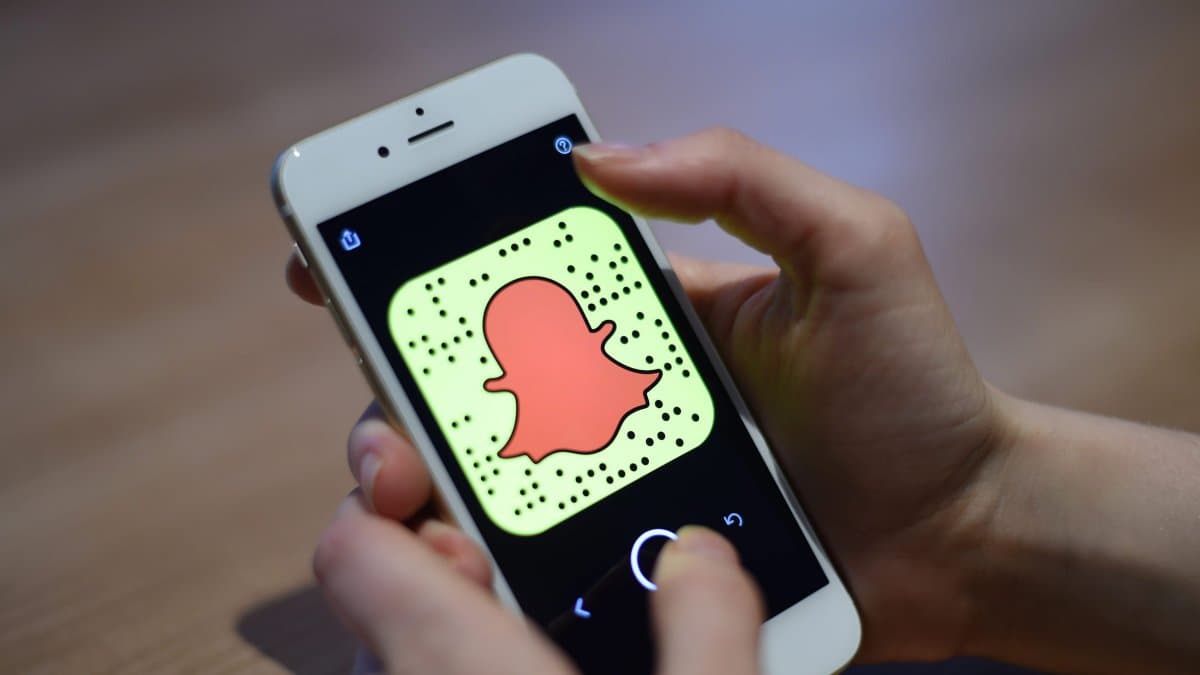
For its part, the French health safety agency warned that digital platforms such as TikTok and Snapchat, so present in the daily lives of teenagers, can negatively affect their mental health.
As reported by AFP, the French government intends to accelerate the deadlines: as of Sept. 1, coinciding with the return school after summer vacation, those under 15 will be prohibited from opening new accounts, and those that already exist will have to be deactivated by Jan. 1, 2027.
"Digital paternalism"
Center and right-wing forces approved the ban, which instead divided the left-wing opposition. Its radical wing, represented in La France Insoumise (LFI), claimed the move is "digital paternalism" and a "simplistic" solution.
"You don't stop drinking by banning alcohol. You stop drinking through prevention and with investment in public health," said LFI M.P. Arnaud Saint-Martin.
Banning cell phones in high schools
In 2018, lawmakers also approved a ban on the use of cell phones in elementary schools and middle schools, while high schools — attended by students aged 15 to 18 — were allowed to introduce such restrictions on a voluntary basis.
Some are already experimenting with this measure, such as the vocational high school in Montsoult, about 15 miles north of Paris. In its case, its 600 students must leave their cell phones in briefcases during classes.
At the start of each class, the teacher passes around a black briefcase in which each student deposits his or her cell phone. This has "calmed the school climate" because "many disturbances" happened due to their use, teacher Christine Antunes told AFP.
Addiction among minors
At the same time, an unprecedented trial is kicking off Tuesday in California in which a jury will have to decide whether TikTok, Instagram and YouTube intentionally developed their platforms to foster addiction in minors.
🛠 Do you think there is an error in this article?
Recommendations



LATEST