China and Canada seal strategic partnership after years of diplomatic and trade tensions
Under the agreement, Canada will allow the initial import of up to 49,000 Chinese-made electric vehicles at a preferential tariff of 6.1% on most-favored-nation terms.
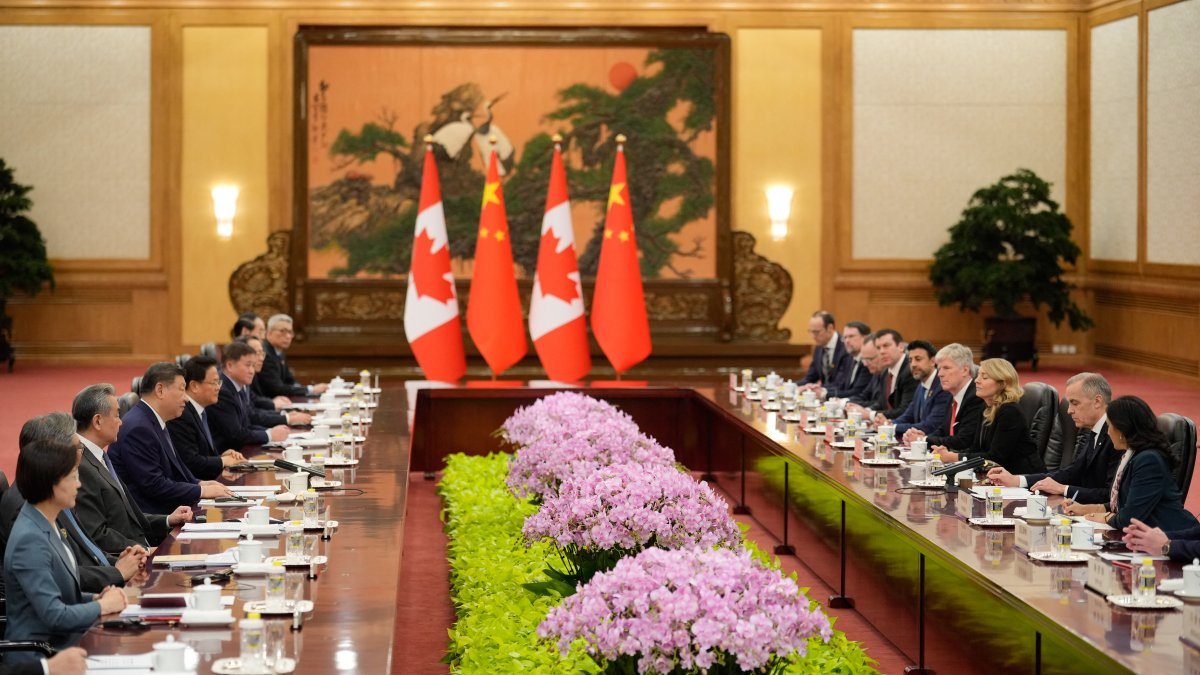
Chinese President Xi Jinping and Canadian Prime Minister Mark Carney (File).

China and Canada announced Friday a strategic partnership with direct impact on trade, investment and tourism, marking a significant turnaround in their bilateral relations after several years of mistrust, tariff disputes and diplomatic tensions, confirmed AFP.
The agreement was sealed during a meeting in Beijing between Chinese President Xi Jinping and Canadian Prime Minister Mark Carney, in the first visit by a Canadian head of government to the Chinese capital in eight years.
Carney called the pact a "landmark trade agreement" that opens a "new strategic partnership" and allows a period marked by citizen arrests, trade retaliation and a prolonged political chill to be put behind us.
"Canada and China have reached a preliminary but landmark trade agreement to remove trade barriers and reduce tariffs," the prime minister said at a press conference following the meeting.
Key tariff cuts
Under the agreement, Canada will allow the initial import of up to 49,000 Chinese-made electric vehicles at a preferential tariff of 6.1%, on most-favored-nation terms. The measure represents a substantial change from the 100% tariff imposed in 2024 by the previous Canadian government, in line with similar restrictions then adopted by the United States.
China will reduce tariffs on Canadian canola derivatives from 84% to around 15% as of March 1, and pledged to eliminate or suspend additional levies on other agri-food products, such as canola meal, seafood and pulses. Ottawa estimates that these measures will unlock about $3 billion in export orders for Canadian farmers and producers.
China also agreed to allow visa-free entry for Canadian visitors, with the aim of reviving tourism flows and exchanges between the two countries.
">We’re removing trade barriers to unlock billions of dollars in business for Canadian farmers, fish harvesters, and workers across agri-food sectors.
— Mark Carney (@MarkJCarney) January 16, 2026
By March 1, we expect that China will lower tariffs on Canadian canola from 84% to about 15%, and that Canadian canola meal,…
Investment and economic cooperation
In a joint statement released by both countries, Beijing and Ottawa pledged to restart high-level economic and financial dialogue, boost two-way trade and investment, and strengthen cooperation in sectors such as agriculture, oil, gas and green energy.
Carney affirmed that Canada welcomes further Chinese investment, especially in areas linked to energy transition, energy storage and clean technology production. He also highlighted his country's interest in expanding its liquefied natural gas (LNG) exports to Asia in the coming years.
From the Chinese side, Xi Jinping pointed out that the bilateral relations reached a turning point after the last meeting between the two leaders, held on the sidelines of the APEC summit in October.

Rapprochement in a tense global context
Analysts note that President Donald Trump's trade pressure on Canada and China have helped accelerate this rapprochement. In 2024, the United States absorbed about 75% of Canadian exports, while China was its second-largest market, albeit at just 4%, according to official Canadian data.
Although the new understanding could partially reshape the trade balance in North America and Asia, experts stress that Canada will remain a key ally for the U.S. even as it adopts a more pragmatic economic policy toward Beijing.
LATEST