"Death to the dictator": mass protests continue in Iran as Reza Pahlavi calls for political transition
The outbreak of protests, which began last Sunday, was triggered by a deep economic crisis in Iran.
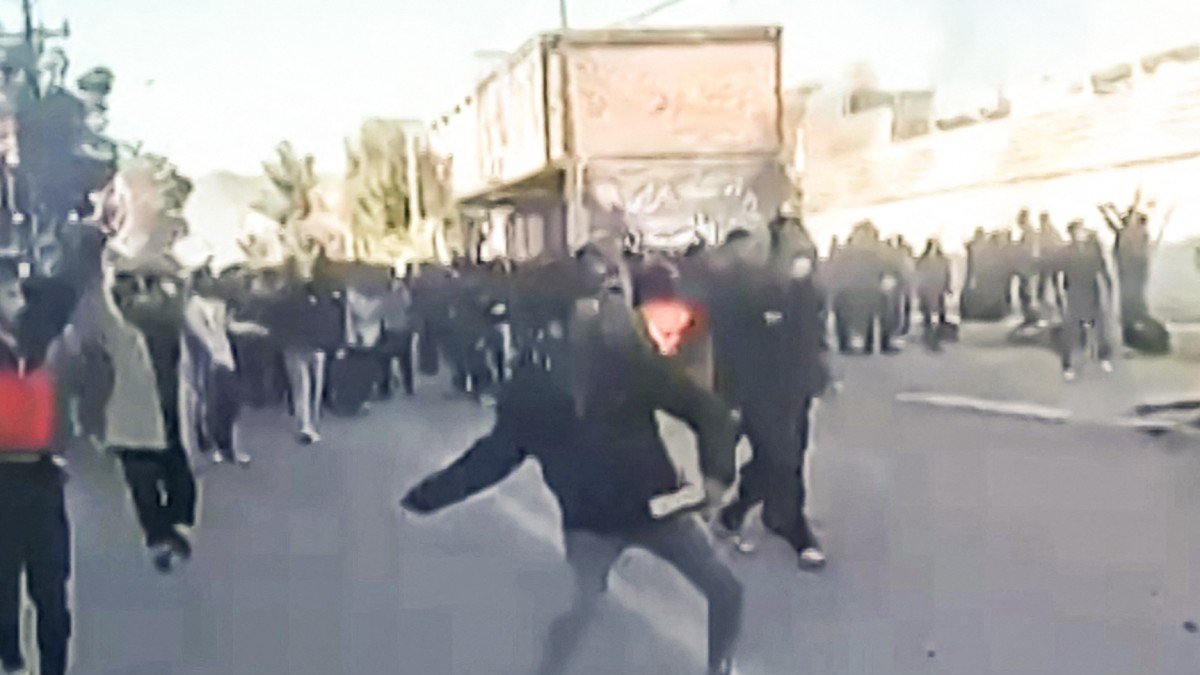
Protesters attack state building in Fasa during Iranian nationwide protests

Protests against the Iranian regime intensified again Friday after a couple of days of tense calm in Tehran, with simultaneous demonstrations in dozens of cities and increasingly harsh slogans against the Islamic Republic and its leadership, led by Ayatollah Ali Khamenei.
After hours of relative tranquility, which coincided with the end of the old 2025 and the beginning of the new year, tens of thousands of people returned to the streets chanting slogans such as "Death to the dictator", in open reference to Supreme Leader Khamenei, according to images disseminated by activists on social networks.
The outbreak of protests, which began last Sunday, was triggered by a deep economic crisis in Iran, whose economy faces annual inflation of close to 42%, with a year-on-year increase of 52% between November and December. Shopkeepers, followed by university students, led the demonstrations.
Adding to the inflationary crisis and the high cost of living was the deterioration of the local currency, the rial, pressured, to some extent, by the sanctions imposed by the United States and the United Nations in connection with the Iranian nuclear program. This harsh context has been the main trigger for a wave of civil unrest that quickly turned economic grievances into massive political demonstrations.
According to reports from organizations and activists, the demonstrations have spread to more than 30 cities, including Tehran, Mashhad, Shiraz, Zahedan, Marvdasht, Kuhdasht and Fuladshahr. In several of these locations, funerals of deceased protesters turned into new protests, with hundreds of people marching and expressing their open rejection of the Iranian regime and law enforcement.
Some reports also reported overnight protests and sporadic clashes with security forces.
According to the U.S.-based Iranian non-governmental organization Hrana, at least seven people have been killed, 33 injured and 119 arrested during the first five days of mobilizations. Testimonies and audiovisual records show that security forces resorted to the use of tear gas to disperse demonstrators, reflecting the escalation of clashes and a repressive response to a movement seeking regime change, as evidenced by the slogans shouted in the streets.

Politics
Trump warns Iran if it kills protesters: 'We are locked and loaded and ready to go'
Carlos Dominguez
In this context, the Iranian opposition in exile sought to capitalize on the political moment. Reza Pahlavi, son of the last Shah of Iran, broadcast a message in 'X' addressed to protesters and the international community, in which he called for a civilian rebellion to move toward a political transition.
"The regime is desperately trying to prevent people from gathering in public now because it knows that Iranians in the streets of Tehran and other major cities will quickly bring about its collapse. To overcome the regime’s repression, there is one path before us: a simultaneous, million-strong presence throughout the city, coupled with traffic blockages on key routes and main roads (...) To achieve this, we must first overcome our fear and understand that if we seize the streets, the regime will quickly lose both the capacity and the will to repress. The solution is to go, within small, cohesive groups of friends and family members, to the nearest street in your neighborhood, find one another, and then, hand in hand, move toward the central streets of the city. I say with confidence that once a flood of millions takes shape, the regime’s forces of repression will not be able to stand their ground. Many will retreat, and some will join the people."
"Seizing the streets of Tehran and Iran’s other major cities through a mass presence is a vital step that complements the bravery of the people who, in smaller cities, have courageously stood up to the forces of repression. I ask all of you to share this message with your friends in preparation for this great event. Together, we will take back and rebuild Iran," the political leader sentenced.
The current mobilizations represent the largest wave of protests in Iran since the 2022 riots, triggered after the death of young Mahsa Amini in police custody. Although Iranian authorities maintain that the level of unrest does not reach that of that period, the geographic breadth of the demonstrations and the harshness of the slogans suggest that social discontent is far from dissipating and represents a direct threat against the ayatollah and his allies.
LATEST