Crisis in Iran: At least six killed in mass protests over the high cost of living
According to reports from international agencies, at least 30 people were arrested in the last few hours.

Business owners protest in Tehran against the economic crisis and rial devaluation

At least six people were killed in Iran in clashes between the regime's security forces and protesters, state media reported on Thursday, amid a new wave of protests sparked by the collapse of purchasing power and the sustained economic deterioration the country is going through.
State and international agencies also reported that at least 30 people were arrested in the last few hours.
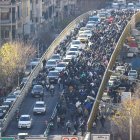
The mobilizations began on Sunday in Tehran, when business owners closed their stores in protest over runaway inflation, the steady depreciation of the rial and the stagnant economy. The protests then spread to universities and different regions of the country, evidencing a social unrest that transcends specific sectors.
The Islamic Republic has been dragging itself through a structural economic crisis marked by the rise in the prices of basic products and the chronic depreciation of its currency. In December, year-on-year inflation averaged 52%, according to official figures from the Statistics Center, reflecting the steady erosion of the population's standard of living.
On Thursday, clashes were reported in several medium-sized cities. In Lordegan, in the southwest of the country, at least two civilians were killed, the Fars agency reported, linked to the regime's security apparatus. The same source spoke of vandalism, significant material damage and multiple arrests.
In Azna, in the western province of Lorestan, another three people were killed during clashes between protesters and security forces, according to Fars. The agency called the participants "rioters" and claimed that the clash followed an attack on a police station, standard language in the official media to delegitimize protests.
In addition, a member of the security forces was killed in incidents recorded in Kuhdasht, also in the west. State television reported that he was a member of the Basij, an all-volunteer paramilitary militia subordinate to the Guards of the Revolution, the ideological and repressive arm of the regime. According to local authorities, thirteen policemen were injured by stone throwing.
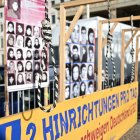
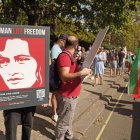
For now, the protests have not reached the scale of the massive mobilizations of late 2022, triggered by the death in police custody of Mahsa Amini after she was arrested for violating the strict Islamic dress code. That wave of protests was repressed with extreme harshness and left hundreds dead.
In the midst of the tension, President Masud Pezeshkian implicitly acknowledged the seriousness of the crisis by warning that, "from an Islamic point of view," if the government does not solve the economic problems of the population, "it will end up in hell." Despite this, the authorities have alternated messages of apparent understanding with repressive warnings.
The attorney general, Mohammad Movahedi-Azad, warned that any attempt to turn the protests into "insecurity" or scenarios "conceived abroad" will be met with a firm response, a recurrent formula of the regime to justify repression and attribute internal discontent to external conspiracies.
In this context, the Tasnim agency, in addition to reporting the arrest of at least 30 people in western Tehran, also assured that seven others were arrested for alleged links with opposition groups in the United States and Europe.
Meanwhile, the rial has lost more than a third of its value against the dollar in the past year, and double-digit inflation continues to erode purchasing power, fueling a social discontent that the regime seems unable - or unwilling - to resolve through political and economic means.
This article was published with information from AFP.
LATEST