EU seeks to streamline military mobility in the bloc amid a Russian threat
"Infantry wins battles, but it is logistics that wins wars," insisted European Defense Commissioner Andrius Kubilius, quoting U.S. General John Pershing.
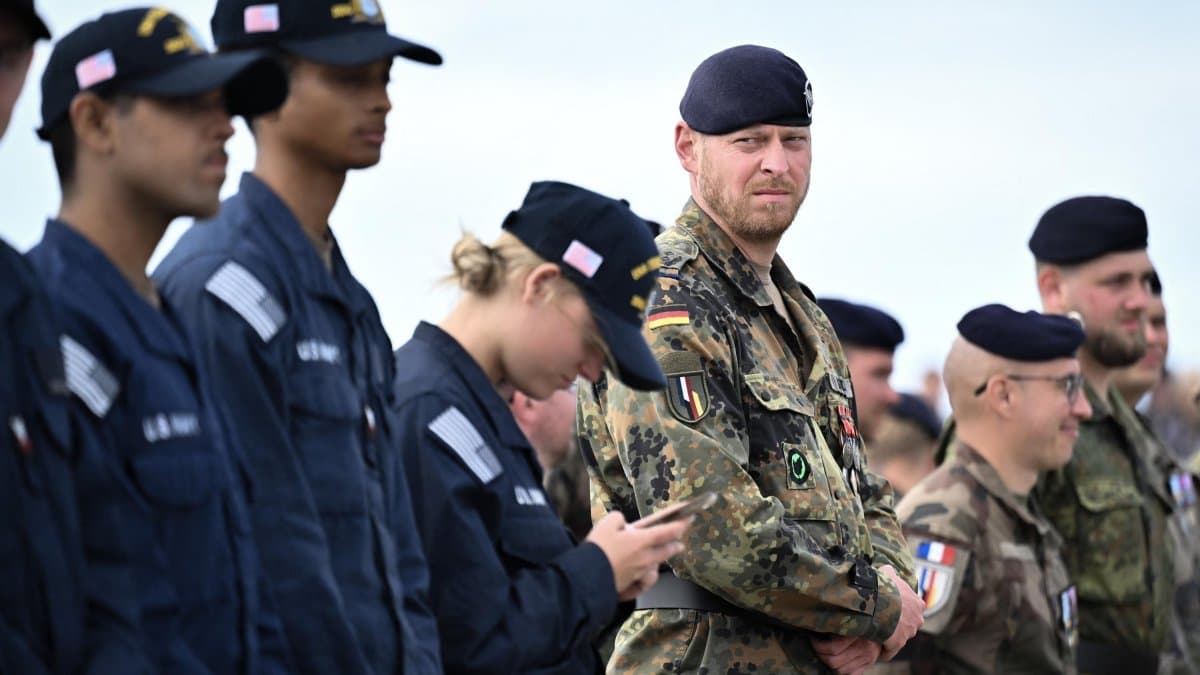

The European Union (EU) on Wednesday presented a battery of measures that seek to accelerate troop mobility on the continent in the face of a Russian threat. Army mobility has returned to the European agenda following Russia's invasion of Ukraine in February 2022.
"The faster we can move our forces, the stronger our deterrence and defense capabilities will be. We have to talk about days, not weeks, to move troops in Europe," assured the EU's High Representative for Foreign Policy, Kaja Kallas.
The Commission, according to AFP, proposes to allocate at least $19.6 billion to facilitate it over the period of 2028-2034. The sum is ten times the amount budgeted for 2021-2027.
"Infantry wins battles, but it is logistics that wins wars," European Defense Commissioner Andrius Kubilius insisted to reporters Wednesday, quoting U.S. Gen. John Pershing.
Obstacles to ground transit
For tanks to transit within the European Union, clearances must be obtained on a country-by-country basis, with some requiring them to be requested 45 days in advance.
But once these permits are obtained, armored vehicles will most likely be forced to take alternative routes to avoid roads or bridges too fragile to support them.
Just the News
Trump working on 28-point peace agreement with Russia to end war with Ukraine
Just The News
To deal with these obstacles, the Commission has identified 500 key crossing points that could be used by European Armies in the event of war. Most, however, need urgent improvements to allow troop mobility.
To check that everything works, the EU wants to organize periodic tests to make sure, for example, of the resilience of the infrastructures.
Priority passage authorizations
The EU, moreover, proposed to institute a "single permit" that would be valid throughout the EU. In case of emergency, it also wants to establish clear rules, for example by introducing priority passage authorizations, to avoid any blockages.
Brussels also proposes a "solidarity mechanism" that would pool civilian and military equipment, such as trucks, which each member state will be able to access easily.
🛠 Do you think there is an error in this article?
Recommendations




LATEST