ANALYSIS
Cuban regime charges renowned former minister for espionage and financial crimes
Former Cuban official Alejandro Gil will face trial for felonies such as money laundering and embezzlement, according to officials. The attorney general's office requested prison sentences and filed formal charges.

(FILE) Former Cuban Economy Minister Alejandro Gil.

Former Cuban Economy Minister Alejandro Gil was charged with espionage and several financial crimes, including corruption, embezzlement and tax evasion, the country's attorney general's office said Friday.
Gil, 61, was removed from office in February 2024 amid a turbulent economic crisis, following the announcement of an increase in fuel prices on the island. Shortly thereafter, authorities reported that he was under investigation for "serious errors" in his management.
According to the official statement, in addition to espionage, the former minister and other defendants whose identities were not disclosed are charged with crimes of embezzlement, bribery, falsification of public documents, tax evasion, influence peddling, money laundering, as well as infractions related to classified documents.
">⚖️La Fiscalía General de la República, controló la investigación penal realizada por los órganos del ministerio del Interior contra Alejandro Miguel Gil Fernández, quien se desempeñó como viceprimer ministro y ministro de Economía y Planificación
— Cubadebate (@cubadebatecu) November 1, 2025
🔗https://t.co/bEvyzEwow2 pic.twitter.com/8KZXvYLTqC
He will also have to respond to "the theft and damage of documents or other objects in official custody," the regime's official media channel confirmed, without offering more details than the brief note.
The attorney general's office specified that prison sentences were requested "in correspondence with the acts committed," although a date for the trial was not announced, nor was a possible beneficiary of the alleged espionage activities identified.
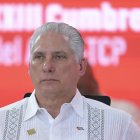
Alejandro Gil served between 2019 and 2024 as deputy prime minister and minister of economy and planning under dictator Miguel Díaz-Canel.

Gil's scandal, another financial failure on the island
Gil's removal came after a critical year for the Cuban economy, marked by food and fuel shortages, blackouts and deterioration of public services.
In December 2023, Gil himself acknowledged before the National Assembly that productive goals were not met and that several sectors registered drops with respect to 2022. He also admitted the failure of the "Tarea Ordenamiento," one of the main economic reforms the regime implemented to try to survive, which ultimately placed greater pressure on the population.
What does the indictment of Alejandro Gil mean for the Cuban regime?
The indictment of Alejandro Gil marks a new chapter in the Cuban regime's strategy to project an image of "fighting corruption" within its own ranks. However, the lack of transparency, the absence of public information about the process and the selectivity with which sanctions are applied fuel skepticism about the dictatorship's true intentions.
The case of Gil, who held one of the highest economic positions in the country, reflects the magnitude of internal tensions in the state apparatus. His indictment for espionage and economic crimes not only exposes the power conflicts within the regime, but also serves as a political warning amidst an economic crisis and growing social discontent.
LATEST