Cuba sentences six for ‘pots and pans’ protest outside regime headquarters
The Cubans were sentenced this week to five and six years in prison for taking part in a peaceful protest outside the Municipal Assembly of People’s Power in Manicaragua—a local office of the regime—in October 2024.

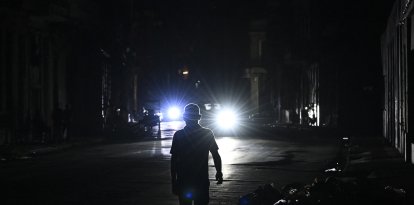
From the Cuban regime they speak of "zero national energy coverage."/ Adalberto Roque

Six Cuban citizens were sentenced this week to five and six years in prison for participating in a peaceful protest in front of the Municipal Assembly of People's Power in Manicaragua—a local office of the regime—in October 2024, as reported by the Observatorio Cubano de Derechos Humanos (OCDH).
The protest involved “banging pots and other metal objects” to demand the restoration of the electricity supply. The ruling, identified as C-7-25 and issued by the Villa Clara Provincial Court, found the defendants guilty of crimes against state security and public disorder, even though the demonstration dispersed after power was restored in that central region of the country.
Those sentenced to six years were José Águila Ruiz (for propaganda against constitutional order), Raymond Martínez Colina and Carlos Hurtado Rodríguez (for public disorder), while Osvaldo Agüero Gutiérrez, Narbiel Torres López (18 years) and Yoan Pérez Gómez received five years in prison on the same charge.
All six were also given additional penalties, including restrictions on political rights and a ban on leaving the country.


"We want electricity"
According to the sentence, the defendants participated in a concentration of more than one hundred people and made noises with various metallic objects and horns, disrupting traffic and protesting with shouts such as "we want electricity" The court also held José Águila Ruiz responsible for filming and broadcasting the demonstration, alleging that it sought to "discredit the Cuban social system."
The OCDH described the ruling as a judicial fraud aimed at criminalizing civic protest and limiting the freedoms of expression and demonstration. The organization emphasized that the sentence lacks sufficient legal grounds, presents flaws in the identification of the accused and prioritizes the testimonies of MININT officials (repressive organ of the regime) and local authorities, compromising the impartiality of the process.
The Chamber for Crimes against State Security was composed of Justo Gustavo Faife Hernández (rapporteur), Noraimis Blanco Echarte and Ricardo Hernández Domínguez, with Yoenys Montero Tamayo as acting prosecutor. All the aforementioned officials are part of the political and legal machinery of Castroism.
The case highlights the enforcement of repressive measures in Cuba in the face of basic social demands, such as access to electricity, and evidences the absence of judicial guarantees in criminal proceedings of a political nature.
How many political prisoners does Cuba have?
The Cuban prison population includes 36 people who were arrested when they were still minors; of these, 30 are currently serving sentences and six remain under criminal proceedings, subject to precautionary measures and without due judicial protection.
Of the current prisoners, 472 suffer from serious illnesses and 40 have mental disorders without adequate treatment, according to the NGO.
The regime's authorities deny the existence of political prisoners in its jails.
LATEST