WSJ editorial board backs Uribe: "His enemies Have never forgiven him for winning a war against narco-terrorism"
Judge Sandra Liliana Heredia convicted the former Colombian president on charges of procedural fraud and witness bribery, which amounts to about 12 years of house arrest.
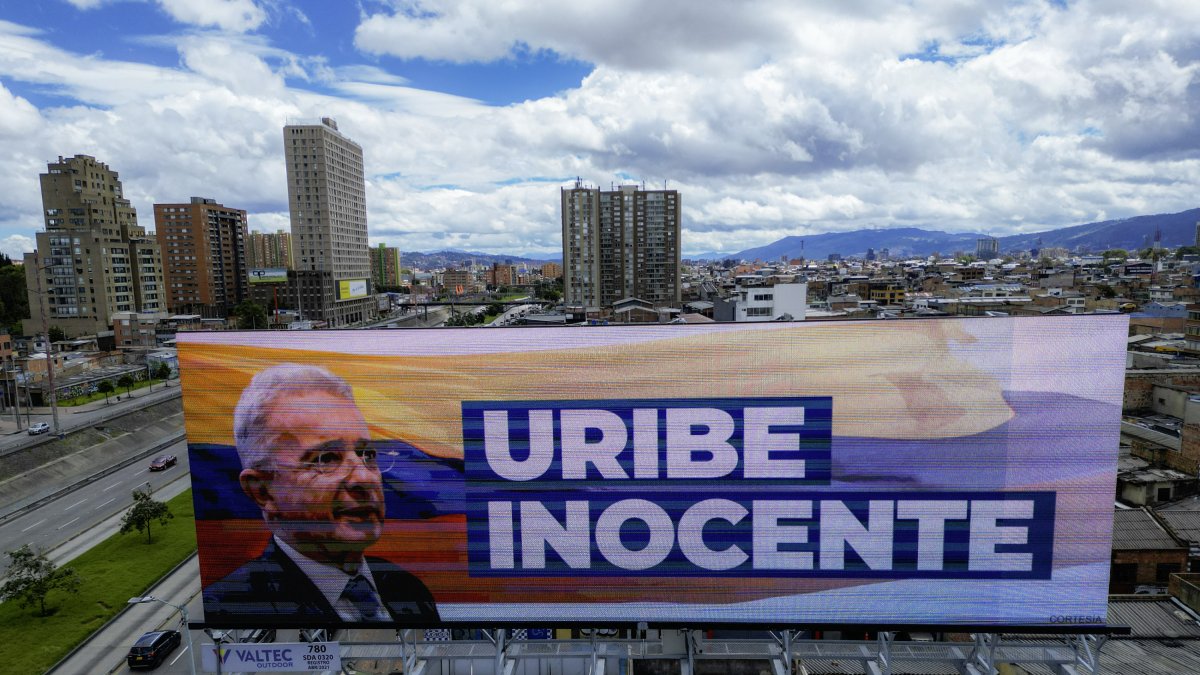
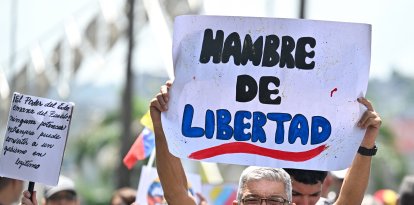
Sign in favor of Uribe/ Luis Acosta.

The editorial board of The Wall Street Journal spoke out on the case of Colombia's former president, Álvaro Uribe. Taking aim at the judicial process, the WSJ described the case as a "revenge" by "left-wing narco-terrorism," which waged a "political campaign to tarnish his reputation and put him in jail."
Judge Sandra Liliana Heredia convicted the former Colombian president on charges of procedural fraud and witness bribery, which amounts to about 12 years of house arrest. The ruling also includes a financial fine and a ban on participating in public life for more than eight years.
During his term in office, which lasted from 2002 to 2010, Uribe pursued a "democratic security" agenda, which sought to weaken the guerrillas and re-establish state control in conflict-affected areas. He left office with a popularity rating of over 70%.


World
Colombia: condenan al expresidente Álvaro Uribe a 12 años de prisión domiciliaria
Agustina Blanco
The aforementioned media points out that it is this policy against guerrillas and drug trafficking that haunts the Colombian leader today.
"Eight years later the guerrillas were beaten, the elected government had restored its authority, and, with the help of the U.S., the military had become more professional. Drug trafficking continued, but the Marxist dream of making the country into another Cuba was dead. Thus the political campaign to tarnish his reputation and put him in jail. A tendentious judiciary is doing its part, and irregular court decisions leading to Monday’s verdict deserve attention," wrote the editorial board.
On the particularities surrounding the judicial process, they criticized the decision to allow the use of secretly obtained recordings as evidence against former President Uribe: "This was highly irregular because the standard in Colombian courts is that wiretaps and recordings made without the knowledge of participants can’t be used as evidence—not even against known members of terrorist organizations. But for Mr. Uribe, the court made an exception."
Uribe's lawyers have already announced that they will appeal Judge Heredia's decision, so the case could even end up in the Supreme Court.
"These are only a few of the violations of Mr. Uribe’s right to due process. Whether that right can be restored on appeal will be a major test of the rule of law in South America’s oldest democracy," the WSJ sentenced.
LATEST