El Salvador approves a constitutional reform that allows indefinite reelection and extends presidential terms to six years
With the congressional decision, President Nayib Bukele further entrenched his power.
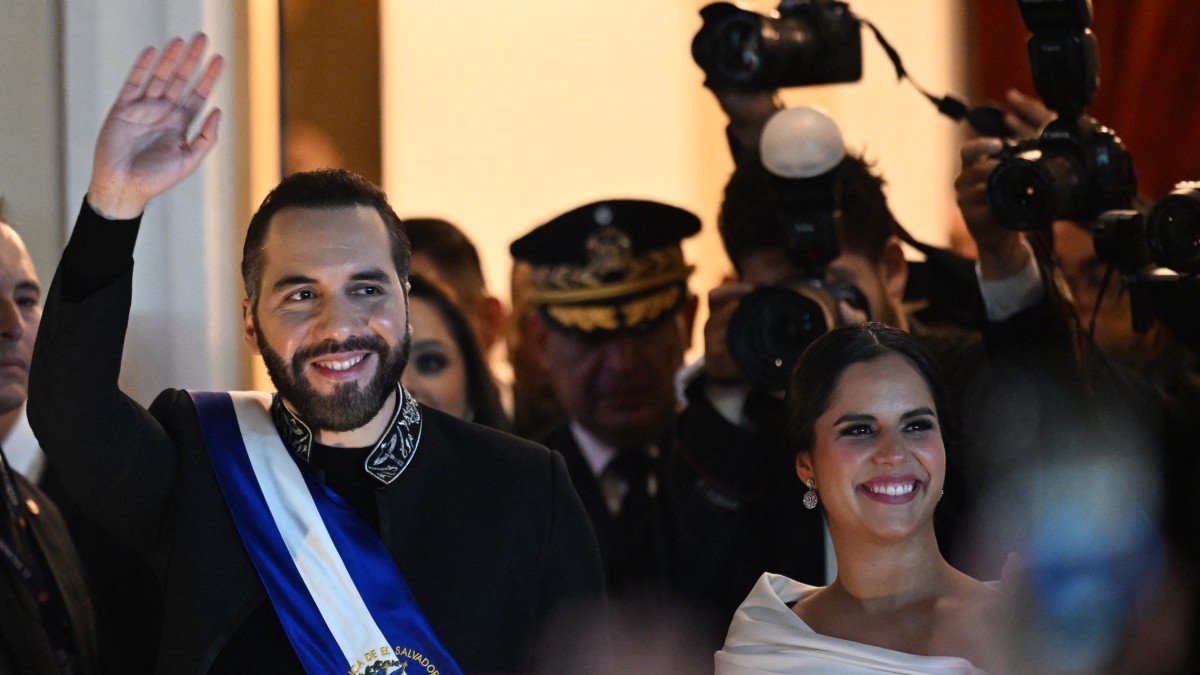
President Nayib Bukele and his wife, Gabriela Rodriguez, in a file image

With a vote of 57-3 in favor, the El Salvador approved a controversial constitutional reform that extends presidential terms to six years and, in addition, allows the indefinite reelection of the country's highest office.
The Salvadoran legislative assembly is controlled by a supermajority of the Nuevas Ideas party, led by Salvadoran president Nayib Bukele who has enjoyed historic levels of popularity for several years despite criticism from human rights organizations and complaints in the press about supposed abuses against dissidents.
Bukele, who gained much popularity inside and outside his country for implementing a hardline security policy against the maras, had already won re-election last year in a landslide victory that consolidated his enormous power in the country.
Those elections were not without controversy due to accusations from his critics, who considered that his candidacy violated the Salvadoran Constitution, which at the time prohibited reelection.
Now, with the constitutional reform, Articles 75, 80, 133, 152 and 154 were modified, making reelection technically "legal."
#Plenaria66 | En este momento, el pleno legislativo discute el fondo de lo solicitado con respecto a la modificación de los artículos de la Constitución de la República relacionados a los cargos de elección popular. pic.twitter.com/dWhl78F3Kn
— Asamblea Legislativa 🇸🇻 (@AsambleaSV) August 1, 2025
The reform, in addition to allowing unlimited reelection, also eliminates the obligation of a second electoral round in case no candidate obtains an absolute majority in the next elections, as contemplated in the Constitution, in force since 1983. Likewise, it provides that the current presidential term will end early on June 1, 2027, in order to unify in that year the presidential, legislative and municipal elections.
Marcela Villatoro, deputy of Alianza Republicana Nacionalista (ARENA), cast one of the three votes against the proposal. She warned that the reform is a death sentence for El Salvador's democracy.
"Today democracy has died in El Salvador," she said. "They do not realize what indefinite reelection brings: accumulation of power, weakening of democracy... it generates corruption and clientelism, because nepotism grows and political participation is curbed."

On the other hand, from the ruling party, congresswoman Ana Figueroa defended the reform sustaining that the objective of the New Ideas party is "to give total power to the Salvadoran people."
The congresswoman also justified the measure by explaining that, in El Salvador, the only office that did not contemplate indefinite reelection was precisely that of the president.
"All have had the possibility of reelection by popular vote. The only exception so far has been the presidency," he said.
The reform, beyond criticism or favorable opinions, emphasizes Bukele's control over the branches of government.
Considered the most popular leader in the world, the president will now have the road paved for his next reelection in a few years, when his term ends and he aspires to six more terms in power. By then, it will remain to be seen if El Salvador continues to control insecurity and prosper economically under the watch of Bukele, who has inspired many political leaders in the region who want to imitate his model.
LATEST