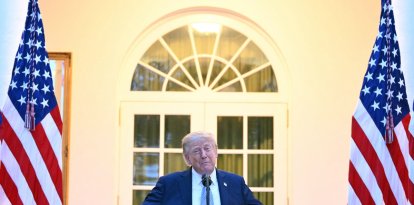
NATO seals a historic increase in its military spending: "5% of GDP without exception"
In their final declaration, the 32 member states of the Atlantic Alliance agreed to increase their defense outlay between now and 2035.
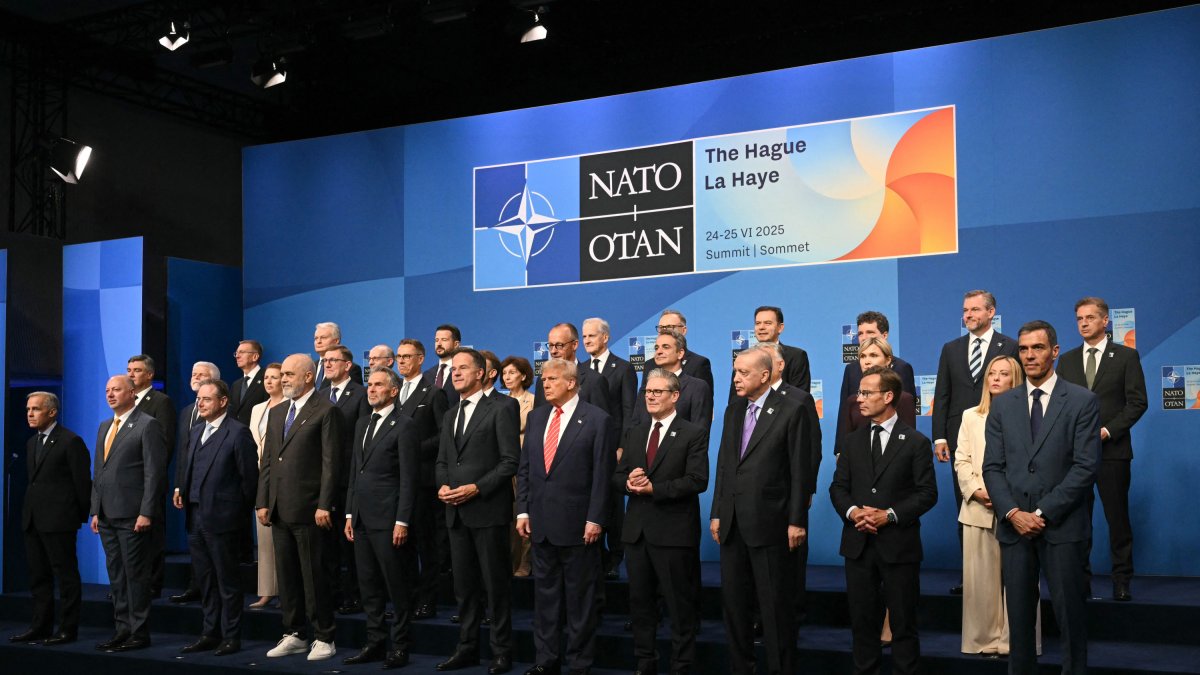
NATO member states agree to increase their defense spending.

Member countries of the North Atlantic Treaty Organization (NATO)—made up of Europe, the United States and Canada—agreed Wednesday at a summit in The Hague (Netherlands) to significantly increase their defense spending. A decision pushed, in large part, by President Donald Trump, who claimed it as a "great victory."
In their final declaration, the 32 member states of the Atlantic Alliance agreed to increase their defense spending to 5% of their respective national GDP by 2035.
The increase is ambitious and historic, and will force the Alliance's European members and Canada to spend much more on their security and to multiply capabilities, manufacturing cadences and arms purchases. The target until now was 2%, a threshold reached last year by only 22 of the member countries.
In its formulation, the final declaration dodged the reluctance of Spain, which claims to have agreed with NATO to invest 2.1% of its GDP in defense, earning it a rebuke from Trump; Secretary of State Marco Rubio; and NATO Secretary General Mark Rutte himself.
The consensus text cites the "long-term threat posed by Russia to Euro-Atlantic security and the persistent threat of terrorism." And it reaffirms its commitment to "offer support to Ukraine, whose security contributes to our own."

World
Trump hails NATO military spending increase, insists on Iran nuclear disarmament
Diane Hernández
A 5-point final declaration
According to diplomatic sources, the final text was brief—five points, as opposed to 38 at last year's summit in Washington—, and terse, with no mention, as in previous editions, of the challenges posed by China, Iran and North Korea, nor promises on the fight against climate change and the promotion of gender equality.
Last year, the United States contributed 62% of the Alliance's total defense budget, while Canada and Europe increased their investment by 19%. Since his return to the White House in January, Trump toughened the demand of previous administrations to ask for more military investment from its partners.
The Republican tycoon even threatened to significantly reduce the security umbrella Washington has provided to Europe since World War II.
Annual reports to NATO
The first is a minimum of 3.5% military spending in the strict sense (salaries, pensions, operations, equipment procurement, maintenance tasks). Each country will have to report each year on how it is progressing to reach that level.
To that percentage will be added 1.5% investment in broader areas such as infrastructure, innovation and border protection, of both civilian and military utility.
The final communique pointed out that the military spending calculation will include "direct contributions to Ukraine's defense."
A comprehensive review of this investment mechanism will also take place in 2029, taking into account the strategic outlook.
Reactions following NATO consensus
President Trump said the NATO summit, which closed Wednesday in The Hague with a decision to dramatically raise military spending, was a "great success."
"I think the summit was fantastic, a great success," said Trump, who pushed alliance countries to increase their military spending to 5% of their national GDP.
"It's a monumental victory for the United States, because we had way more than our fair share," the Republican leader revealed to reporters after the summit of the 32 NATO countries.
Meanwhile, others, such as the Spanish Prime Minister, Pedro Sanchez, defended his current position not to commit the country to an increase in military spending, something that has been discredited and harshly criticized by NATO leaders.
Spain vs. NATO over military spending
The head of the Spanish Executive, however, assures that he negotiated with Rutte a flexible formula on Madrid's military spending, which would increase up to 2.1% of the national GDP. A reasoning that was echoed in two other countries, Belgium and Slovakia.
According to Sanchez, that level of spending is sufficient for Spain to meet the necessary contribution of capabilities to the alliance, and 5% would be "disproportionate" and likely to threaten the social model and force tax hikes.
Trump criticized the Spanish position on Tuesday, saying it is "unfair" to the rest of NATO and represents a "problem." The same position was repeated Wednesday by Marco Rubio in an interview, and by the alliance's secretary general himself.
"Frankly, it puts them in a very complicated situation with respect to their other allies and partners," added Rubio, who insisted that "if everyone fulfills their commitment, it will be a much stronger alliance, with more capable partners," referring to Spain's refusal.
Rutte insisted this week that the 5% agreement does not include an exception clause, and that the alliance countries will all be committed to the spending increase.
LATEST