Satellite images published by the Washington Post reveal that Iran hit at least 228 U.S. military structures, more than officially reported
The U.S. newspaper's analysis, based on images published by Iranian state-affiliated media and verified with European satellites, shows a greater magnitude of destruction than acknowledged by the Pentagon.
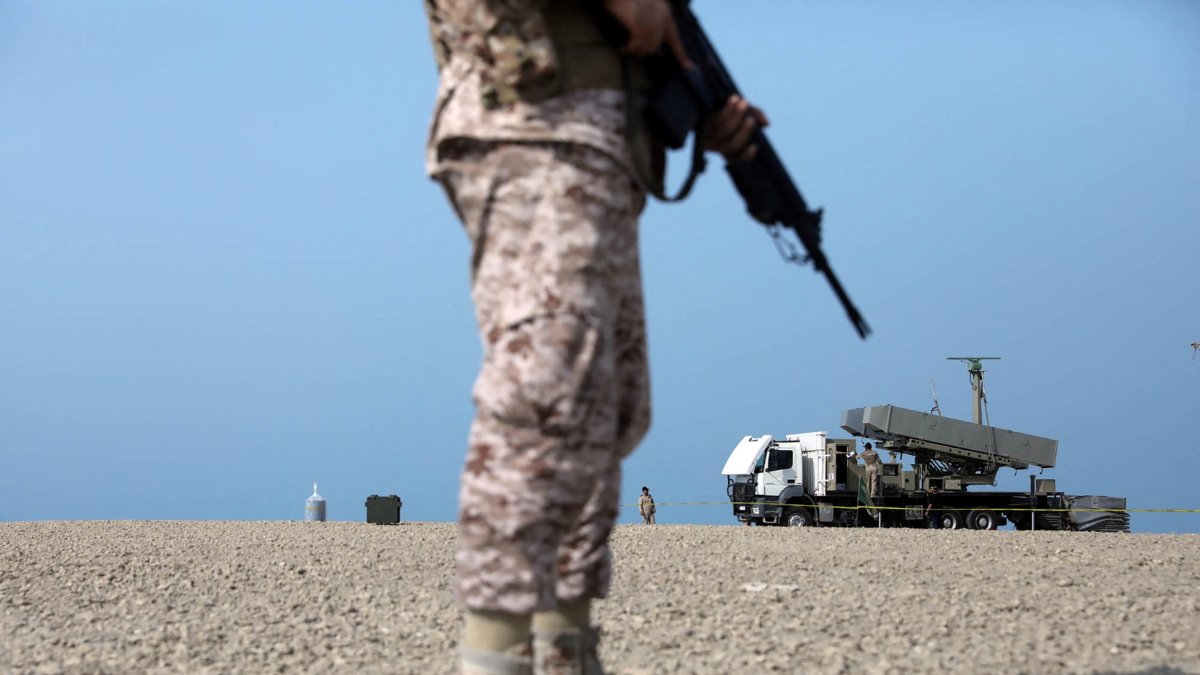
A photograph provided by the Iranian Army office on August 21, 2025

The Washington Post, after analyzing more than 100 high-resolution satellite images published by Iranian state-affiliated media and verifying them with the European Copernicus satellite system, concluded in its most recent investigation that the war between the United States and Iran has caused more damage than Washington has publicly admitted.
According to the exhaustive report, the newspaper found damage to at least 228 structures or pieces of equipment at 15 U.S. military bases in the Middle East.
The number far exceeds what the U.S. government has publicly reported so far. Recently, CNN had reported damage at 16 facilities, NBC News spoke of 100 targets at 11 bases, and the New York Times had identified attacks at 14 sites. The Post's analysis, however, reveals that dozens of additional targets were hit, including hangars, barracks, fuel depots, aircraft, radars, satellite dishes and Patriot and THAAD air defense equipment.
The human and material cost
Since the conflict began on Feb. 28, seven U.S. military personnel have been killed in attacks on facilities in the region, six in Kuwait and one in Saudi Arabia, and more than 400 soldiers have been wounded, at least 12 of them with injuries classified as serious.
The most damaged bases were the headquarters of the Navy's 5th Fleet in Bahrain and the three bases in Kuwait: Ali al-Salem, Camp Arifjan and Camp Buehring.
The damage in some cases was so forceful that the 5th Fleet headquarters was moved to MacDill Air Force Base in Tampa, Florida, according to a U.S. official quoted by the Post. Two other officials noted that U.S. forces may not return to regional bases in large numbers, although no final decision has been made.

Politics
Trump halts mission to escort ships in Strait of Hormuz to make room for deal with Iran
Emmanuel Alejandro Rondón

Iran underestimated?
Experts who reviewed the WaPo analysis said the U.S. military likely underestimated Iranian capabilities and did not sufficiently adapt to modern drone warfare.
"The Iranian attacks were precise. There are no random craters indicating misses," said Mark Cancian, a senior adviser at the Center for Strategic and International Studies and a retired Marine Corps colonel.
William Goodhind, a researcher with the Contested Ground project, elaborated further on Iranian intentions: "The Iranians have deliberately targeted accommodation buildings across multiple sites with the intent to inflict mass casualties. It is not just equipment, fuel storage and air base infrastructure under fire, but also soft targets, such as gyms, food halls and accommodation."
A key point in the whole affair is that the cost in missile interceptors has also been enormous. According to estimates by the Center for Strategic and International Studies, between Feb. 28 and April 8 the military used 53% of its THAAD interceptor inventory and 43% of its Patriot interceptors, a figure that is raising concerns internally.
From Tehran there is taunting while negotiating
As the Post published its investigation and President Trump himself publicly pressed Iran to reach a quick deal, Iranian Parliament Speaker Mohammad Bagher Ghalibaf took the opportunity to publicly taunt Washington on 'X'.
"Operation Trust Me Bro failed," he wrote, making a sarcastic reference to recent U.S. diplomatic and military initiatives and using the term "Fauxios," a pun using "faux" and "Axios" to question the veracity of published information about negotiations between the two countries.
The U.S. Central Command declined to respond to the Post's analysis and merely replied that destruction assessments "are complex and can be misleading in some cases." However, it did not disavow the report.
LATEST