Country's leading universities must audit their ties with China or risk losing federal funding
These institutions have been identified as engaging in activities that increase the risk that U.S. government-funded research and development efforts could be misappropriated.
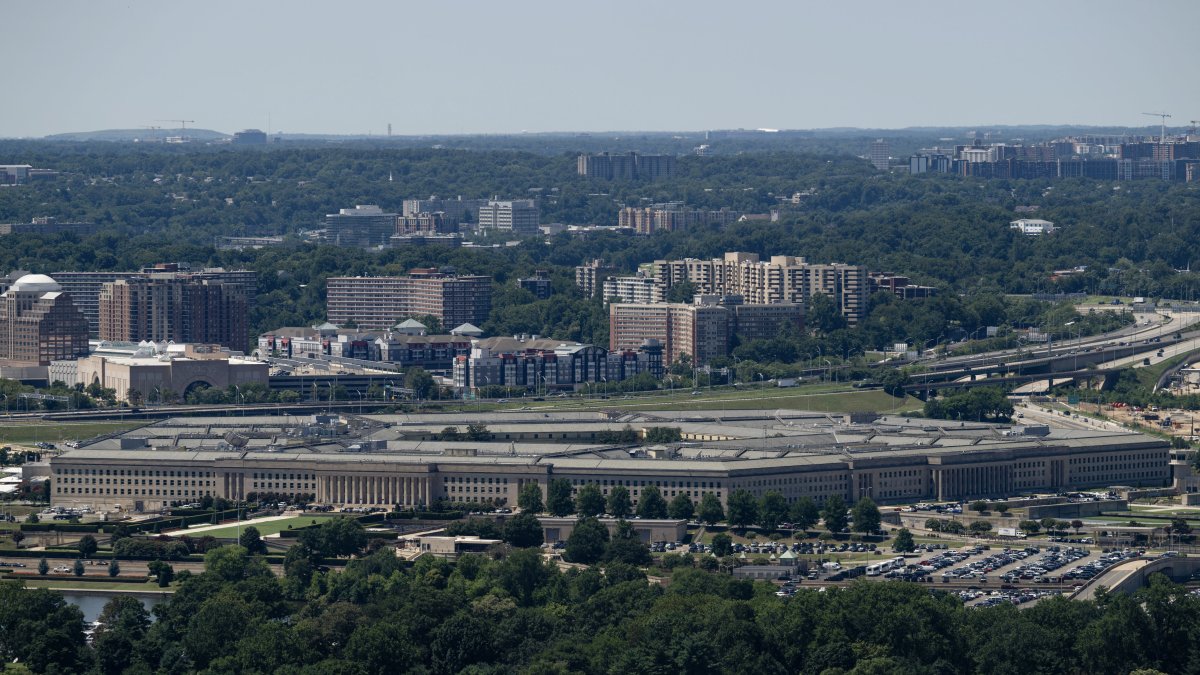
A panoramic view of the Pentagon on July 23, 2026.

In a move aimed at protecting strategic intellectual property and national security, the Pentagon ordered 30 U.S. universities on Monday to conduct comprehensive audits of their financial and research ties with foreign entities.
The institutions must review their operational collaborations and assess any unauthorized exposure in sensitive areas or those subject to export controls.
The ultimatum sets Aug. 31 as the deadline for the universities to submit their findings to military authorities.
If they fail to comply with the requirements or do not terminate partnerships deemed problematic, the universities risk immediate suspension of federal funding for research projects.
"The Department of War has zero tolerance for academic partnerships that compromise our national security," stated Emil Michael, under secretary of war for research and engineering.
"Institutions that receive funding from American taxpayers must uphold the highest standards of research security, and these mandated audits will ensure accountability across the board," he added.
Focus on influence of adversarial regimes
The official oversight is based on Section 1286 of the National Defense Authorization Act for Fiscal Year 2019, which includes a list of 130 academic institutions located in China, Russia and Iran.
These entities have been identified as engaging in activities that increase the risk that U.S. government-funded research and development efforts will be misappropriated.
Among the universities subject to the restrictions are Georgetown, the Massachusetts Institute of Technology (MIT), U.C. Berkeley, Columbia, Johns Hopkins, Cornell, Duke, Harvard and New York University (NYU).
"Universities are critical partners in executing a wide range of Department of War research programs, and the Department must therefore ensure that our research investments are well protected from foreign exploitation," said Dr. Joseph Jewell, Assistant Secretary of Defense for Science and Technology.
A history of opacity at elite universities
The government's crackdown comes on the heels of congressional reports that revealed deficiencies in the internal controls of prestigious universities.
A recent report by the House Select Committee on the Chinese Communist Party revealed that Harvard researchers co-authored more than 140 publications with experts affiliated with Chinese universities linked to Beijing's state apparatus.
Furthermore, Department of Education records list Harvard as the institution receiving the largest amount of funding from China under the foreign donation disclosure system, exceeding $600 million.
Adding to these concerns is the alarm over the use of artificial intelligence models developed in the U.S. to train Chinese defense capabilities, as well as the forced decline of the Confucius Institutes, which went from about 100 to fewer than five within the United States following legislative pressure over their funding linked to the Beijing regime.
With this requirement, authorities seek to close any institutional loopholes that expose technological knowledge funded by taxpayer dollars to exploitation by strategic competitors.

Opinion
Americans, don't be fooled by socialism: the problem is statism, not capitalism
Daniel Lacalle


LATEST