Senate approves comprehensive federal reform to regulate sponsorships, transfers in college sports
Despite the bipartisan nature of the agreement, the legislation faced opposition from segments of the Democratic caucus and groups such as the Congressional Black Caucus.
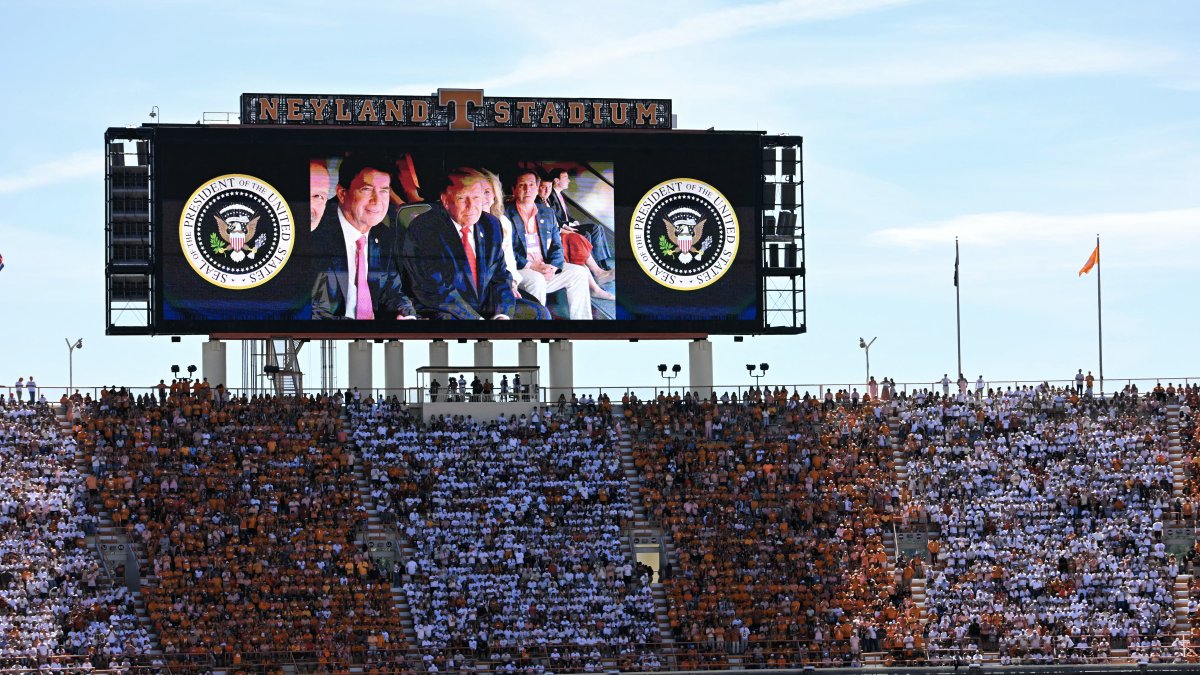
President Donald Trump enjoys a college football game in Knoxville, Tennessee, on Sept. 26, 2026.

The U.S. Senate approved on Thursday — by a comfortable majority of 77 votes in favor and 22 against — the Protect College Sports Act, an ambitious piece of legislation aimed at establishing a uniform federal framework for college sports.
The initiative seeks to bring transparency to the financial compensation of student-athletes — linked to their name, image and likeness (NIL) rights — and regulate eligibility rules for transfers between academic institutions.
The bill, sponsored by Republican Senator Ted Cruz, responds to growing concern over the destabilization of the traditional athletic system in the face of the massive influx of private funds and financial incentives from commercial brands.
Among its main provisions, the bill establishes a framework allowing universities to distribute nearly $21.6 million to their athletes for the 2026–27 academic year, in addition to a retention fund of up to $22.5 million per institution, while guaranteeing free transfers without loss of eligibility and imposing unified health and safety standards.
Putting a stop to the chaos in recruiting and protecting women's sports
During the floor debate, according to a CBS News report, the bill's sponsors emphasized the urgency of curbing the uncontrolled spiral of financial incentives that threatened to marginalize less lucrative sports.
"The system we have today is unsustainable, plain and simple. Students are transferring three or four times, professionals are trying to play against college students, and conflicting court rulings have created a fragmented system that no one intended," said Senator Ted Cruz as he defended the measure in light of the loss of educational opportunities for young athletes.
In addition to establishing clear criteria for transfers, the legislation seeks to safeguard the continued presence of women's sports and Olympic disciplines within academic programs — areas vulnerable to the bloated budgets allocated to the highest-revenue-generating sports.
The measure had the explicit support of major college conferences, such as the Big Ten and the SEC, the White House's approval, and the backing of Senate Majority Leader John Thune.
Fissures in the Democratic caucus and a clash of views
Despite the bipartisan nature of the agreement, the legislation faced opposition from sectors of the Democratic caucus and groups such as the Congressional Black Caucus.
Critics of the bill, led by Democratic Senator Cory Booker, argued that the law limits athletes' ability to litigate in court and restricts their collective bargaining power vis-à-vis the NCAA, arguing that commercial image rights had already been secured by the athletes themselves in court.
In response, Democratic Senator Maria Cantwell, the bill's primary sponsor within her party, argued that the initiative provides permanent legal certainty in the face of temporary agreements that were at risk of expiring.
Cantwell emphasized that the bill establishes five years of eligibility for students, introduces mechanisms to address the disproportionate salaries of coaches and creates a commission composed of the athletes themselves to discuss the future of labor representation in higher education.


Politics
The Senate is considering an ambitious plan to expand nuclear infrastructure
Diane Hernández

LATEST