Local police departments receive up to $2 million for each immigration arrest thanks to a federal program under the Trump administration
For example, the Miami-Dade Sheriff's Office alone enrolled more than 970 officers and became eligible for nearly $14.5 million between April and June, despite making only seven immigration arrests during that period, according to the WSJ's calculations based on state records. That's more than $2 million per arrest.
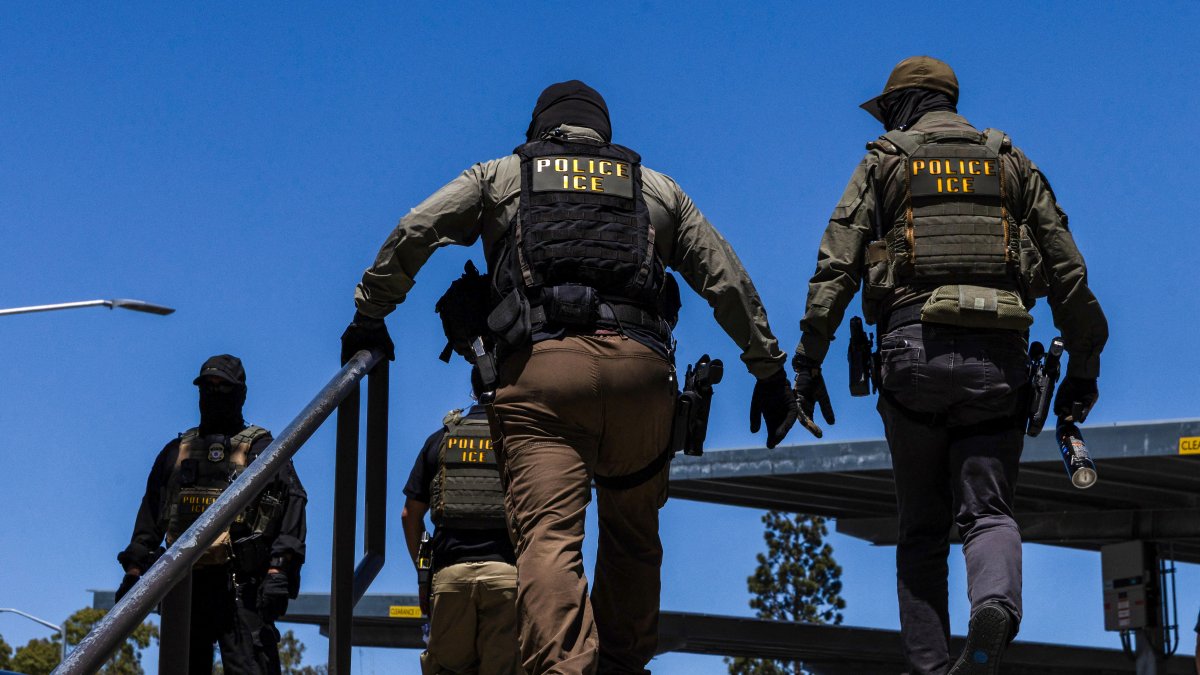
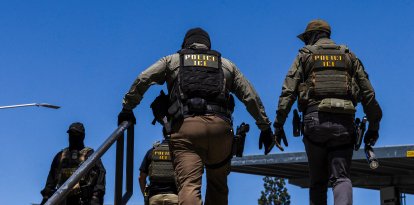
U.S. Immigration and Customs Enforcement official

Sheriff Clinton Boring of Doddridge County, in West Virginia, knew that his jurisdiction, with a population of just 7,600, had virtually no Hispanic population. Despite this fact, he signed his department up in February for President Donald Trump's immigration crackdown. Not because he expected to find many immigrants, legal or otherwise, but because his department needed new patrol cars and a federal program had the resources to provide them.
"Honestly don't think there are any Hispanics that live in Doddridge," he told The Wall Street Journal, which published an extensive investigation this week into how this program actually works. "When you get an opportunity to get possibly $100,000 for equipment or vehicles, that's a no-brainer." In six months, his office arrested just two undocumented individuals and received more than $137,000 in federal funds.
The case of the Doddridge County Sheriff's Department perfectly illustrates how a program of the Department of Homeland Security (DHS) turned hundreds of police departments into virtual paid partners in the White House's deportation campaign. As the WSJ details, after turning in a single immigrant eligible for deportation, any department is entitled to collect $60,000 annually for each officer to whom federal authority has been delegated to enforce immigration laws, regardless of whether that officer makes another arrest.
To cite another example, the Venice Police Department in Florida has already requested $895,000 from the program thanks to a single immigration detention recorded in September 2025, and can continue to receive funding each quarter as long as it remains enrolled. This is extremely profitable for small local agencies across the country and even more so for large county agencies.

Additionally, the sheriff's office in Miami-Dade registered more than 970 officers and became eligible to receive nearly $14.5 million between April and June, despite making only seven immigration arrests during that period, according to the WSJ's calculations based on state records. That's more than $2 million per arrest.
A lot of money made available
The massive rewards for deportation stem from the enormous available funds. DHS has already distributed more than $200 million among its law enforcement partners between January 2025 and August of this year, according to a Trump administration official consulted by the WSJ, and Congress allocated an additional $1 billion for these types of programs, on top of $3 billion in grants announced this summer by the Department of Justice for state and local governments that cooperate with immigration enforcement.
However, despite this influx of money—which, of course, comes from taxpayers—the program yields modest results in terms of actual arrests. According to an analysis of government data, this program accounted for just 46,500 of the nearly 576,000 immigration arrests recorded nationwide between January 2025 and July 2026. That is, less than one in ten.
The report also highlights a striking geographical fact: jurisdictions with few immigrants receive the same per-officer payment as those with much larger immigrant populations.
In West Virginia, where 14 agencies have already joined the program, undocumented immigrants make up just 1% of the workforce, according to estimates by the Pew Research Center. That figure is negligible compared to states such as Florida, Texas, Arizona, California, and New York. In the latter two states, moreover, Democratic authorities prohibit local police departments from participating in the federal program.
The program, known as "287(g)" after the section of the law that governs it, has existed since 1996, but was effectively suspended during the Obama administration in 2012 after Department of Justice investigations determined that officers in Maricopa County, Arizona, and Alamance County, North Carolina, were disproportionately detaining Latino drivers—including U.S. citizens—without any apparent cause. Trump reinstated the program upon taking office in January 2025, and today nearly 80% of agencies that collaborate with DHS participate under it.

Just The News
SCOTUS agrees to hear challenge to ICE's mass detention policy
Just The News/Ben Whedon
The WSJ also documented various incidents of violence during traffic stops that account for a significant portion of these arrests. The newspaper described officers using Tasers, chokeholds, and, on occasion, smashing vehicle windows, methods similar to those that had previously sparked controversy among federal ICE agents.
In one of the cases, described based on a video recorded by witnesses, Florida Highway Patrol officers detained Kenny Laynez, a U.S. citizen, while he was traveling to a landscaping job with his mother and two coworkers. The officers called in Customs and Border Protection (CBP) agents for backup, and Laynez filmed the moment when one of them fired a taser at one of his coworkers, while other officers pinned him to the ground.
Seconds later, an unidentified officer remarked: "Just remember you can smell that too, with a $30,000 bonus," implying a reward for the operation. Laynez and the other two passengers were ultimately detained by federal immigration agents; Laynez was released shortly thereafter.
So far, neither DHS nor the state agency involved has responded to the media outlet's questions about the comment or the arrest.
LATEST