The court confirms that there is sufficient evidence to convict Lindsay Clancy of murder despite her defense's arguments
The judge also rejected the defense's argument that the defendant's psychiatric condition rendered her incapable of facing the consequences of her actions.
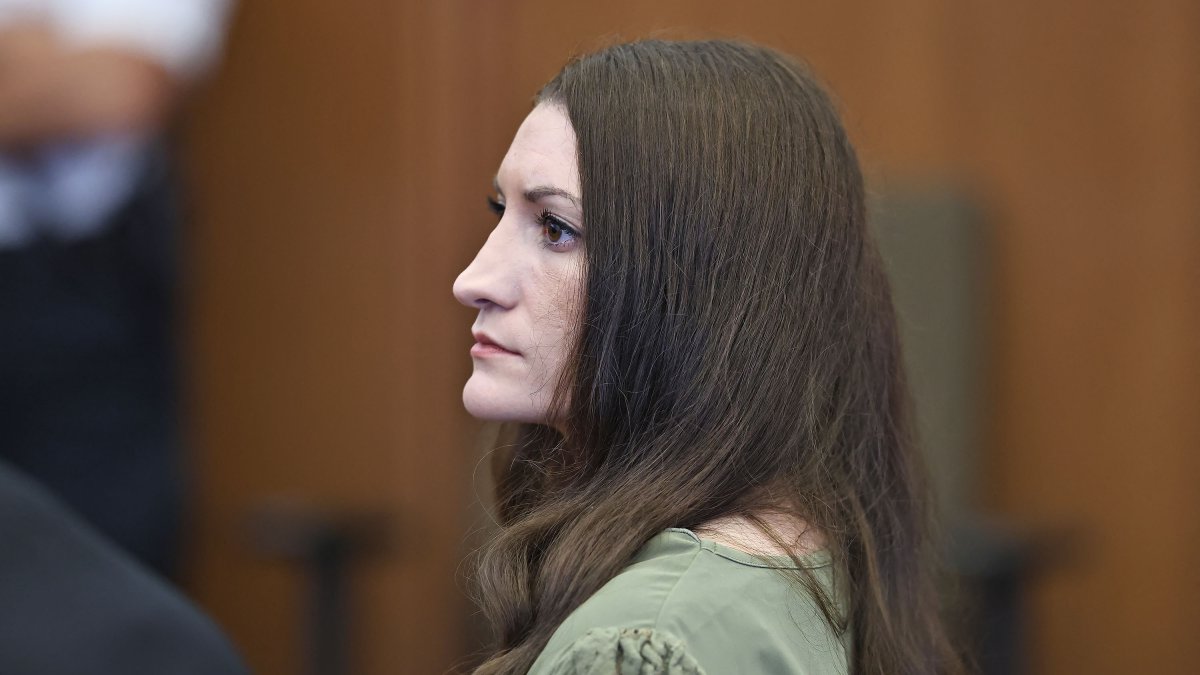
Lindsay Clancy looks at the jury during the hearing following the murder of her children.

Judge William Sullivan of the state of Massachusetts denied the motion filed by the defense for Lindsay Clancy, which sought a mandatory not-guilty plea.
The court's decision comes just weeks after the first trial against Clancy was declared a mistrial on September 4, thwarting defense attorney Kevin Reddington's attempts to have the case dismissed without a conviction.
Reddington argued before the court that Plymouth County prosecutors failed to present sufficient evidence to prove his client's guilt beyond a reasonable doubt.
However, Judge Sullivan concluded that the case file contains the necessary elements to keep the charges for the murder of Clancy's children in force.
"Evidence was presented—both physical and circumstantial—that would allow a rational evaluator of the facts to find, beyond a reasonable doubt, the elements of the murder charge," Sullivan stated in the court ruling.
Mental illness does not automatically preclude criminal responsibility
The judge also rejected the defense's argument that the defendant's psychiatric condition rendered her incapable of facing the consequences of her actions.
According to the ruling, severe mental illness does not constitute an absolute shield from the law when the evidence indicates that the defendant possessed the capacity to discern right from wrong during the commission of the crime.
"Mental illness alone does not preclude a finding of criminal responsibility beyond a reasonable doubt," Sullivan stated. The judge emphasized that the prosecution maintained that the defendant retained a substantial capacity to understand the wrongfulness of her conduct.
To support this position, the prosecution presented evidence related to the nature and methods used in the killings, as well as the conduct and behavior observed in Clancy before and after the events.
The proceedings will continue in the coming weeks to address the pending appeals before the court determines the case's legal future.
Lindsay Clancy is scheduled to appear in court again on November 2 for a hearing on her double jeopardy motion and to address the defense's motion regarding the single juror who voted to find her guilty.
LATEST