ANALYSIS
Productivity or replacement? Here's how AI is redrawing the employment map
A Gallup report revealed that artificial intelligence (AI) is impacting companies and workers. Concerns about losing their jobs are growing.
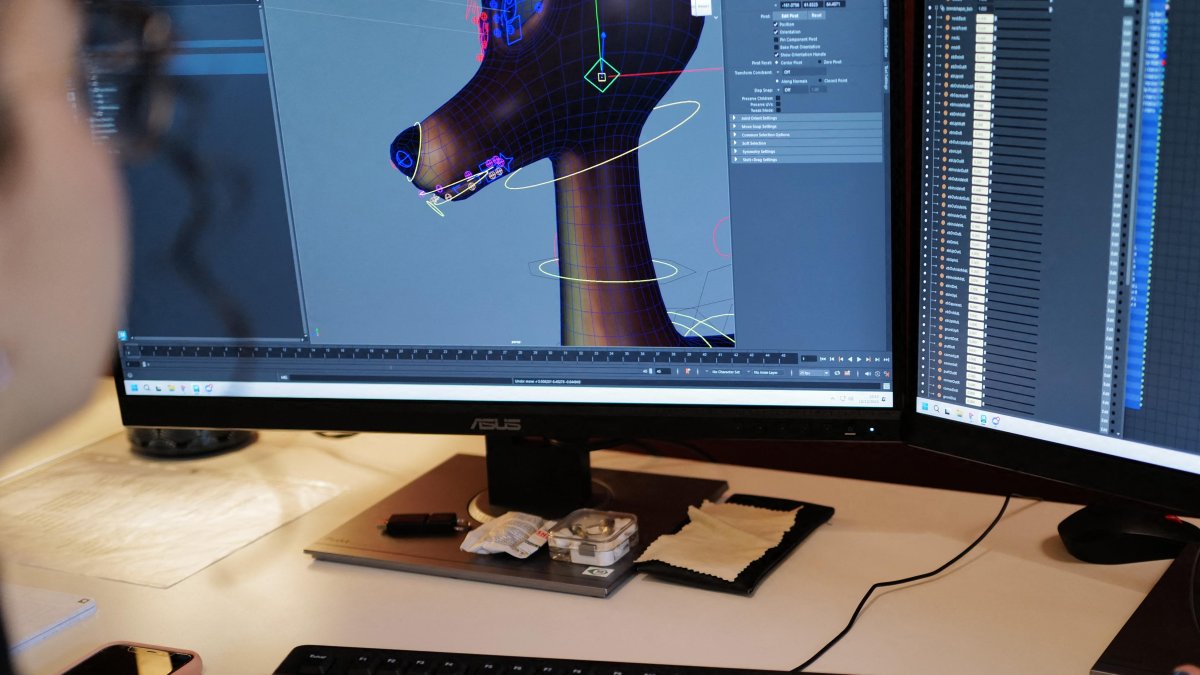
Artificial intelligence is already part of many workers' daily work lives. File image

The wheel, the printing press, artificial light, the internet.... There are many inventions that have transformed the world. Artificial intelligence (AI), a tool that has evolved from a theory to an everyday reality, seems to have slipped into this list of must-haves.
It is already part of everyday life. People use it for personal tasks, but especially for their work performance, radically transforming the way they execute their work.
How is AI entering the work environment?
The growth of artificial intelligence has reached a tipping point. According to the report Rising AI Adoption Spurs Workforce Changes by Gallup, 28% of employees already turn to it daily or several times a week.
In addition, 13% indicate daily use, while 50% of the workforce resort to this tool on a recurring basis. These are clearly increasing trends.
Does AI improve employee productivity?
The 41% of workers point out that their companies are already coupling AI tools in their structure. Of those, 65% flatly state that this technology improves their productivity.
The report suggests that regular AI users get better results when encountering clear use cases such as:
- Redaction of written content.
- Summarizing complex information.
- Generation of creative ideas.
However, the benefits seem to be concentrated on individual tasks and not so much on a fundamental change to the overall workplace systems
The workforce dilemma: More or fewer employees?
The big question is whether AI affects the size of the workforce. Thirty-four percent of employees in AI-enabled companies say their organization is hiring new people, compared with 23% reporting workforce cuts.
The impact varies by company size:
- Less than 25 employees: 29% expand their workforce, 12% downsize and 53% make no changes.
- Between 25 and 499 employees: 39% expand their workforce, 17% downsize and 41% make no changes.
- Between 500 and 999 employees: 39% expand their workforce, 22% downsize and 34% make no changes.
- Between 1,000 and 4,999 employees: 34% expand their workforce, 25% reduce it and 37% make no changes.
- Between 5,000 and 9.999 employees: 38% expand their workforce, 23% downsize and 34% make no changes.
- 10,000 employees or more: 30% expand their workforce, 33% downsize and 30% make no changes.
Concern about job loss is growing
Despite hiring more than firing, job uncertainty is increasing. 23% of employees in AI organizations consider it "very or somewhat likely" that their job will be eliminated in the next five years due to job automation and robotics. 18% believe it is "likely."
LATEST