ANALYSIS
Disneyland implements facial recognition: New smart access raises concerns
California theme parks are digitizing entry to speed up lines and prevent fraud. Experts warn of privacy risks and the "normalization of surveillance" in recreational spaces.
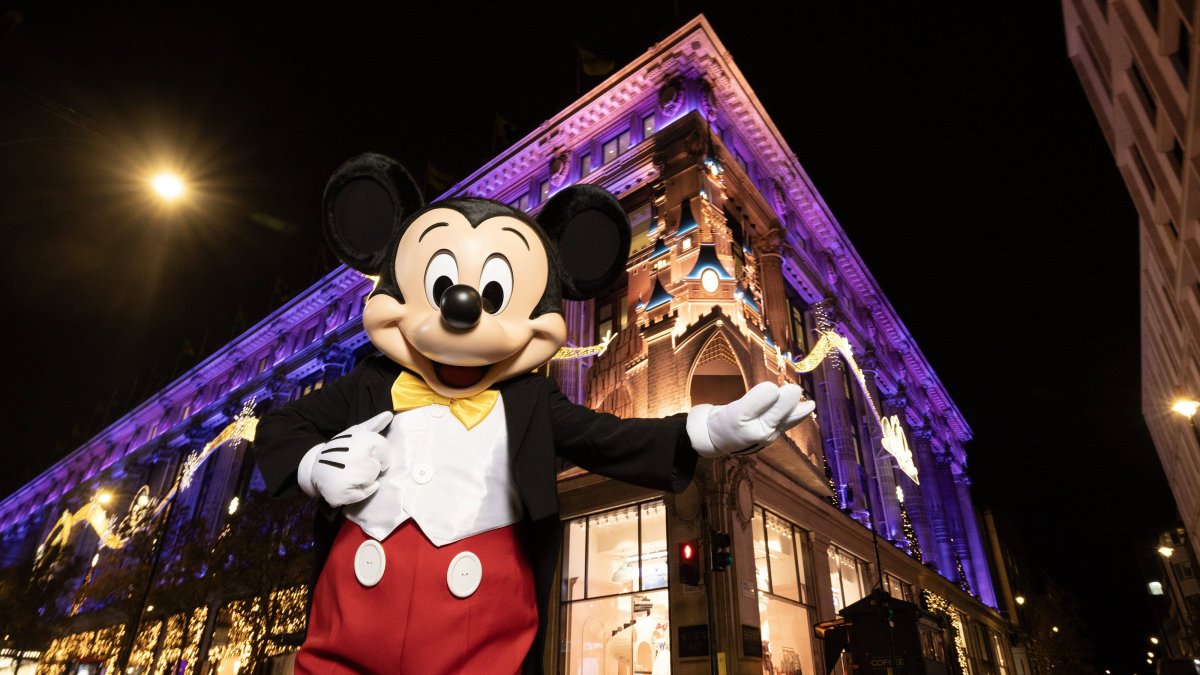
Image of Mickey Mouse in a Disneyland special (File).

Access to the world's most famous parks is no longer a simple ticketing procedure, but a biometric data scan. Disneyland and California Adventure have implemented a facial recognition system that transforms each visitor's face into a unique numeric code, marking a milestone in the modernization of the entertainment industry, but also setting off alarm bells for privacy advocates.
As The Los Angeles Times originally reported, the company's primary goal is to optimize the flow of people and reduce fraudulent use of annual passes. However, the deployment of this technology puts Disney at the center of a global trend of biometric surveillance already being seen in stadiums and retail stores.
Between speed and surveillance
The system works by comparing the image captured in real time at entrances with photographs linked to tickets or passes. Although Disney has assured that the process is optional, the reality on the ground shows a clear trend: last Friday, out of dozens of available lines, only four allowed manual entry without biometric processing.
"The normalization of facial surveillance is really problematic," said Ari Waldman, a law professor at the University of California, Irvine, to The Los Angeles Times. "This isn’t just next step in surveillance; it’s qualitatively different. In a world of facial recognition, when people leave their house, it automatically means they’re identified."

Data security: The critical point
Despite these assurances, organizations such as the Electronic Frontier Foundation (EFF) have warned that the creation of these databases makes companies attractive targets for cybercrime. Adam Schwartz, privacy litigation director at the EFF, underlined the vulnerability of these systems: "If you collect this type of data you have put a target on your back for people to steal it."
Visitor reaction
For many tourists, the priority remains avoiding long waits. However, some visitors have expressed concern, especially regarding children. Sandra Contreras, a park visitor, told the international press of her discomfort at having her five-year-old daughter subjected to the scanning, "I think it’s more concerning for children just to protect their privacy."

A California standard
Disneyland is not alone in this transition. The biometric rollout is already a reality at other venues in California:
- Intuit Dome: Uses the GameFaceID system, where fans can upload a selfie for streamlined access.
- Dodger Stadium: Implements Go Ahead Entry, based on facial recognition.
As technology advances toward the 2028 Olympics in Los Angeles, the loophole in California's oversight of these systems continues to be a topic of debate in legislative chambers, leaving users at a crossroads between digital convenience and identity protection.
LATEST