A congressional report reveals that New York prosecutors reduced criminal charges to prevent the deportation of undocumented immigrants
An investigation by the House Judiciary Committee indicates that the Bronx and Queens district attorney's offices instructed their staff to modify plea agreements to avoid immigration consequences, even in cases involving weapons, domestic violence, and sexual offenses against minors.
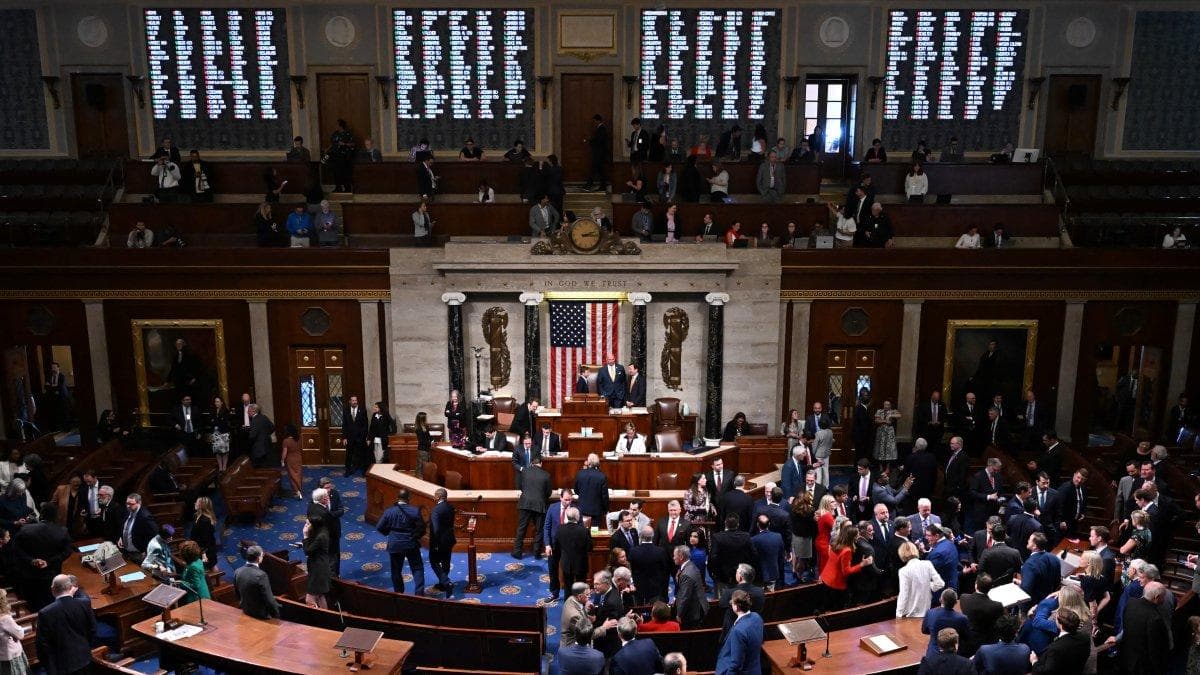

A report published Monday by the House Judiciary Committee, controlled by Republicans, alleges that prosecutors in the five boroughs of New York implemented policies aimed at reducing or modifying criminal charges against certain foreign defendants to prevent their convictions from leading to deportation.
The investigation, initially reported by the New York Post, identifies particularly controversial practices in the Bronx and Queens district attorney's offices, led by Democrats Darcel Clark and Melinda Katz.
According to Republican lawmakers, these offices allowed immigration consequences to be taken into account when negotiating plea agreements, even in certain cases involving serious crimes. The report argues that these practices gave foreign defendants preferential treatment over U.S. citizens in comparable situations.
Just the News
Trump border enforcement cuts fiscal, criminal costs of illegal migration that amnesty would restore
Just The News
Instructions for modifying charges and avoiding deportation
One of the main findings pertains to the Bronx District Attorney's Office.
According to training documents from 2019 and 2023 obtained by Congress, prosecutors were instructed to negotiate alternative charges that would not automatically trigger immigration consequences.
The recommendations included avoiding certain references in conviction records:
- Weapons offenses: seek plea agreements that did not specify the presence of a firearm.
- Domestic violence: avoid having the family or romantic relationship between the defendant and the victim listed as an element of the conviction.
- Sexual offenses against minors: consider alternative charges that did not include the victim's age as an element of the crime.
The documents also considered the possibility of negotiating guilty pleas for offenses deemed legally impossible, which, according to the committee's analysis, could prevent certain immigration consequences.
The report questions these guidelines, arguing that the priority of preventing deportations may compromise the transparency of criminal records and the enforcement of immigration laws.
Queens had a specialist to review immigration consequences
The investigation also examines the practices of the Queens District Attorney, Melinda Katz.
According to documents from her own office cited by the committee, the district attorney's office employed an immigration specialist to advise prosecutors on plea agreements that would avoid immigration consequences deemed disproportionate.
In 2020 alone, that specialist was involved in 21 cases in which sentences were reduced or overturned. In addition, the district attorney's office recommended that then-Governor Andrew Cuomo grant pardons in six other cases to prevent deportations.
The committee also obtained an email in which a Queens prosecutor described a plea agreement as "immigration-safe," even though the defendant had admitted to several crimes and served time in prison.
These actions do not necessarily mean that all beneficiaries were undocumented immigrants. The immigration consequences of a conviction can also affect foreign nationals with legal residency.
The New York Police Department failed to respond to nearly 10,000 requests from ICE
The report also addresses the lack of cooperation between local authorities and U.S. Immigration and Customs Enforcement (ICE).
According to data presented by the Judiciary Committee, the New York Police Department received 9,645 immigration detention requests during the period from July 2025 to June 2026, but did not comply with any of them.
These requests allow ICE to ask local authorities to notify them of the impending release of a person subject to deportation or to temporarily hold that person in custody to facilitate their transfer to federal authorities.
The committee attributes the lack of cooperation to sanctuary city policies, which limit local authorities' participation in the enforcement of federal immigration laws.
According to the investigation, between July 2018 and June 2026, the New York Police Department received 20,255 such requests but did not comply with any of them.
An investigation that reopens the debate on sanctuary cities
The Judiciary Committee, chaired by Republican Jim Jordan, began requesting information in May 2026 and subsequently asked district attorneys' offices for additional documentation.
The investigation also examined practices in Brooklyn, Manhattan, and Staten Island, where prosecutors have considered the immigration consequences of certain convictions or promoted alternative agreements.
The Queens district attorney had previously argued that decisions regarding state criminal prosecutions fall under the jurisdiction of local authorities and not the federal Congress.
According to the New York Post, the Bronx and Queens district attorney's offices did not respond to requests for comment on the findings published on October 26.
The report once again places New York's sanctuary policies at the center of the clash between Republicans and the city's Democratic officials, particularly regarding the extent to which local prosecutors should consider immigration consequences when negotiating a criminal sentence.
🛠 Do you think there is an error in this article?
Recommendations





LATEST