'El Niño' climate phenomenon could be especially strong this year, according to experts
Scientists from the U.S. National Oceanic and Atmospheric Administration (NOAA) said in their latest monthly bulletin that there is an 82% chance that El Niño will emerge between May and July, extending into next year.
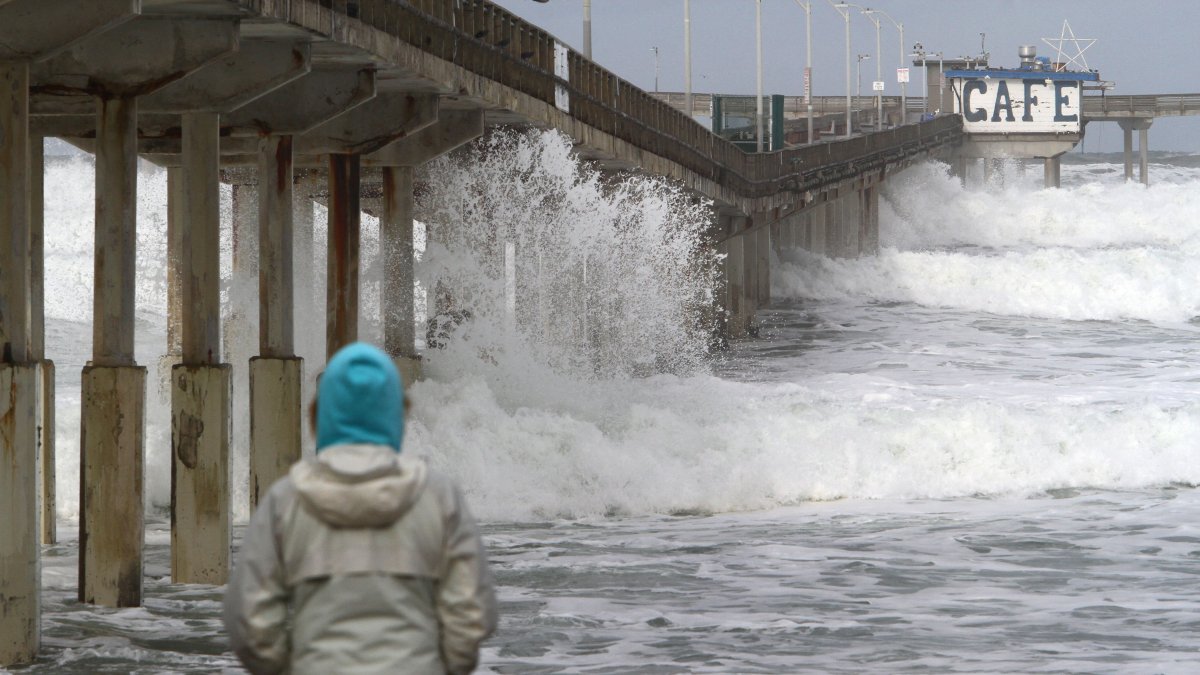
A woman watches as large waves break on the beach (File).

The nation's Climate Prediction Center announced Thursday that the El Niño weather pattern is "likely to emerge soon" and could reach "very strong" levels later in the year.
It is the latest forecast for this naturally occurring phenomenon that could leave populations around the world vulnerable to extreme weather conditions.
Scientists from the National Oceanic and Atmospheric Administration (NOAA) noted in their latest monthly bulletin that there is an 82% chance that El Niño will emerge between May and July, extending into next year.
Likewise, there is currently a greater than 50% chance that the phenomenon will become "strong" or "very strong" sometime between September and November, according to NOAA charts.
Uncertainty about the intensity of the phenomenon
However, the scientists warned that "while confidence in the occurrence of El Niño has increased since last month, there is still substantial uncertainty in the peak strength of El Niño, with no strength categorization exceeding a 37% chance."
They also noted that "Stronger El Niño events do not ensure strong impacts; they can only make certain impacts more likely."
Droughts, torrential rain and other extreme weather phenomena
It influences climate on a global scale and raises the likelihood of droughts, torrential rains and other extreme weather events. It also adds heat to an already warmer planet due to the burning of fossil fuels.
The latest El Niño episode contributed to 2024 and 2023 being the first and second warmest years on record, respectively.
LATEST