North Carolina purges its voter rolls and removes 34,000 records of deceased voters
On April 17, the board reviewed approximately 7.4 million records as part of its regular maintenance protocol.

An image from the elections (Acrhivo).

North Carolina has taken a significant step in updating its voter rolls by removing about 34.000 records corresponding to deceased voters, according to the State Board of Elections reported. The move comes after a routine review that officials said turned up numbers far above what they expected.
"While we expected to find some cases, this is higher than we anticipated," Sam Hayes, the agency's executive director, said. The official stressed that these types of verifications are essential to ensure the accuracy of electoral records.
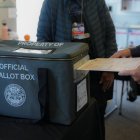
The board reviewed approximately 7.4 million records
The purging was carried out through the use of the federal database known as SAVE (Systematic Alien Verification for Voting Benefits). Last April 17, the board submitted approximately 7.4 million records for review as part of its regular maintenance protocol.
Hayes stressed that the goal is to strengthen the integrity of the electoral system by using all available legal tools. "Now, we must roll up our sleeves and begin the hard work to act of verifying that every person registered to vote in North Carolina is eligible," he said, noting that the process will be done in coordination with state and federal authorities.
Public confidence
The political context has also influenced these actions. Since 2024, oversight of the State Board of Elections has fallen to the state auditor, following a reform pushed by the Republican majority in the General Assembly. Dave Boliek, the current auditor in his first term, backed the measure, considering that efficient voter roll management is key to public confidence.
However, the authorities emphasized that the presence of deceased persons in the registers does not imply that they have cast votes in electoral processes, an idea that has circulated both in a joking tone and in more serious accusations. According to the Electoral Board, this finding reinforces the need for constant updates and strong interagency coordination.
The verification system
With this initiative, North Carolina seeks to strengthen transparency and confidence in its electoral system, in a national context where the integrity of the polls continues to be the subject of debate.
LATEST