ANALYSIS.
Spiritual awakening: Young people around the world are returning to religion in search of answers
Amid secularization and the spread of the woke agenda, youth are returning to faith at the hands of influencers and life models who offer them to "fill the void" which, in the words of singer Rosalía, "is God's space."
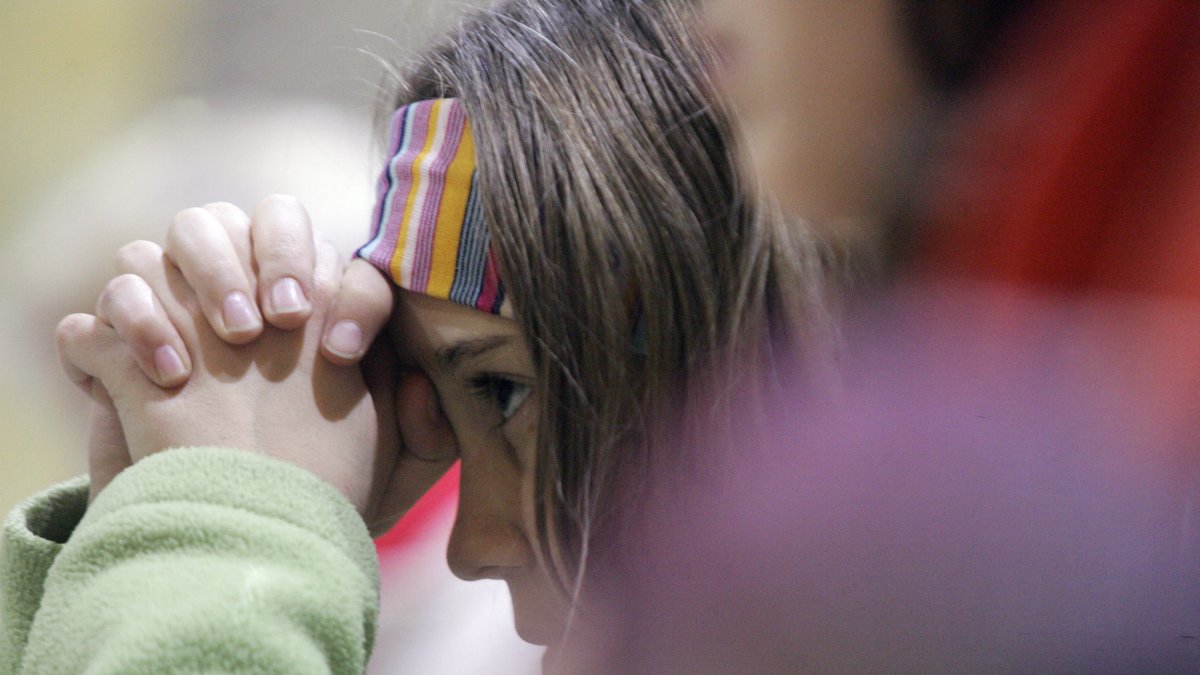
A young woman praying in a file photo

In a secularized and materialistic world where the woke agenda has been gaining ground over the major religions in the public conscience, young people have said enough is enough. Sociologists have been observing with bewilderment a return to religion on a global scale... and it is precisely the young, those born in the midst of the new social trends, who are leading the return to religion.
Almost all religious, especially Catholics and Evangelicals, are reporting this phenomenon. It is, moreover, a return with a characteristic of new times: many have rediscovered faith from the hand of influencers who have converted in turn or who directly became famous by sharing their religious experience on a daily basis.
Rosalía: "Maybe God is the only one who can fill the void"
An example of this comes from Rosalía. The Spanish singer has highlighted spirituality and God in her latest album, and her experience and beliefs have been trending worldwide throughout the week. The "Motomami" herself has had no qualms about talking about it in the promotion of her latest work. For example, in an interview with the "Radio Noia" podcast:
"Maybe God is the only one who can fill the void. I've spent my whole life with this feeling of emptiness. Sometimes you get confused, thinking that you can fill it with something material, with an experience, a mess you get into or even romantic relationships in which you put your partner on a pedestal. Maybe we are confusing this space. This space is God's space."
"An undercurrent"
Even Spanish bishops rode the wave provoked by the singer's new album to talk about the religiosity of young people: "If Rosalía and her marketing team see that talking about God, dressing like a nun and singing about the consequences of the existential void caused by materialism has something to say, surely it's because there's an undercurrent," said the archbishop of Valladolid and president of the Spanish Episcopal Conference, Luis Argüello.
In fact, the Catholic Church is aware of which way the wind of the new times is blowing: "more influencers and less pulpits," is a motto among young people, and the first jubilee featuring well-known Catholic faces was organized last summer in Rome. The event brought together nearly a thousand influencers in the Holy City.
"Seeing young people talking about their faith on social media without fear is very contagious"
One of the participants, Cristina Sempere, who saw her videos exceed 50,000 views when she began talking about God and tips on "how to put on makeup to go to mass," celebrated this trend and stressed the importance of the virtual environment in the transmission of faith, in a conversation with El Mundo: "The church is not for just a few, it is for everyone, but you have to go out to the street to find people, to call them, and social media is a fantastic way to evangelize."
Quique Mira, a Catholic influencer and religious content creator with more than 173,000 followers on Instagram and 68,000 on TikTok, noted, "The new wave of digital content has given a lot of authenticity to the faith. Religion is no longer the veneer of a priest from a pulpit, no longer something distant and boring. Seeing young people talking about their faith on social media without fear is very contagious."
Spectacular "resurgence" in the U.K.
The phenomenon of the return to religion is also making itself felt in countries such as the United Kingdom and even France, the cradle of the most radical secularism. Several reports in these countries confirm the phenomenon that has experts, not religious people, around the world surprised.
In April, The Guardian spoke of the "resurgence" of religion among young people in the United Kingdom. The figures are clear. Between 2018 and 2025, the number of Britons aged 18 to 24 who went to mass at least once a month quadrupled from 4% to 16%, according to The Quiet Revival study.
In France, adult and adolescent baptisms have skyrocketed. Last Easter alone, 45% more adults received the first sacrament than in the whole of the previous year. It was the highest figures in recent decades according to French bishops.
A "historic change" in the U.S.: Millennials and Generation Z lead the return to mass
Within the U.S., there is talk of "a historic change" At present, Millennials and Generation Z are the most dedicated parishioners, above the older generations. The change is especially noticeable among males, and that began with the coronavirus pandemic.
According to David Kinnaman, executive director of Barna Group, a Christian research organization on religious trends: "This is the first time we have recorded a spiritual interest of such magnitude led by the younger generations. There is certainly a renewed interest in Jesus."
According to a study conducted by this group last April, "commitment to Jesus" increased by 15 percentage points among American Generation Z men between 2019 and 2025 and by almost 20 points among millennials in the same period.
A passing fad or here to stay?
In this regard, many experts note that "The recent increase in religious affiliation, practice and/or identification amid decades of secularization is not so much a permanent change as a passing phenomenon. In modernizing societies, religious revivals can emerge in times of crisis (e.g., wars, recessions, pandemics) when people are searching for stability and meaning." For them, the pandemic was the trigger for this spiritual renewal.
However, this is refuted by those who point to weariness about the lack of meaning in young people's lives, saying they feel the need to find something transcendent.
LATEST