Pentagon disburses nearly $3 million in initial payments to victims of the mysterious Havana syndrome
Havana syndrome first came to public attention in 2016, when U.S. diplomats stationed on Cuba reported falling ill after hearing high-pitched sounds at night, which at the time fueled suspicions of an attack with an unidentified sonic weapon by a foreign power.
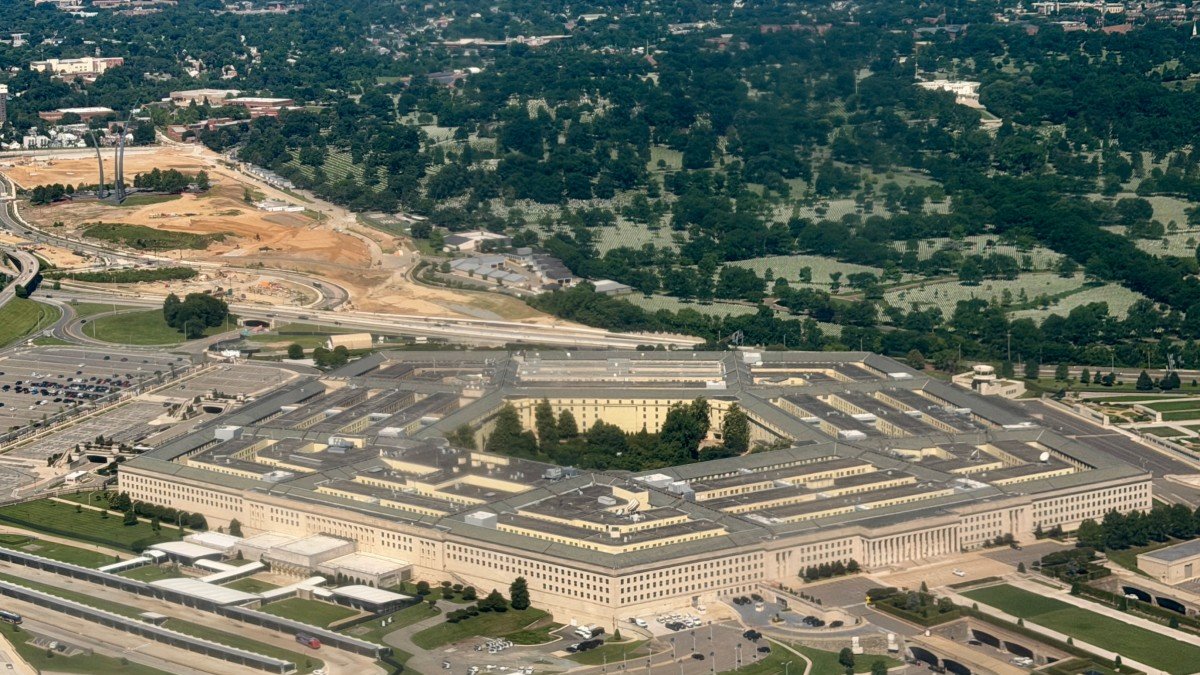
Aerial view of the Pentagon, headquarters of the U.S. Department of Defense, in Arlington, Virginia

The War Department made its first compensation payments to personnel affected by the so-called Havana syndrome, the condition that has affected U.S. diplomats, spies, and military personnel in various parts of the world since 2016.
According to a statement released Friday by the Pentagon, the agency disbursed nearly $3,000,000 in compensation, representing the first payments under the Havana Act made by any U.S. administration.
“The Department is fully meeting Congressional intent regarding non-kinetic threats by applying a more dedicated warfighter and medical focus to this mission and expanding collaboration with interagency partners to coordinate vital research efforts,” the statement reads. “The Department is prioritizing the care of affected personnel and has disbursed nearly $3 million in compensation, representing the first HAVANA Act payments made under any presidential administration.”
The announcement came alongside another key institutional change: the Office of the Under Secretary of War for Research and Engineering renamed the Multifunctional Team on Anomalous Health Incidents (AHI) to the Multifunctional Team on Directed Energy Bioeffects (DEBE), although it will continue to perform the same interagency coordination tasks to investigate the phenomenon.
Havana Syndrome first came to public attention in 2016, when U.S. diplomats stationed on the communist island reported falling ill after hearing high-pitched sounds at night, which at the time fueled suspicions of an attack with an unidentified sonic weapon by a foreign power. Over time, diplomatic personnel in China, Europe and Washington itself reported similar symptoms, including nosebleeds, headaches, and vision problems.
The situation led the United States to withdraw non-essential staff from its recently reopened embassy in Havana in 2017 and to expel Cuban diplomats, amid speculation about a possible microwave-based electronic warfare campaign. The administration of Joe Biden, however, chose to send a signal of reconciliation in 2023 by reopening the U.S. immigration office in the Cuban capital, which had remained closed since the incident.
In early 2025, a U.S. intelligence assessment concluded that it was “highly unlikely” that a foreign adversary was behind the reported symptoms, a finding that has not settled the debate within the government itself or among the victims, as the syndrome remains, all things considered, a great mystery.
In Friday’s statement, Defense Department officials noted that the agency will continue to emphasize transparency and scientific integrity to achieve validated results, improve care for those affected, and adapt to a changing operational environment.

Just The News
Ratcliffe CIA review on Russia and 2016 a ‘whitewash’ & ‘protects deep state,’ GOP intel chair says
Just The News/Jerry Dunleavy
What is Havana syndrome?
The most widely debated hypothesis since 2020 points to pulsed electromagnetic energy—radio frequency or microwaves—emitted from an external source. An intelligence panel even concluded in 2022 that this mechanism could plausibly explain some episodes. However, medical studies—including MRI scans conducted by the National Institutes of Health on 81 victims and 48 people in a control group—found no significant differences between the two groups, which, of course, adds further uncertainty to the matter. Other researchers, however, have suggested that the condition could be a phenomenon of mass hysteria, triggered by fear of an attack rather than by an external physical cause.
Meanwhile, according to CNN, the Pentagon has been testing a device in recent months—one with Russian-made components acquired through a covert operation—that is capable of emitting pulsed radio waves and is compact enough to fit in a backpack. The goal is to determine in a laboratory whether this technology can reproduce the symptoms reported by the victims, at a time when the intelligence community maintains that a coordinated campaign by a foreign adversary is unlikely—though it does not rule it out entirely.
LATEST