ANALYSIS
Immigration: Stricter rules for family-based petitions
Starting in August 2025, new immigration rules will tighten controls on family-based petitions. The Trump administration says the changes aim to close loopholes and strengthen the integrity of the immigration system.
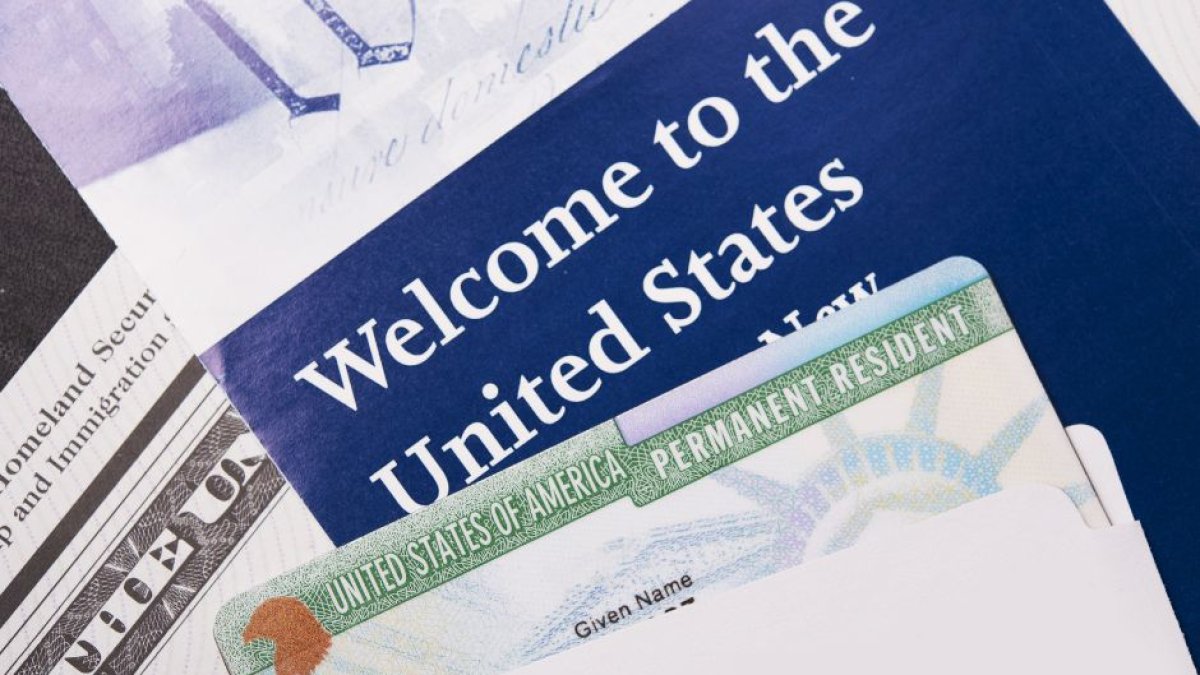
Document with a Green Card

Starting in August 2025, lawful permanent residents (green card holders) who want to bring family members to the United States will face stricter requirements. The U.S. Citizenship and Immigration Services (USCIS) has updated its policy manual to tighten review standards for family-based applications.
The changes, now in effect, are outlined in Volume 6 of the USCIS policy manual and apply to both new and pending petitions.
More detailed requirements and more stringent interviews
Under the new guidance, USCIS officers now have clearer tools to verify whether claimed family relationships are genuine. This particularly affects marriage-based petitions, which will face more rigorous scrutiny to prevent immigration fraud and ensure all documents meet legal standards.
The updated manual specifies the exact documentation required, clarifies eligibility criteria, outlines new conditions for when an interview will be required, and details situations in which a Notice to Appear (NTA) may be issued—initiating deportation proceedings even if the petition has been approved.
Legal reorganization for greater transparency
The policy not only tightens the process but also aims to resolve previous administrative confusion. USCIS has eliminated sections of the manual and reorganized entire chapters to ensure uniform interpretation of the rules.
In parallel, new guidance also covers cases involving multiple petitions and situations in which U.S. citizens may send Form I-130 directly to the State Department—such as for military personnel, government employees overseas, or in emergencies.
One of the strongest warnings in the update is that approval of a family petition does not guarantee immigration protection. If a petitioner is found to be deportable for other reasons—such as illegal entry, a criminal record, or fraud—USCIS may still issue a Notice to Appear (NTA).
About petitioners and beneficiaries
Under current law, both U.S. citizens and lawful permanent residents may petition for certain relatives to join them in the United States, starting with Form I-130. Eligible relatives include:
- Spouses.
- Children (unmarried or married, depending on the status of the petitioner).
- Parents (only if the petitioner is a citizen).
- Siblings (only if the petitioner is a citizen).
Changes in proof of citizenship
"In the same announcement, U.S. Citizenship and Immigration Services (USCIS) Director Joseph Edlow said in an exclusive interview on Fox that the current test for acquiring U.S. citizenship should be changed, arguing it is not up to the standards the nation requires: "The current test is too soft."
The test should reflect the letter and spirit of what Congress intended (...) It's important that people understand English, our history, our government ... and the way the test is written and executed right now doesn't meet that bar.
Currently, those seeking naturalization must correctly answer 6 out of 10 questions from a list of 100 covering history, the Constitution, geography, and civic duties. They must also read aloud one sentence in English and write another correctly. For Edlow, this is insufficient."
The director proposes revising both the content and methodology of the citizenship test. Instead of limiting the English assessment to basic reading and writing, he suggests evaluating fluency throughout the entire interview.
I want judges to really listen and speak throughout the interview (...) Change some of the words...and see if individuals are still able to understand the questions. That's a better indicator of readiness."
"English fluency is an imperative part of the American dream"
Edlow recalled that a recent executive order declared English the national language and emphasized that language fluency is essential for fully integrating into American life.
"Linguistic fluency is an imperative part of the American dream."
Finally, Edlow warned that the growing backlog of immigration cases poses a direct threat to the country, noting that the current administration has diverted key resources amid the border crisis.
"The backlogs that continue to grow are nothing short of a national security threat to this country," he said.
While pledging to reduce wait times, he made it clear there will be no shortcuts that compromise the security or integrity of the process.
LATEST