Harvard and its leftward tilt: From Fidel Castro to the defense of Palestinian terrorism
Harvard's trajectory as an epicenter of progressive ideas, from the reception of Fidel Castro in 1959 to the recent pro-Hamas demonstrations, reveals a structural tension between its aspiration for intellectual excellence and its susceptibility to ideological instrumentalization.

Pro-Hamas demonstration at Harvard University.

Harvard University, an emblem of the global intellectual elite, has historically been a pillar of progressive and leftist ideas. From its enthusiastic reception of figures like Fidel Castro to its nuanced support for movements like that led by Ho Chi Minh in Vietnam, interest in Maoist China and, more recently, the Palestinian cause, Harvard has hosted debates and held positions that have generated controversy.
Fidel Castro at Harvard
In April 1959, just months after the triumph of the Cuban Revolution, Fidel Castro, then a young 32-year-old leader, visited the United States on a tour that sought to project an image of openness. His stop at Harvard on April 25 was one of the highlights. Unable to accommodate the crowd in an auditorium, the speech was moved to the university's soccer stadium, converted into a makeshift amphitheater. More than 10,000 people, including students, faculty and Boston residents, gathered to hear the revolutionary, introduced by Dean McGeorge Bundy, who even joked about having turned down Castro's application for admission years earlier.
Castro's 90-minute speech, in limited English, was a mix of celebration of his revolution and criticism of imperialism. He spoke of oppression under the regime of ousted President Fulgencio Batista and defended the need for reforms in Cuba, winning effusive applause from the audience. The students, many of whom saw Castro as a romantic liberator who had overthrown a corrupt dictator, greeted him enthusiastically. However, when asked about the summary executions in Cuba, Castro denied any wrongdoing.
This episode reflects Harvard's weakness for leftist leaders, especially in a context where anti-imperialism resonated among students in the 1950s and 1960s. Less than two years later, however, Castro would declare himself a Marxist-Leninist, aligning himself with the Soviet Union, which transformed the perception of many at Harvard and in the United States. The visit, which initially symbolized hope, became a reminder of how romantic narratives can obscure authoritarian realities.
Ho Chi Minh and the Vietnam War: The academic left in action
During the Vietnam War, Harvard became an epicenter of protests against U.S. intervention, and Ho Chi Minh, leader of the communist and nationalist Viet Minh movement and president of North Vietnam until his death in 1969, was seen by many students as a symbol of anti-colonial resistance. Although he did not visit Harvard, his figure inspired student movements of the 1960s and 1970s, such as the Students for a Democratic Society (SDS), who organized occupations and demonstrations on campus, despite the atrocities committed by the communist leader.
Professors such as the leftist Noam Chomsky, although based at MIT, influenced progressive circles at Harvard with speeches and writings that defended North Vietnam and only pointed against the U.S. operation, downplaying the persecutions, tortures and murders of dissidents and religious people who did not align with the regime.
This perception of Ho as an agrarian reformer reflected an idealization common with the academic left, which often overlooked the repressive policies of the North Vietnamese regime.
Criticisms of this stance pointed out that Harvard, by giving space to these ideas, contributed to romanticizing movements that, in practice, restricted freedoms.
Maoist China: Academic and student fascination
In the 1960s and 1970s, the Chinese Cultural Revolution, initiated by the dictator Mao Zedong, captured the attention of some sectors of Harvard. Although the support was not institutional, the university hosted debates and courses exploring Maoism as an alternative model to capitalism.
John King Fairbank, a prominent Harvard sinologist, led studies on modern China, although his approach was analytical rather than ideological. Among students, however, Maoism appealed to those who sought a radical break with the established order.
This fascination was not without its critics. Repression during the Cultural Revolution, which claimed millions of victims, generated skepticism even among progressives.
More recently, concerns about the influence of the Chinese Communist Party on American campuses have put Harvard under scrutiny.
In 2021, Harvard senior nanoscientist Professor Charles Lieber was convicted of concealing his research ties to China, a case that highlighted the risks of academic openness in the face of geopolitical interests.

The Palestinian cause: Support for terrorism
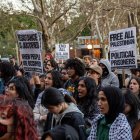
Support for the Palestinians has been one of the most controversial issues at Harvard. Since the 1970s, student groups have championed the so-called Palestinian cause, criticizing Israel. In recent decades, the Harvard Palestine Solidarity Committee has generated headlines for its activism, especially in the wake of the October 7 massacre perpetrated by Hamas in Israel in 2023. Some student statements, which appeared to justify indiscriminate violence against Israelis, sparked accusations of anti-Semitism and implicit and explicit support for Palestinian terrorism.
Radicalized students at Harvard often take more extreme positions, equating Palestinian terrorism, driven by racial, religious and genocidal motivations, with historical anti-colonial movements. This polarization has intensified criticism of Harvard, with the Trump Administration in 2025 singling out the university as an example of left-wing extremism and anti-Semitism in academia, leading to a feud between the president and the academic institution.
The Trump Administration has accused Harvard of not having done enough to combat the numerous instances of anti-Semitism that have taken place at its facilities, initiated after the barbaric October 7 attacks. In fact, Trump decided to freeze any new grants to the university. However, the situation seems to be heading towards an agreement between the parties.
Previously, Harvard University President Claudine Gay resigned from her post on January 2, 2024, after only six months in the position, due to allegations of plagiarism and backlash over what some considered an inadequate response to anti-Semitism on campus, as during a hearing with the U.S. House Education Committee, she refused to affirm that calling for genocide of Jews, as was happening at Harvard during his presidency, violated the harassment policy at the academic institution.
Harvard disguises dissemination of leftist ideas as academic freedom
Harvard's trajectory as an epicenter of progressive ideas, from the reception of Fidel Castro in 1959 to the recent pro-Hamas demonstrations, reveals a structural tension between its aspiration for intellectual excellence and its susceptibility to ideological instrumentalization. While the university prides itself on being a pillar of free debate, its history suggests a recurring inclination toward the amplification of leftist narratives that, at times, sacrifice critical scrutiny in favor of political empathy. This dynamic has not only fueled polarization, but also raises questions about Harvard's consistency in defending academic freedom when the ideas it harbors clash with democratic values or generate divisive consequences.

Trump reported that his administration could reach an agreement with Harvard this week
Also, the Republican leader added that "They have acted extremely appropriately during these negotiations and appear to be committed to doing the right thing. If an Agreement is reached based on what is currently being discussed, it will be absolutely HISTORIC, and very good for our country."
LATEST