Secret Service investigates Iranian video threatening Barron Trump, offering bounty for his head
The video, which asks how to kill 20-year-old Barron Trump, offers a $10 million reward.
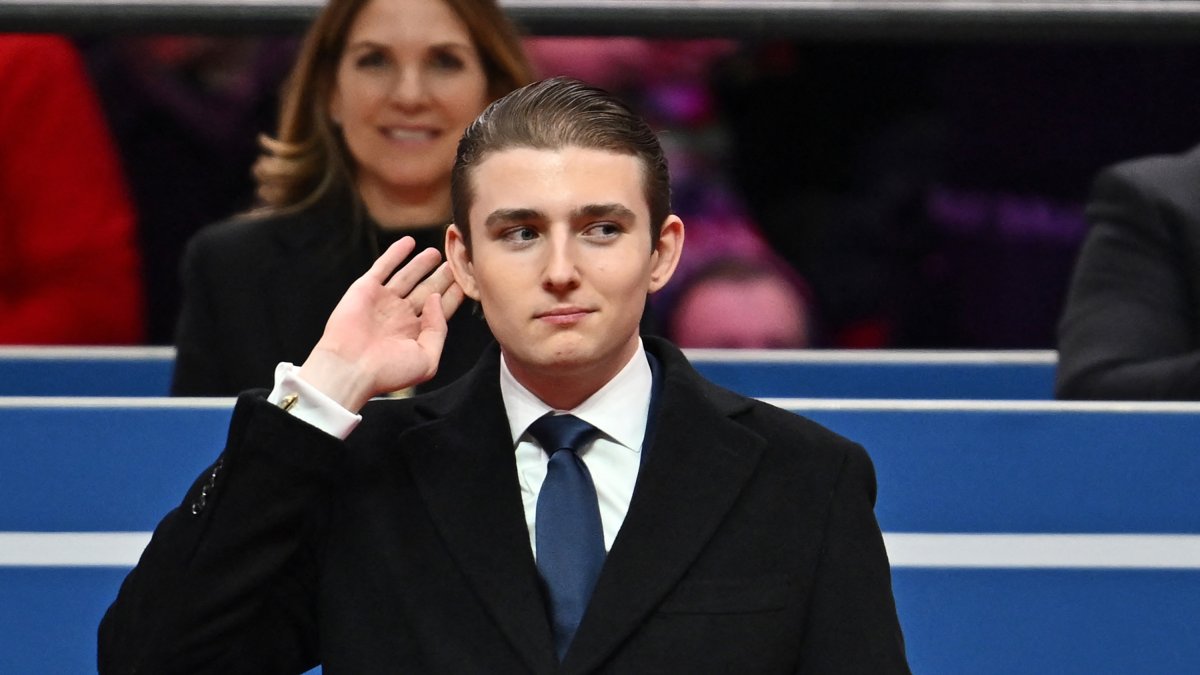
Barron Trump at Donald Trump's presidential inauguration

The Secret Service confirmed that it is aware of a video broadcast by Iranian state television that threatens Barron Trump, President Donald Trump's youngest son, and announces a reward of $10 million.
Secret Service spokesperson Nate Herring, told The Epoch Times that the agency "is aware of the video and investigates anything that can be perceived as a threat toward our protectees." The official declined to provide intelligence details, citing operational security.

World
Iranian propaganda video calls for killing Melania and Barron Trump amid tensions with Washington
Emmanuel Alejandro Rondón
A production by the Revolutionary Guard
On August 24, Channel 3 of Iranian state television aired a three-minute video titled "Where and how should we kill Barron Trump?" The Epoch Times links it to production companies affiliated with the Revolutionary Guard (IRGC). The title, which asks how to kill the president's 20-year-old son, includes a $10 million bounty. The video claims to be monitoring him and boasts of knowing about his university, his routes, and his private life.
The video also claims that Barron uses voice commands on a gaming platform, that they already have access to his accounts, and names a couple of his friends. It also mentions Trump Tower, the building where he usually stays.

Politics
Trump calls for end to executions in Iran following steady increase since start of war
Carlos Dominguez
A previous video targeted Melania
This isn't the first warning. In July, an agency affiliated with the IRGC released a similar video targeting First Lady Melania Trump, claiming to have knowledge about her device and her movements. That video ended with a phrase that is repeated in this week's video: "This is just the beginning. Barron Trump, wait for us."
The Epoch Times reports that it did not receive an immediate response from the university regarding whether it had stepped up security measures.
LATEST