






Episode 85
Staying attuned: Why the care we give also needs to be reciprocal
The Vivas and Plenas chat among themselves about how to maintain intentional connections, recognize when a friendship stops being mutual, and set boundaries without stopping loving.
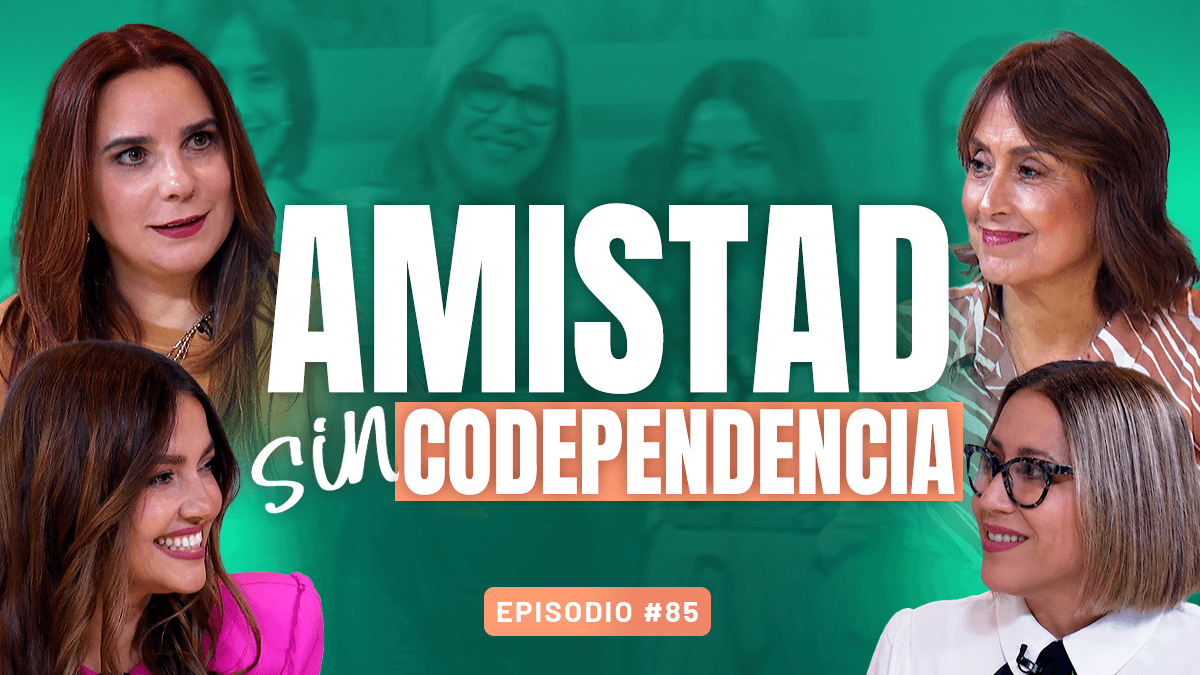
In this episode of Vivas y Plenas, Flor Elena Robledo and the panel discuss a question we ask several times a day almost without thinking: "How are you?" We're more connected than ever thanks to technology, and yet, at the same time, more emotionally disconnected. That question can be a polite formality that doesn't expect an answer, or the gateway to a conversation that supports someone going through a difficult time. The difference lies in whether we stop to listen.
But the conversation takes an uncomfortable turn halfway through, because being attentive is beautiful—until it becomes a one-way street: always giving. In this conversation, we explore how to cultivate intentional connections, how to recognize when a friendship has ceased to be reciprocal, and how to let go without ceasing to care.
The question almost no one stops to listen to
Ivethe opens the episode with a personal memory. A few years ago, she arrived in Miami going through a difficult time, and someone asked her how she was doing. She answered truthfully—"I'm really struggling"—and the other person was left at a loss for words. They weren't prepared for an honest answer.
The panel agrees that "how are you?" has become a mere formality: it's asked in passing, with no real time to listen, which is why almost all of us automatically answer "fine." But they also point out something important: you don't have to open up to everyone. The key is to have a small group of trusted people with whom you can truly be honest, because one of the deepest human needs is to feel heard and valued.
The phrase "if you need anything, give me a call" isn't enough.
There's a phrase that sounds generous but doesn't work in practice: "If there's anything you need, give me a call." Las Vivas put it bluntly: when someone says that to us, we don't call. No one picks up the phone to ask for a bowl of soup. Being attentive isn't about being available—it's about taking the initiative.
The panel also identifies an uncomfortable pattern: we tend to wait for a tragedy to strike before reaching out. We find out someone is in the hospital, and then we call. But many people aren't suffering from a visible illness—they're suffering from loneliness—and that doesn't send out warning signs. The question that lingers is an honest one: Am I truly paying attention, or am I just fulfilling an obligation because the situation is serious?
Intent is shown through small gestures
One of the speakers shares the example closest to her heart: her 83-year-old mother remembers almost everyone's birthdays and calls them on the very same day. When her own birthday comes around, she receives a huge number of messages—and it's no coincidence: she's been sowing those seeds for years. Some people tell her, "it's so nice that you remembered me—I hadn't received a single call today."
That's where ideas come from that cost nothing: a little note in the mail when you remember someone, a text message so the day doesn't pass by unnoticed. And a very practical recommendation: when there's no time to call, send a voice message instead of a text, because in a written message, you can't sense the intention behind the words. An "I'm on the run, but happy birthday" said in your own voice feels different from sending birthday wishes on Facebook or Instagram, which the panel describes as the most impersonal thing there is.
The connection starts with one person, but it has to be mutual
Here the conversation takes a different turn. If I want to be friends with someone, the initiative is up to me: to call, to reach out, to show I care. But what happens when that's never reciprocated? One of the panel members shares that she had a friend she'd call over and over without ever getting a response, until she decided to stop forcing a relationship that the other person didn't want to pursue.
The panel doesn't see this as resentment but as healthy self-esteem. It's sad and it's hard, but it's also wise: protecting your own heart is part of loving oneself. Let's be intentional in reaching out to others, they say, but let's also learn to read the atmosphere. The affection you send out should be returned.
When friendship becomes an emotional drain
The panel describes a dynamic that many will recognize: people who only show up when they have a problem, who seek you out so you'll listen to them or solve their issues, and who, when everything is fine, don't remember you. They use you as an "emotional trash can," and it works precisely because you're reliable. Later, when you're the one who needs support, all you get in return is silence, unanswered messages, or a "seen" that never leads to a reply.
What's almost never said out loud is the real cost: listening isn't free. "When you're telling me about your life and your problems, it weighs on my heart," says one of them, because there's a genuine connection and she truly cares. Hence the need for balance and knowing who to give your time to. The conclusion that ties the whole episode together is this: friendship has to be mutual.
The support that fades (and the support that remains)
Iveth delivers the episode's most powerful closing moment. She explains that statistics show that when a person goes through a crisis—a diagnosis, a death—they're surrounded by people during the first few weeks: messages, calls, everyone's concern. But over time, that support fades away, until only one or two people remain. Sometimes, none at all.
And she shares a story that says it all. One of her clients tragically lost her husband; they were both in their forties. Another widow gave her client advice that was as honest as it was devastating: "Enjoy this moment now, while you have everyone's attention, because after a month, no one will remember you."
Therein, perhaps, lies the true measure of being there for someone. We all show up the first week. The hard part—and the valuable part—is remembering a month later, six months later, when the rest of the world has gone back to its daily routine and that person is still going through their own struggles in silence. Flor Elena closes with the phrase that sustains this group both on and off camera: together we're stronger.
Want to hear the full conversation?
Watch the full episode on our YouTube channel.
Follow us on social media too:
• Instagram: @vivasyplenas
• TikTok: @vivasyplenas
• Facebook: Vivas & Plenas
🛠 Do you think there is an error in this article?
Recommendations




LATEST