Singapore launches data center with 20 servers, each containing at least 200,000 living human neurons that must be fed every three days
These cells require constant maintenance: they must be fed, their environment's pH must be regulated and they must be supplied with gases—much like the care patients receive in an intensive care unit.
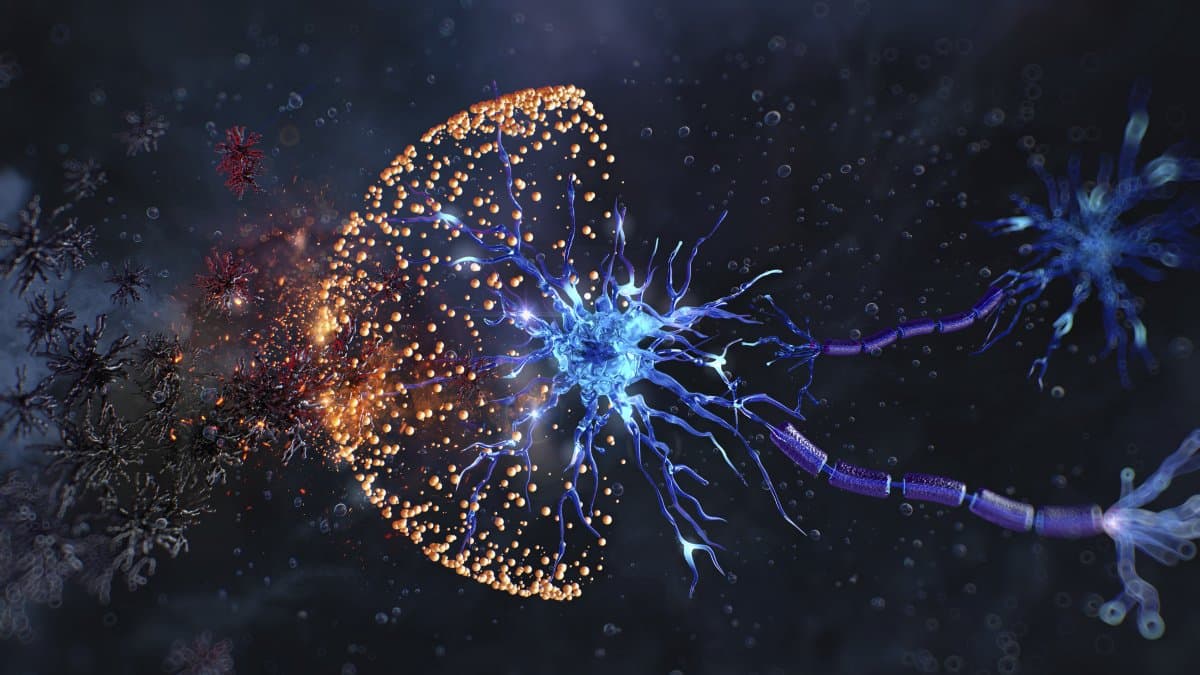

At the Life Sciences Center of the National University of Singapore (NUS), a prototype data center is operating that processes information using live human neurons grown in the laboratory.
These cells require constant maintenance: they must be fed, the pH of their medium must be regulated, and they must be supplied with gases—much like the care patients receive in an intensive care unit.
From Melbourne to Singapore: 20 boxes of neurons in a rack
According to a report by The Straits Times, the prototype, built by the Australian biotech company Cortical Labs, went live in mid-July. In Singapore, the company is working with two partners: NUS and DayOne, a local data center operator. The agreement between the three parties was announced in March.
Cortical Labs already offers a similar service in Melbourne. The company bills it as the world's first biological data center. It operates 120 CL1 biological computers—the company's commercial model—and has about 20 paying customers: research departments at companies and universities experimenting with robotics and video games.
The Singapore rack contains 20 CL1s. Each one houses at least 200,000 neurons on a silicon chip with electrodes, according to the report. The cells are derived from blood that has been reprogrammed into stem cells and then into neurons. They exchange electrical signals with a computer, and that activity translates into computation. Every three days, technicians supply them with sugars, micronutrients and buffers. A mixer injects carbon dioxide, oxygen and nitrogen.

This isn't for ChatGPT: They want it to learn with minimal resources
Chong Hon Weng, founder of Cortical Labs, does not claim that these neurons will replace ChatGPT. A model like that needs millions of examples and silicon chips that compute very quickly, always the same way. There, he admits, silicon wins.
What he's selling is the opposite: situations where there isn't that much data and the scenario changes all the time. A humanoid robot on the street can't rehearse every sidewalk, every piece of street furniture or every person. A cybersecurity system doesn't have a complete catalog of new attacks either. In those cases, according to Chong, you need something that learns from very little, just like a person does.
"There is not enough data in the real world to train humanoid robots to do everything that we need the robots to do using traditional servers," he said. His analogy is this: a human sees four cases and adapts when the fifth scenario no longer resembles the others. That, he argues, is what they're aiming for with the cells. Not to beat Nvidia in speed. To get it right when the manual falls short.
The bet against data center outages
The energy demand aligns with a local issue. In 2019, the country put a hold on new data centers due to electricity and water concerns; that year, they consumed 5.3% of the nation's electricity, and in 2020, amid the pandemic, 7%. Chong says that each CL1 consumes 30 watts, including power supply—less than a pocket calculator, according to his comparison—compared to up to 700 W for an Nvidia H100 SXM and about 10,200 W for a server with eight of those chips plus supporting hardware. Singapore is a fiber hub in the Asia-Pacific region, he argues; the bottleneck is power and water, not connectivity.
🛠 Do you think there is an error in this article?
Recommendations





LATEST