Fighting has resumed in the Middle East: What is the true status of US missile stockpiles?
Despite the significant reduction in interceptors such as Patriots and THAAD due to their use in the conflict with Iran and the time it will take to replenish the silos to pre-war levels, the U.S. has the capacity to handle "any scenario" in this war and has significant deterrence and defense options in the face of potential new challenges.
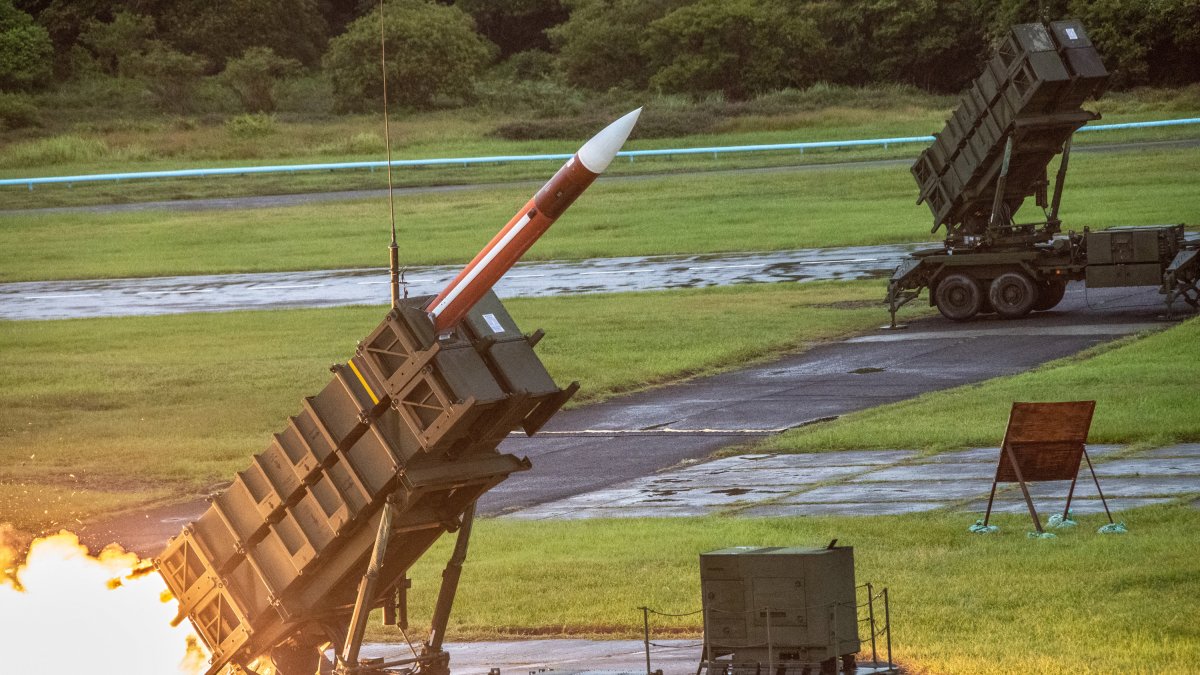
File photo of a Patriot missile launch

The U.S. missile stockpile has become a matter of national interest in recent days, in every sense of the word. Its importance to the country's security is compounded by reports of a possible critical shortage in reserves of a key element for maintaining its position as a global hegemonic power and, above all, for being able to defend itself in the hypothetical event of a conflict with the other global superpower, China.
Speculation surged following the latest nod by Donald Trump toward diplomacy in the Iran conflict, just a few days after resuming attacks due to Tehran's repeated violations of key provisions of the Memorandum of Understanding, particularly regarding navigation through the Strait of Hormuz and the nuclear program.
According to reports published in The New York Times and The Wall Street Journal, which cite officials who requested anonymity to avoid reprisals, it was noted that the pause was not only an attempt to achieve peace through diplomatic channels, but was also linked to concerns among senior military leaders regarding the number of interceptor missiles (Patriots and Terminal High Altitude Area Defense, or THAAD) used so far in the conflict, and what remains in the silos to end this conflict and be able to face potential future wars.

Politics
Trump postpones major offensive against Iran: White House cites diplomacy, but reports point to interceptor shortage
Emmanuel Alejandro Rondón
Years to return to pre-war levels
This is a critical issue for national security, since bringing arsenals back to pre-Middle East conflict levels—and even replacing the Patriots sent to Ukraine during the Biden administration—will take years at the current production rate, even with the improvements agreed upon with manufacturers. This is something the Trump administration has already begun working on to expand capacity, but it will still take time.
According to estimates from the Center for Strategic and International Studies (CSIS), before the conflict began back in February, U.S. missile silos held 2,330 Patriots and 452 THAADs. When the fighting ceased, there were about 1,030 Patriots and between 232 and 262 THAADs remaining. As of July 27, following the resumption of the bombings, the stockpile stood at between 759–827 Patriot missiles and approximately 234–278 THAAD missiles, taking into account the latest shipments from the factories.
Dangers of missile shortages
There are several concerning aspects to these figures. One, which is imminent, is that the military is forced to optimize the use of these missiles, which have the highest interception capability, which means allowing Iranian drones or missiles that pose a lower risk to soldiers' lives or strategic areas to ultimately strike their targets.
It is true that the effectiveness of these interceptors is high, but it is not absolute, as indicated by the fact that there were some casualties and significant damage to bases in the Middle East in the early days of the conflict.
"A window of vulnerability for a potential Western Pacific conflict"
The second danger, in the medium and long term, is the ability to face a conflict with a much more powerful nation such as China. In fact, CSIS analysts and other experts note that "the United States has enough munitions for any plausible scenario in the Iran war, but the depleted inventories have created a window of vulnerability for a potential Western Pacific conflict. The time needed to rebuild those inventories has thus become a major concern."
This is something the Trump administration is aware of and is working on. Secretary of War Pete Hegseth acknowledged that it will take "months and years... depending on the weapons system" to replenish U.S. stockpiles. The request to Congress for $95 billion for ammunition in the fiscal year 2027 defense budget and $21 billion in the supplemental war funding bill reflects this urgency.
According to the CSIS:
- The Terrestrial Attack Missile (TLAM), the Terminal High Altitude Area Defense (THAAD) system, and the Patriot—which have been heavily used in this war—will take three years or more from now to return to pre-war stock levels.
- The Standard missiles (SM-3 and SM-6) will take about two years. These naval missiles were not used as frequently.
- Replenishing the Joint Air-to-Surface Standoff Missile (JASSM) and the Precision Strike Missile (PrSM) will take between several months and a year. Pre-war PrSM stockpiles were low, as the system had just entered production. As for the JASSM, although it has been used extensively, significant deliveries will be received from recent acquisitions.
Another front: Fulfilling orders from allies and partners
It must also be taken into account that, beyond the needs of the war in Iran and aid to Ukraine, "in addition to replenishing its own reserves, the United States also has to fulfill orders from its allies and partners (from up to 17 countries). Decisions on how to allocate new production have already sparked bilateral tensions, and these tensions will continue over the next few years, as demand outstrips supply," the think tank warns.
"The Trump administration has recently announced a series of agreements with the industry to boost production and bring missile stocks up to 'wartime levels.' The large quantities of ammunition included in the president's budget request for fiscal year 2027 further underscore the urgency of rebuilding and expanding stockpiles. However, short-term deliveries are relatively scarce due to the limited orders placed in the past. Even if Congress approves the funds requested for fiscal year 2027, it will take years before these missiles are delivered."
"The problem today is not money, but time"
The war in Ukraine and the Patriot missile shipments sent by Biden served as a first warning of the need to replenish missile silos. In fact, funding for this purpose had already been approved during the Democrat's term, and Trump accelerated this process. This indicates that "the problem today is not money, but time. It takes time to expand production capacity and build these complex systems."
This is a numerical reality—as accurate as possible based on CSIS calculations, since "ammunition inventories are classified information and some delivery times are not available." However, there is sufficient public information to make estimates with the necessary precision to serve as a basis for political debate.
Thus, the group explains that its calculations regarding when acquired missiles become part of U.S. inventories were based primarily on two data points: the production rate and the acquisition timeline. The Department of Defense (DOD) provides three different production rates in its annual budget documents:
- Minimum Sustainment Rate (MSR): The rate necessary to maintain a continuous production process.
- Economic production rate ("1-8-5"): One eight-hour shift per day, five days a week.
- Maximum production rate ("Max"): Capacity to increase production through multiple shifts using "existing or prior-year machinery."
The situation is far from dramatic, or even dangerous, for the U.S.
However, CSIS itself points out other factors to consider beyond the cold hard numbers that help better explain the actual state of U.S. national security at this time. Regarding Iran, experts highlight as a key point that "Iranian launches have occurred at a slower pace than before the ceasefire," both in terms of missiles and drones.
As for China, the report's authors note that "the situation in the Western Pacific is not entirely bleak. The world has witnessed the great skill of U.S. military forces, not only in the conflict with Iran but also in operations against Venezuela and the Houthis. China is fully aware that it lacks recent combat experience and that it fared poorly in its last war, the one fought against Vietnam in 1979. That difference in experience could maintain deterrence until ammunition reserves are replenished."
U.S. military doctrine prioritizes the destruction of the enemy's offensive capabilities
Furthermore, as Park MacDougald points out for Tablet magazine:
"In U.S. military doctrine, air defense is not intended to provide an indefinite shield against drone and missile attacks; given enough time, any enemy with the necessary capability can overwhelm air defenses—a problem known as 'overwhelming superiority.'" The goal of air defenses is to protect U.S. and allied forces long enough to neutralize and destroy the enemy's launch capabilities."
"In fact, this was precisely the point that Admiral Brad Cooper, head of CENTCOM, reportedly raised during the president's recent war council meeting. According to The Wall Street Journal, Cooper 'believes the U.S. can cope with limited stocks of Patriot missiles and other air defense interceptors because an escalation of U.S. strikes, if approved by Trump, would undermine Iran's ability to launch large numbers of missiles.'"
"The U.S. still has a large amount of ammunition, but it needs to be a little more cautious"
In the words of Colby Badhwar, an independent defense analyst and member of the Center for European Policy Analysis, in an interview with The Scroll:
"The United States and Israel undoubtedly still have the capability to carry out operations, but they may have to take on a little more risk than in the past. They will have to get a little closer using weapons such as small-diameter bombs, JDAMs, and glide bombs. The United States still has a large amount of ammunition at its disposal, but it will undoubtedly have to be a little more cautious, perhaps, when planning and executing operations."
LATEST