Fauci invokes Fifth Amendment, refuses to answer questions in Senate on origins of COVID
The former director of NIAID refused to answer questions from Senator Rand Paul, citing the risk of self-incrimination. The hearing reignited the debate over the origin of the coronavirus, funding for research in Wuhan and the federal government's role during the pandemic.
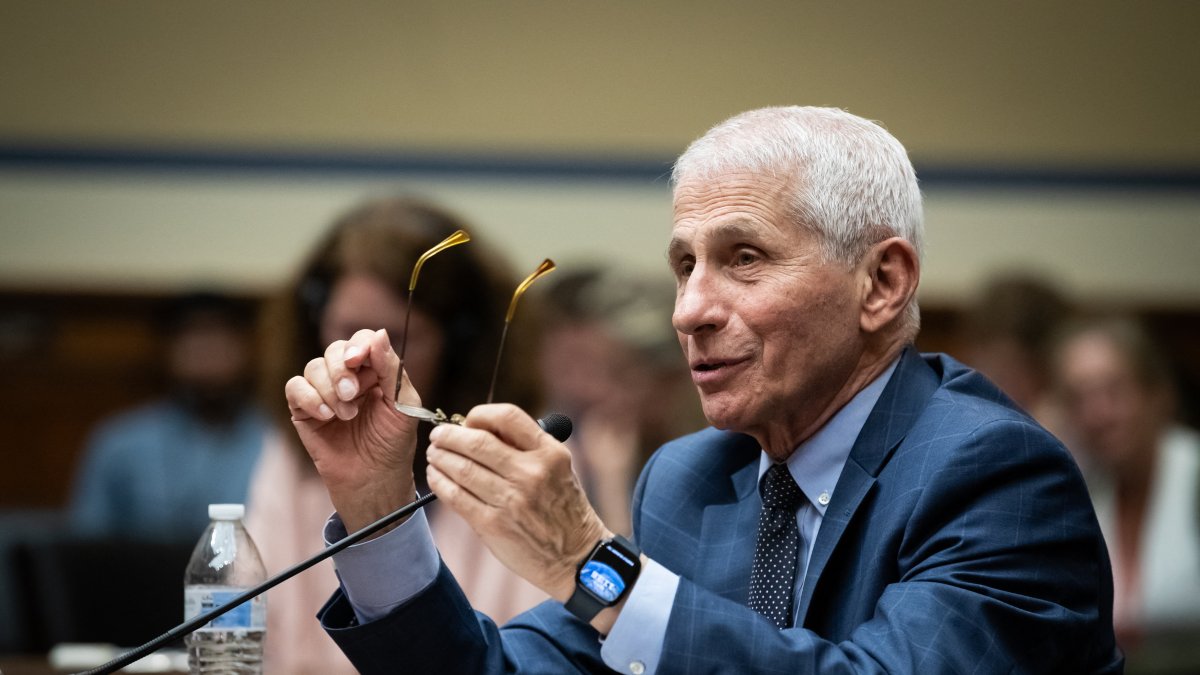
Image of Dr. Anthony Fauci,

The former director of the National Institute of Allergy and Infectious Diseases (NIAID), Anthony Fauci, invoked the Fifth Amendment to the Constitution on Wednesday and refused to answer questions posed during a hearing of the Senate Committee on Homeland Security and Governmental Affairs, chaired by Republican Senator Rand Paul.
The hearing, convened to examine the origins of the COVID-19 pandemic and the response of U.S. health authorities, was marked by a heated political confrontation between Fauci and Republican senators, who maintain that there are still unresolved questions regarding the possible funding of research at the Wuhan Institute of Virology and the information provided to Congress during the pandemic.

Just The News
Private messages show COVID origin authors doubted their public claims it was natural
Just The News/Greg Piper
Fauci: "Under the advice of my attorneys..."
In his opening statement, Fauci explained that he decided to invoke his constitutional right to avoid any risk of self-incrimination.
"Although it pains me to do so because of the respect I have for the legislative branch of government ... under the advice of my attorneys, I will invoke my right under the Fifth Amendment of the constitution to refrain from answering your questions," the former official stated.
Fauci argued that the subpoena was part of a personal campaign led by Rand Paul and stated that the senator has publicly expressed on several occasions his intention to see him "behind bars."
According to the former health advisor, the sole purpose of the hearing was to elicit a statement that could later be used to attempt to prosecute him for alleged perjury.
Rand Paul points out contradictions
The Republican senator maintains that these documents show that, as early as the first months of 2020, Fauci seriously considered the possibility that SARS-CoV-2 had escaped from a laboratory in China, a hypothesis that, according to Paul, he later downplayed in public.
The hearing also saw moments of tension when one of Fauci's attorneys attempted to intervene during the questioning, and Rand Paul ordered him to be removed from the room by security personnel.
Debate over the virus's origin remains open
Among the documents released by Paul are Fauci's personal notes from February 2020, in which the then-director of NIAID noted that some scientists were debating both a possible natural origin and a potential laboratory leak.
In those notes, Fauci stated that he was keeping an "open mind" regarding both possibilities, although he later stated that he considered a natural origin through a species jump to be much more likely.
To date, none of the main hypotheses has been conclusively proven. The World Health Organization (WHO) has stated that the natural origin theory remains the explanation with the strongest available scientific support, although it maintains that research into the virus's origin remains inconclusive due to a lack of access to all necessary information.
Updates
Congress warns Anthony Fauci that committing perjury on Wednesday will invalidate the legal immunity granted by Biden
Andrés Ignacio Henríquez
Republicans and Democrats clash during hearing
Fauci's decision to invoke the Fifth Amendment drew harsh criticism from several Republican lawmakers.
Senator Josh Hawley stated that the former official's refusal was "contempt" of Congress and called for greater accountability regarding the handling of the pandemic.
A central figure in the pandemic
After his retirement in 2022, he continued to face strong criticism from numerous Republican leaders, particularly for his defense of public health restrictions and for investigations related to Wuhan.
Before leaving the White House, former President Joe Biden granted him a preemptive pardon for potential federal crimes related to his actions during the pandemic, although the pardon decree itself clarified that this measure should not be interpreted as an admission of guilt.
LATEST